Fresh Code Clinic
Decode Your Freshness
Unlock the secrets to all your skin problems, with expert advice from doctors to help you better understand your skin.
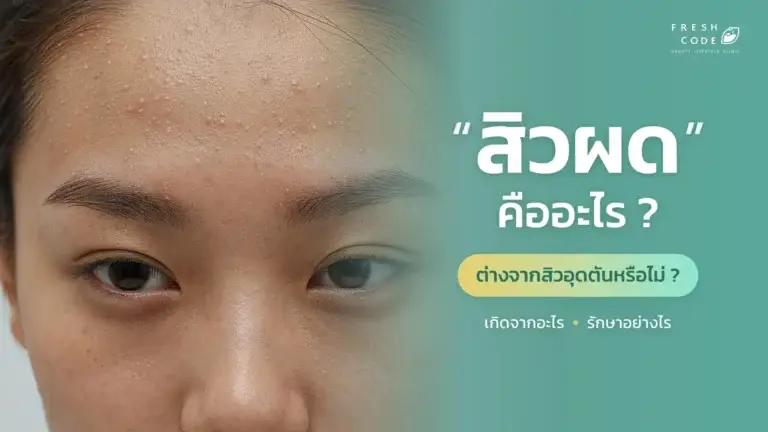
สิวผด เป็นคำที่คนไทยใช้เรียกตุ่มเล็ก ๆ หลายเม็ดที่ขึ้นบนผิวพร้อมกันและหน้าตาคล้ายสิว บางคนหมายถึงสิวอุดตันเม็ดเล็กที่เรียงกันทั่วหน้า บางคนหมายถึงผดที่ขึ้นหลังเหงื่อออกมาก และบางคนหมายถึงตุ่มคันที่ขึ้นบริเวณอก หลัง หรือแนวไรผม ทั้งที่ตุ่มเหล่านี้เกิดจากกลไกต่างกัน เนื้อหาในบทความนี้เป็นความรู้ทั่วไป ไม่ใช่การวินิจฉัย และไม่สามารถใช้แทนการตรวจของแพทย์ได้ บทความนี้ช่วยให้เห็นว่าตุ่มคล้ายสิวมีกี่กลุ่ม มีเบาะแสอะไรให้สังเกต และเมื่อไรควรให้แพทย์ตรวจแยกชนิด ข้อมูลทางการแพทย์อ้างอิงจากเอกสารที่ระบุไว้ท้ายเรื่อง สรุปสั้นก่อนอ่านต่อ สิวผดไม่ใช่ชื่อโรคเดียว คำนี้ใช้เรียกตุ่มเล็กคล้ายสิวอย่างน้อย 4 กลุ่ม ได้แก่ สิวอุดตัน ผดร้อน รูขุมขนอักเสบจากเชื้อรา Malassezia และรูขุมขนอักเสบจากแบคทีเรีย แต่ละกลุ่มมีกลไกและแนวทางดูแลไม่เหมือนกัน เบาะแสเบื้องต้น ไม่ใช่การวินิจฉัย คือ ตุ่มขนาดใกล้เคียงกันและคันที่หลังส่วนบน อก หรือแนวไรผม อาจเข้าข่ายตุ่มจากเชื้อรา ตุ่มแดงเล็กที่คันหลังเหงื่อออกมากอาจเป็นผดร้อน และตุ่มสีเดียวกับผิวที่ไม่เจ็บไม่บวมอาจเป็นสิวอุดตัน งานวิจัยในกรุงเทพฯ ที่ตรวจผู้ป่วย 320 รายซึ่งแพทย์วินิจฉัยเบื้องต้นว่าเป็นสิว พบเชื้อรา Malassezia ในรูขุมขนร้อยละ 28.8 จึงไม่ควรเดาใช้ยาเอง ควรให้แพทย์ตรวจแยกชนิดก่อนเลือกวิธีดูแล Plasmalis ตามที่คลินิกระบุในหน้าบริการเป็นเทคโนโลยีพลาสมาสำหรับดูแลสิวผดและสิวเรื้อรัง ความเหมาะสมกับตุ่มของแต่ละคนขึ้นกับการประเมินของแพทย์ และผลลัพธ์ขึ้นกับแต่ละบุคคล สารบัญ สิวผดคืออะไร ทำไมตุ่มเล็กคล้ายสิวถึงถูกเรียกรวมกัน…

Profhilo คือสารฉีดที่มีกรดไฮยาลูรอนิก (hyaluronic acid หรือ HA) เป็นส่วนประกอบหลัก ผลิตโดยบริษัท IBSA และออกแบบมาเพื่อฉีดบริเวณผิว โดยบริษัท Evolus ผู้ได้สิทธิ์พัฒนาและจำหน่ายในสหรัฐฯ อธิบายว่าเน้นความชุ่มชื้น ความยืดหยุ่น และคุณภาพผิวโดยรวม[8] ผู้ที่เพิ่งได้ยินชื่อนี้มักสงสัยพื้นฐานสามข้อ คือ Profhilo คืออะไรกันแน่ ช่วยเรื่องอะไรได้บ้าง และต้องฉีดกี่ครั้ง บทความนี้เป็นความรู้ทั่วไป ไม่ใช่การวินิจฉัย และไม่สามารถใช้แทนการตรวจประเมินโดยแพทย์ ข้อมูลส่วนใหญ่มาจากงานวิจัยที่ตีพิมพ์แล้ว ซึ่งงานวิจัยในคนที่อ่านทุกฉบับได้รับทุนจากผู้ผลิตหรือมีผู้เขียนเป็นพนักงานของผู้ผลิต จึงระบุแหล่งทุนไว้ในแต่ละจุด ข้อความเกี่ยวกับ Fresh Code Clinic ระบุที่มาว่ามาจากหน้าบริการของคลินิก ส่วนตัวเลขเรื่องจำนวนครั้งเป็นผลจากงานวิจัย ไม่ใช่นโยบายของคลินิก ผลลัพธ์ขึ้นกับแต่ละบุคคล ควรปรึกษาแพทย์ก่อนตัดสินใจ สรุปสั้นก่อนอ่านต่อ Profhilo รุ่นเดิมมี HA โมเลกุลสูงและต่ำอย่างละ 32 มก. ใน 2 มล. ตามที่รายงานในงานวิจัย เน้นคุณภาพผิว เช่น ความชุ่มชื้นและความยืดหยุ่น ต่างจากฟิลเลอร์ที่เน้นเติมปริมาตร[1][6] งานวิจัยในคนที่อ่านมีผู้เข้าร่วม 25-64 คน…

Rejuran คือชื่อแบรนด์ของสารฉีดเข้าผิวที่ใช้โพลีนิวคลีโอไทด์ (polynucleotide หรือ PN) เป็นสารสำคัญ ผลิตโดยบริษัท PharmaResearch จากเกาหลีใต้[1] และถูกนำมาใช้ในงานฟื้นฟูคุณภาพผิว บทความนี้เป็นความรู้ทั่วไป ไม่ใช่การวินิจฉัย และไม่ใช่คำแนะนำเฉพาะบุคคล การเลือกรุ่นผลิตภัณฑ์ จำนวนครั้ง และความเหมาะสมกับผิวของแต่ละคนเป็นสิ่งที่แพทย์ต้องประเมินเอง เนื้อหาเรียบเรียงจากเอกสารกำกับของผู้ผลิต บทความทบทวน และงานทดลองที่เปิดอ่านได้จริงในรอบนี้ โดยแยกให้เห็นว่าข้อมูลใดมาจากผู้ผลิต งานวิจัย หรือหน้าบริการของคลินิก เพราะงานเรื่อง PN ด้านความงามส่วนใหญ่มีตัวอย่างน้อย และบางส่วนมีผู้ผลิตสนับสนุน สรุปสั้นก่อนอ่านต่อ Rejuran เป็นแบรนด์สารฉีดที่ใช้ PN จาก DNA ของปลาแซลมอนหรือเทราต์ ส่วน Rejuran HB Plus ตามเอกสารกำกับของผู้ผลิตมี PN ร่วมกับ hyaluronic acid และลิโดเคน กลไกของ PN ในผิวยังเป็นสมมติฐานที่อิงงานของ PDRN เป็นหลัก และงานวิจัยด้านความงามส่วนใหญ่มีขนาดเล็ก ติดตามผลระยะสั้น หรือมีผู้ผลิตสนับสนุน จำนวนครั้งและช่วงห่างในเอกสารมีหลายแบบ เช่น 3 ครั้งห่างกัน…
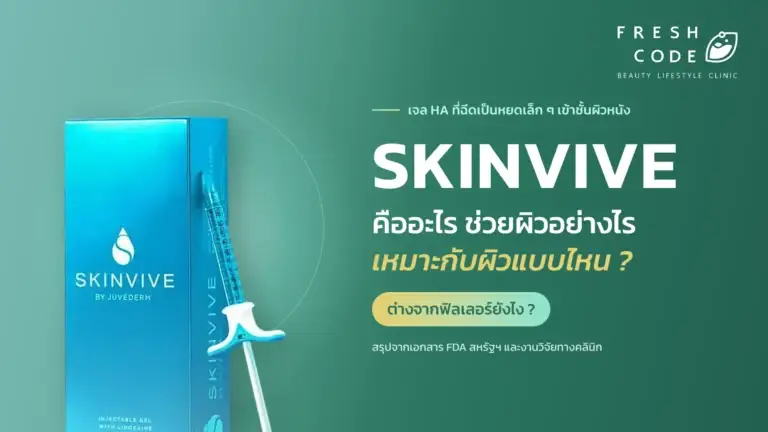
SkinVive is an injectable hyaluronic acid (HA) gel from Allergan Aesthetics that is injected in small droplets into the skin. The US FDA indication is for cheek smoothing and, later, neck line reduction in adults over 21 years of age.[1][4] This article describes what it is, how it differs from conventional fillers, what research has found, and which skin types it is compatible with. All information is general knowledge, not diagnosis, and is not personalized medical advice. Most information is from US FDA documents and manufacturer-funded research, with sources cited in each section. Results vary from person to person; consult a physician before making a decision. In short, SkinVive is an injectable HA gel that is injected in small droplets. The US FDA indication is for cheek and neck line smoothing in adults over 21 years of age; it is not specified for volume addition or facial contouring. US FDA approval is separate from Thai FDA registration status; interested parties should inquire about the registration number and actual product used directly from the clinic. In the manufacturer-funded research, Those who have received the injection…

Nasolabial fold filler is the injection of a hyaluronic acid (HA) gel into the groove that runs from the sides of the nose down to the corners of the mouth, medically known as a nasolabial fold. This groove becomes more prominent when smiling and tends to deepen with age. Frequently asked questions are: what causes deep grooves, who is suitable for filler injections in the groove, and what should you know before deciding? This article is for general knowledge, not a diagnosis. Results depend on the individual. You should consult a doctor who has performed a real facial assessment. The nasolabial folds in this article refer only to the grooves from the sides of the nose to the corners of the mouth, not the raised area of the cheeks known as the "apple cheeks," and not the hollows under the eyes. Those two topics have separate articles: What are apple cheek fillers and where are they injected? and Under-eye fillers. This section focuses on the causes of deep nasolabial folds, suitability for injections, research figures, and risks to be aware of. In short, before reading further, nasolabial folds can deepen due to a combination of factors, such as a flattened mid-face and sagging skin with age. Therefore, a doctor must assess whether fillers should be used in the grooves, in the cheeks, or in combination with other methods.[3][4] Fillers work by adding volume to make the groove shallower, and 3D imaging studies report that there is no pulling of the skin into the groove. Those with very saggy cheeks and loose skin should discuss lifting options with their doctor.[5] A randomized study in people with severe nasolabial folds reported an average total dose of 1.3 mL per side and around 80% still responded at 12 months, but this is manufacturer-supported research and not clinical figures.[2] Nasolabial folds have been identified as a high-risk area for filler-induced vascular occlusion, pale skin…
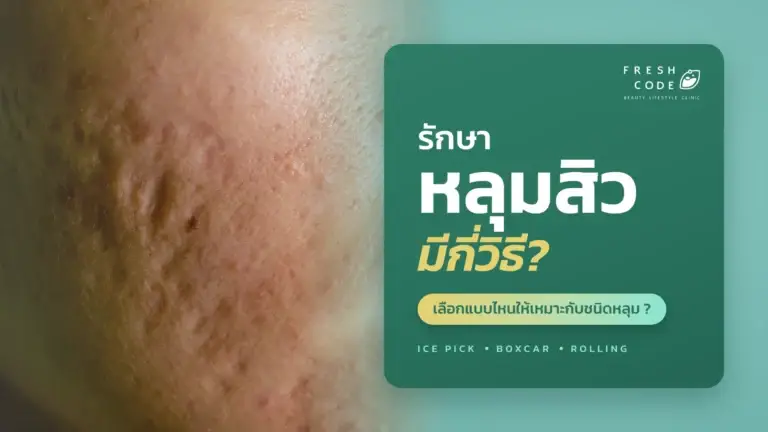
Treating acne scars doesn't have a single method that works for everyone, as acne scars come in many forms: narrow and deep, wide and well-defined, and those that leave the skin uneven. Each type responds differently to treatment. This article provides an overview of commonly used acne scar treatments, ranging from chemical peels and microneedle therapy to radiofrequency (RF) and laser treatments, as well as filler injections and targeted procedures. Fresh Code Clinic's services for acne scars are also listed. This information is general knowledge and not a personalized diagnosis or recommendation. Each person's scar type, depth, skin color, and acne history are different, so a doctor must examine the skin before choosing a method and planning treatment. Results vary from person to person; consultation with a doctor is recommended. In short, acne scars are broadly categorized into narrow and deep (ice pick), round or oval with well-defined edges (boxcar), and wide and sloping edges (rolling). Post-acne redness or dark spots are skin discoloration, not scars. There is no single method that works for all scars. A Cochrane review concludes that there is insufficient evidence to determine which method should be the first choice. Doctors therefore choose based on the type of scar and often use a combination of methods. Self-care has limited benefits. Retinoids or salicylic acid may make mild scars less noticeable. However, microneedle treatment at home carries the risk of infection and dark spots, and squeezing or pressing pimples increases the chance of scarring. The number of sessions and recovery time vary depending on the method and are determined by the doctor on a case-by-case basis. Before starting, any inflamed acne should be controlled, and you should inform your doctor about any acne treatments you have received in the past two years. Table of Contents: Treating Acne Scars Starts with Identifying the Types: What are Acne Scars and How Many Types Are There...?
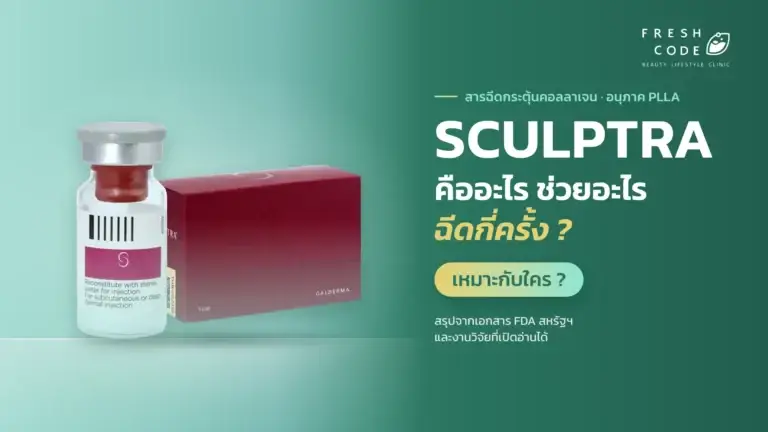
Sculptra is a collagen stimulator (or biostimulator) injection containing small particles of poly-L-lactic acid, or PLLA, as its main component.[2][5] Doctors inject it into the skin to allow the body to gradually respond and increase its own collagen production.[3] This article is for general knowledge purposes only, not a diagnosis, and is not personalized advice. Results vary from person to person. Consult a doctor before making a decision. The content is divided into the mechanism of action, FDA-approved indications, research results, differences from fillers, suitable and unsuitable groups, and the number of times research reports. Some information is from the manufacturer's documents and manufacturer-funded research, which clearly states each point so that readers can weigh the information themselves. In short, Sculptra is a collagen stimulator injection containing PLLA particles. The mechanism described in research is that the body responds to the particles and stimulates cells to produce collagen, but the details at the molecular level are not yet fully understood.[3] Results are often not immediately visible after the first injection. The initial volume is of the carrier substance, which decreases within a few days. The manufacturer recommends evaluating results no sooner than 4 weeks after treatment.[3][5] The US FDA has approved its use for nasolabial folds and fine lines on the cheeks in immunocompromised individuals. The research has been followed up for about 2 years, but it is a US approval, not a Thai FDA registration.[1][2] The research plans to inject up to 4…

What are the differences between Oligio and Ultraformer, and which machine should you choose for facial lifting? This question often arises when individuals start experiencing sagging cheeks, undefined jawlines, loose skin, or wrinkles, but are unsure whether to choose RF radio frequency or HIFU technology. While both machines aim for skin tightening, they operate on different principles and deliver energy differently. This article will help you choose based on your skin care goals, not on the machine name or advertising claims of which is more powerful. It primarily compares Oligio and Ultraformer MPT, and adds Ulthera as a third option for those researching non-surgical facial lifting, illustrating each technology's role and outlining questions to consider before treatment. Key Takeaways: Oligio uses Monopolar RF to deliver heat energy to tissue, making it suitable for assessment when the goal is firmness and skin quality. Ultraformer MPT uses HIFU, delivering focused ultrasound energy to a defined depth, making it a good choice for planning lifting based on tissue layers. Ulthera is another option using focused ultrasound, featuring an ultrasound visualization system to help monitor tissue layers during energy delivery. There is no single best machine for everyone; the choice should depend on your skin problems, sagging severity, facial structure, and medical suitability…

What are the differences between Ulthera and Ultraformer? This is a question many people ask before deciding on a facelift. Both machines use focused ultrasound energy to deliver energy to the tissue beneath the skin, but they differ in technology, energy placement control, treatment head design, sensation during treatment, and treatment plan approach. This article provides a neutral comparison to help those undecided between Ulthera/Ultherapy and Ultraformer MPT understand the advantages of each machine and what factors should be considered when making a choice. Actual results depend on skin condition, degree of sagging, facial structure, energy level, number of lines or shots, and the treatment plan chosen by the doctor. Therefore, a personalized assessment by a doctor is recommended before treatment. Key Takeaways: Both Ulthera and Ultraformer MPT use focused ultrasound to create heat energy in the target tissue layer and stimulate collagen restructuring. A key advantage of Ulthera is its ultrasound visualization, allowing the patient to see the tissue layers and location before energy delivery. Ultraformer MPT features Micro-Pulsed Technology and multi-depth cartridges…

The question of which to do first, Ulthera, Botox, or Filler, is a question for people who already have Botox or filler injections and are about to do Ulthera Prime because two Thai research papers that I've read found that if Ulthera is done too close to the injection date, the effect of Botox is reduced and the effect of HA filler is partially reduced [1][2]. This article provides a timeline and checklist of how each case should be ordered, what the intervals are that the research has tested, and which areas do not yet have figures. This is general knowledge, not a diagnosis. The actual intervals to use must be determined by the doctor based on the area and each person's injection history. Key Takeaways: If planning a whole new treatment, the Pan-Asian consensus, for example, for the upper face, is to do Ulthera (MFU-V) first, then Botox and filler [4]. This order avoids cases where research has found an impact, but is an example from consensus, not a comparison of experimental results. If Botox has already been injected, a randomized 15-person trial found that MFU-V 1.5 mm head, if done immediately, on day 7 or day 14, reduces the effect of Botox. Researchers recommend waiting at least 2 weeks and have not yet tested beyond…
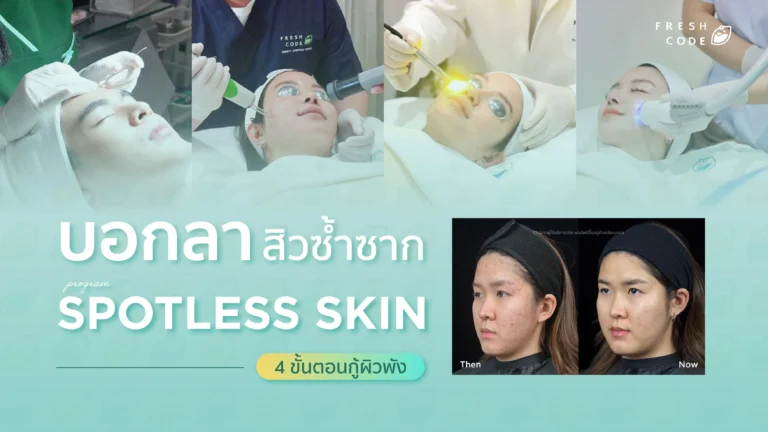
Acne scars and recurring acne are different problems. Acne is inflammation, while acne scars are the resulting marks. Therefore, it's necessary to differentiate between scar types and control acne simultaneously. This article explains the types of acne scars, the causes of recurring acne, the four steps of the Spotless Skin program at Fresh Code Clinic, and how to prepare and care for your skin after treatment. This is general knowledge, not a diagnosis. Key Takeaways: Red acne scars (PIE), dark acne scars (PIH), and acne pits are caused by different mechanisms, so they must be categorized before choosing a treatment method. Some scars may last a long time if left untreated. Recurring acne in the same spot is due to many factors, not just hygiene. Inflamed acne should be controlled first; otherwise, new scars will replace old ones. Fresh Code Clinic's Spotless Skin program is divided into four steps: clearing acne, treating dark scars with Discovery Pico, treating red scars with Dual Yellow Plus+, and rejuvenating the skin with Vitacool. Use sunscreen with SPF 30 or higher daily, and avoid picking or squeezing pimples…

Is Discovery Pico good? The answer depends on what your main skin problem is. As stated by the clinic, this is a picosecond laser used to treat pigmentation and skin texture problems, but the evidence is not as strong as it is for acne scars. Acne scars have more research supporting their effectiveness than melasma, and the term "skin brightening" does not mean skin whitening. This article explains the working principle, what it helps with, how many modes it has, whether it is painful, how many sessions are needed, post-treatment skin care, including post-procedure masks, and what you should ask the clinic before deciding. This is general knowledge, not a diagnosis. Key Takeaways Discovery Pico is a picosecond laser. As stated by the clinic, it is used to treat pigmentation and skin texture. The strongest evidence is for acne scars with the Fractional 1064 nm head, but this is a small procedure with some improvement, not complete elimination.[1][7] Melasma: An analysis of six randomized controlled trials found that the results varied greatly. 1064 nm reduced melasma scores, while 755 nm was no better than creams and caused post-inflammatory hyperpigmentation. Melasma is not on the FDA indications that the clinic found.[1][8] Skin brightening (Pico Bright) is the name of the mode and the clinic's terminology. No research has been found to directly measure skin brightening. And it is not a skin whitening [1]. Post-inflammatory hyperpigmentation is a side effect to watch out for. Sun protection should be used regularly, and ask the clinic about the model of device…