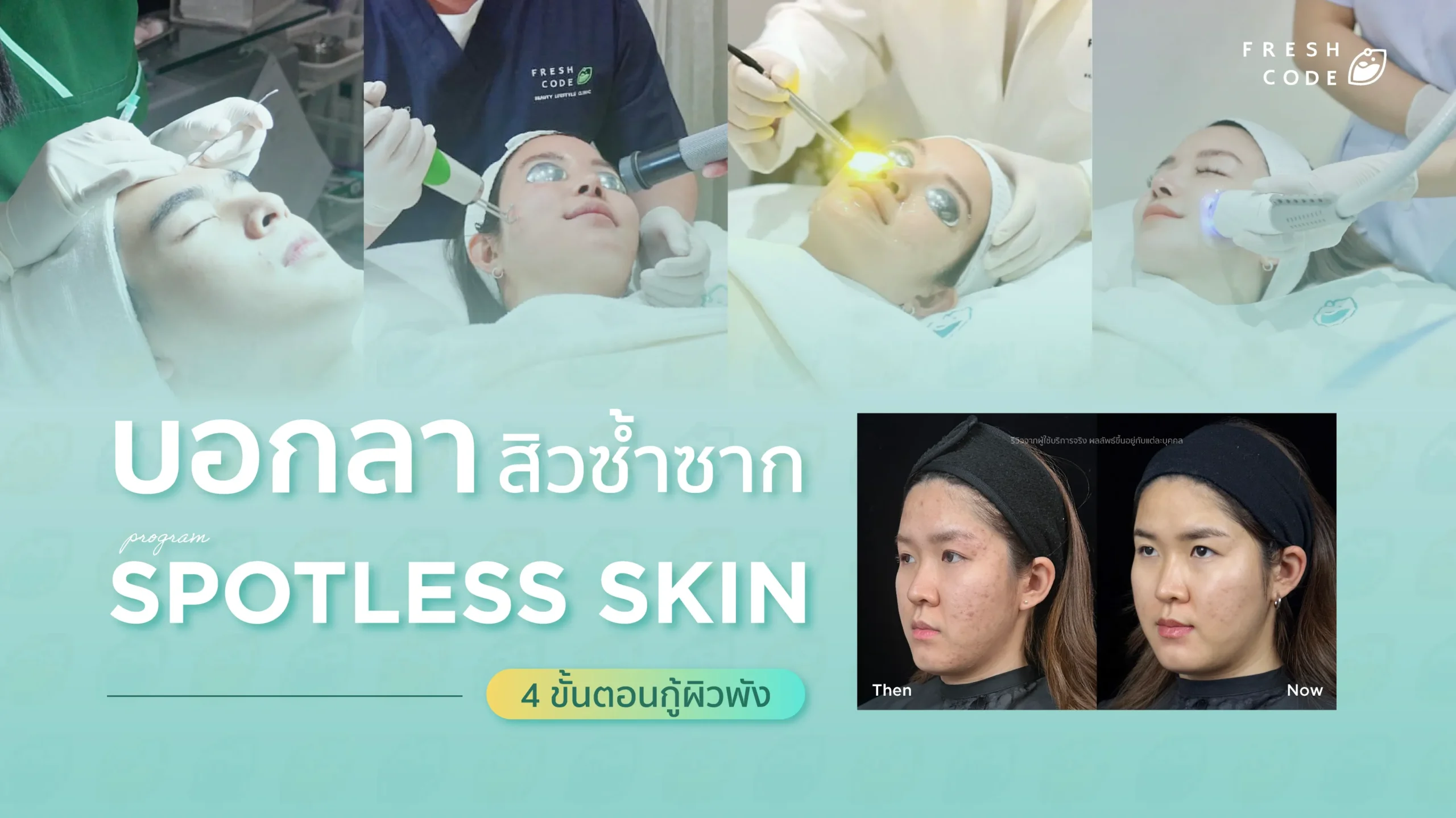
Say goodbye to recurring acne. Discover 4 steps to revive your skin with the Spotless Skin program.
Acne appears and then clears up, but soon returns. Some pimples subside but leave dark or red marks, leaving the skin feeling unresolved. This is a common problem doctors see, especially in people with clogged pores, inflamed acne, and acne scars all at once.
The important thing is... acne and Acne scars Not all problems are the same, even if they occur in the same area. Clogged pores, inflamed acne, redness, and dark spots have different mechanisms. Therefore, using a single method to manage all problems may not be comprehensive.
This article will help you understand why acne tends to recur, the difference between dark spots and red marks, and why addressing specific skin problems is important, before introducing the four steps of the Spotless Skin program at Fresh Code Clinic.
list of contents
- Why do pimples keep recurring and leaving scars on the skin?
- What is an acne scar reduction program?
- A deep dive into 4 steps to repair damaged skin in the Spotless Skin program.
- Why is integrated care important?
- Who should take the Spotless Skin program?
- Preparation before starting the Spotless Skin program.
- How should I care for my skin after the procedure?
- Why should you choose Fresh Code Clinic for your skincare?
- FAQ (Frequently Asked Questions)
- summarize
Why do pimples keep recurring and leaving scars on the skin?
Recurring acne doesn't always mean your skin isn't clean, because acne is related to many factors, including clogged pores, oil production, dead skin cells, inflammation, acne-causing bacteria, as well as hormones and certain lifestyle habits. Some people tend to get acne repeatedly in the same areas, such as the chin, jawline, cheeks, or forehead. When blockages and inflammation continue, old and new pimples, as well as acne scars, may appear on the skin all at once. Another common misconception among patients is that red and dark acne marks are the same type of scar, when in reality they are different.
1. Redness from acne. Post-inflammatory erythema (PIE) is a red or purplish-pink mark left by acne after the inflammation has subsided. These types of marks are more related to inflammation and vascular changes in the skin than to pigmentation alone. Therefore, people with primarily redness may need a different care approach than those with dark spots.
2. Dark spots from acne. Acne scars, or Post-inflammatory Hyperpigmentation (PIH), are caused by inflammation stimulating the melanin production process, leaving brown, gray, or dark brown spots on the skin after acne has subsided. Dark spots may become more visible in people who pick or squeeze pimples, have severe inflammation, or are exposed to sunlight without proper protection.
Therefore, if your face has acne, redness, and dark spots, a single treatment method may not be sufficient for all of them. Therefore, the goal should begin by identifying the main problem right now: “"Acne that is still present"” or “"The marks left behind after acne has cleared up."”
What is an acne and acne scar reduction program?
The acne and acne scar reduction program is one of Fresh Code Clinic's skincare approaches designed for people with multiple acne and acne scar problems. The program's concept is not to view every problem as a separate issue. “"acne"” They are all similar, but each area is treated separately, from existing clogged pores or inflamed acne to dark spots, redness, and post-treatment skin condition.
The program therefore integrates several steps, including appropriate acne management, the use of Discovery Pico for pigmentation issues, the use of Dual Yellow Plus+ for certain types of redness, and post-treatment skin care with Vitacool.
However, the program does not mean that everyone will have every type of problem or that everyone will respond to treatment in the same way. Before starting treatment, it is important to assess what type of acne is present, how much inflammation there is, and whether the remaining scars are mainly red or dark marks.
A deep dive into 4 steps to repair damaged skin in the Spotless Skin program.
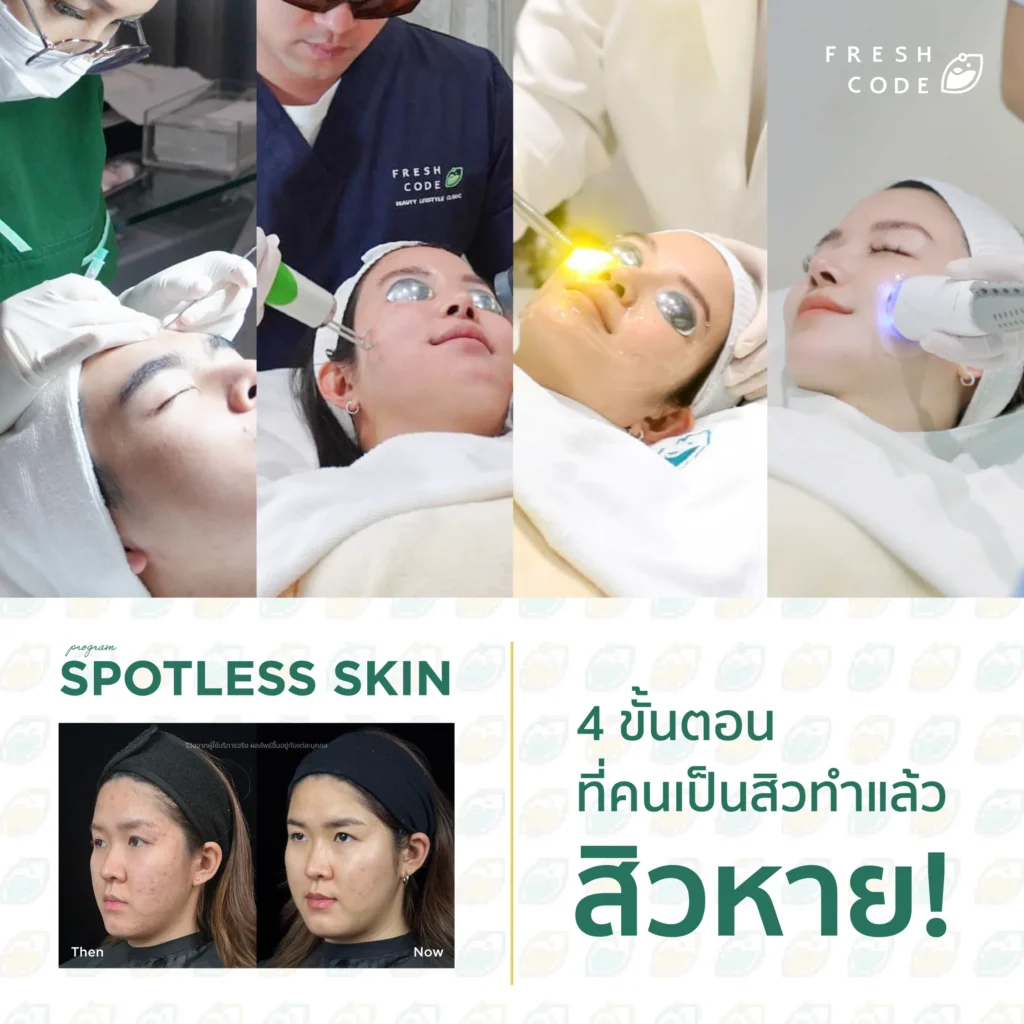
The concept of the 4 steps in the Spotless Skin program is to address individual skin problems that often occur continuously, from acne itself to acne scars.
Step 1: Clear, squeeze, and inject acne all over the face.
The first step is to assess any existing acne on the skin, particularly comedones and certain types of inflammatory acne. Some types of comedones may be extracted using appropriate methods, while for other types of inflammatory acne, the doctor may consider additional treatment depending on the nature of the acne. It is important not to extract or inject all types of acne in the same way, as each type of acne requires different treatment. For people with a large number of inflammatory acne breakouts or those who continuously experience new acne breakouts, identifying the cause and controlling new acne is also crucial; the focus shouldn't be solely on removing visible acne.
Step 2: Discovery Pico treats dark spots and uneven skin tone.
When acne subsides, some people are left with dark marks on their skin, which are a characteristic of post-inflammatory hyperpigmentation. The choice of product... Discovery Pico This is a type of picosecond laser that can be used to treat certain types of pigmentation problems. The doctor will assess the characteristics and depth of the marks before choosing a treatment approach. For people with acne scars, scattered dark spots, or uneven skin tone, pigmentation treatment may help to gradually fade the overall appearance of the marks. However, it shouldn't be assumed that the laser will eliminate all marks immediately, as the results depend on the depth of the pigment, the original skin color, any existing inflammation, and post-treatment sun protection.
Step 3: Dual Yellow Plus+ treats redness from acne.
Redness and dark spots after acne are caused by different factors, so it's important to differentiate them before choosing a treatment method. Dual Yellow Plus+ This is one of the machines Fresh Code Clinic uses to treat post-acne redness, especially in people whose acne has subsided but still have lingering red marks. Some people feel that even after laser treatment, the acne scars haven't completely disappeared because the remaining marks aren't just dark spots from pigmentation, but also red marks from blood vessels and inflammation. Before treatment, the doctor will assess whether the marks are red, dark, or a combination of both, in order to select the appropriate machine and treatment plan to best address the problem.
Step 4: Vitacool soothes and hydrates the skin.
After treating acne or undergoing skin procedures, another important aspect that doctors emphasize is... Skin Barrier Because your skin may be drier, tighter, or more sensitive to irritation than usual after the treatment. Vitacool Therefore, it is used as a post-treatment skincare step to help soothe and hydrate the skin, making it feel more comfortable during periods when the skin still needs extra care. This step does not directly treat the cause of acne, but it helps maintain the overall skin condition after treatment, allowing the skin to retain moisture and recover better in conjunction with the main treatment.
Why is integrated care important?
People who experience recurring acne often don't just have one problem. At times, they may have clogged pores, inflamed acne, redness, and dark marks from past acne all at once. Therefore, when treating skin, doctors don't just focus on the current breakouts, but also look for the type of scarring left behind and identify any other immediate skin issues that need addressing first. If you only focus on treating acne scars but new acne continues to appear, there's a chance of developing new scars as well.
Conversely, if you only treat inflamed acne but neglect the remaining redness or dark spots, the overall skin may still appear uneven and have an inconsistent skin tone, even after the acne improves. Therefore, a comprehensive approach to skincare doesn't mean doing as many treatments as possible at once, but rather choosing the right methods for each problem and prioritizing treatments based on individual skin conditions.
Who should consider the Spotless Skin program?
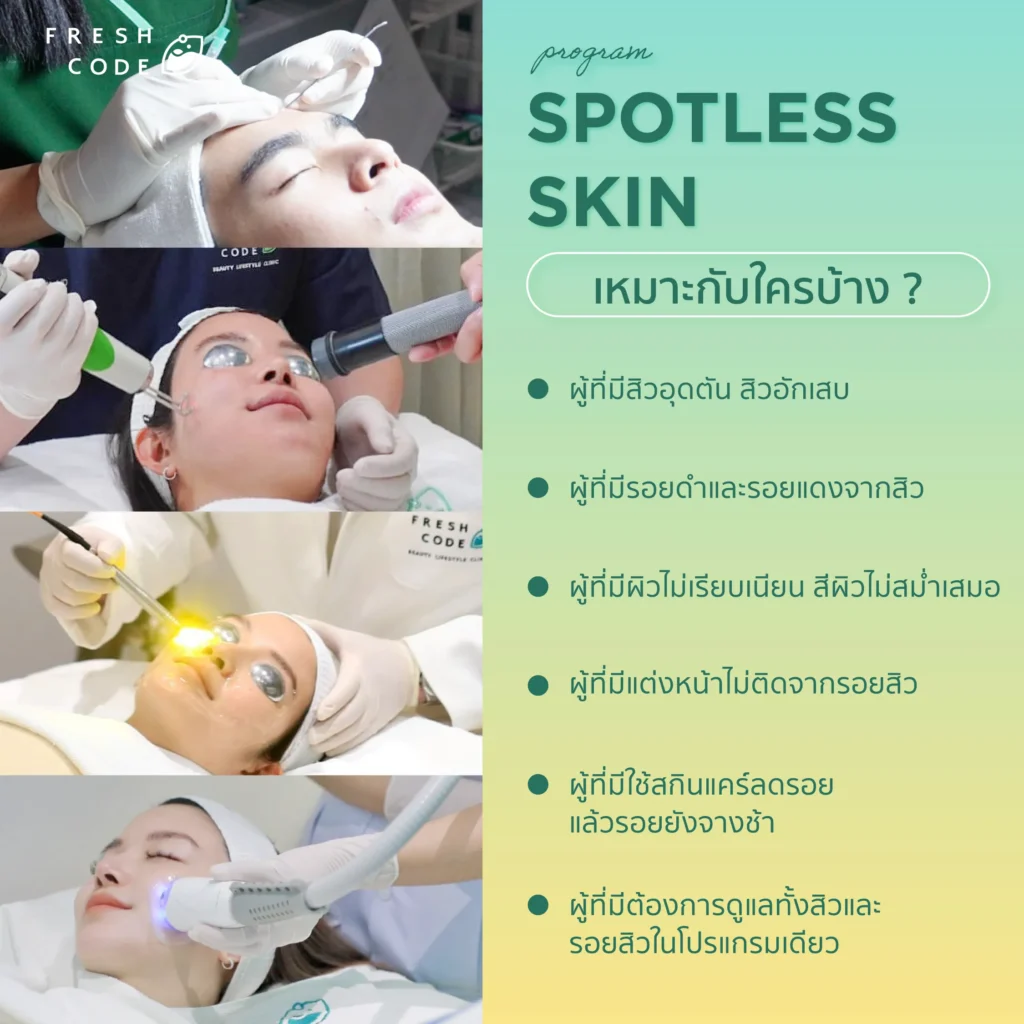
This program is suitable for individuals with multiple types of acne and acne scars, such as those experiencing recurring breakouts of clogged pores or inflammatory acne, and who remain with both red and dark marks after the acne subsides. Some people may have reduced their acne but still feel their skin is uneven, has an irregular skin tone, or has accumulated acne scars in several areas. For these cases, the doctor will assess both the existing acne and the remaining scars to develop a treatment plan tailored to their specific needs.
For individuals with severe, deep-seated acne, scarring, or other co-existing skin problems, the doctor will first assess which issue should be addressed first. Then, the Spotless Skin program will be incorporated into the treatment plan as appropriate. Because everyone's skin and acne characteristics are different, treatment should be tailored to the specific problems found, rather than using the same method for everyone.
Preparation before starting the Spotless Skin program.
Before any procedure, you should inform your doctor about any medications or products you are currently using on your skin, including any recent procedures or laser treatments, especially acne medications, topical acne treatments, and any history of drug allergies. This will allow the doctor to assess your skin condition before starting the procedure.
If your skin is red, sore, peeling, irritated, or recently sunburned, inform your doctor beforehand. You may need to adjust your skincare routine or wait for your skin to heal. Before the procedure, avoid picking, squeezing, or pressing on pimples yourself, as this may cause further inflammation and irritation.
For skincare products containing AHA, BHA, Retinoids, or ingredients that may easily irritate the skin, it's recommended to inform your doctor about the products you are currently using to determine if you should discontinue or adjust your routine, as everyone's skin condition and treatment are different.
How should I care for my skin after the procedure?
After treatment, focus on gentle skin care, especially during periods of redness or sensitivity. Choose cleansers and moisturizers that won't sting or irritate. Avoid scrubbing, rubbing, picking at pimples, or scabbing. Sun protection is crucial, particularly for those with post-acne hyperpigmentation, as sun exposure can cause pigmentation to darken or slow down the fading process.
Regarding resuming the use of skincare products such as AHA, BHA, Retinoids, or acne treatments that are irritating, you should consider your skin condition after the treatment and the instructions given on the day of treatment. Do not rush back to using them immediately simply because the redness has subsided.
Why should you choose Fresh Code Clinic for your skincare?
at Fresh Code Clinic Before starting treatment, the doctor will assess the type of acne present and the type of scarring left behind – whether it's red marks, dark spots, or a combination of both. Each problem requires a different treatment approach. Even if many patients present with the same problem – "I want to treat acne and acne scars" – their actual skin condition may differ. One person might still have persistent clogged pores and inflamed acne, while another might have almost no new acne but still have many red or dark spots. The doctor will therefore choose the appropriate course of treatment based on the current situation, determining whether to prioritize acne treatment or also address the acne scars, and adjust the treatment to suit each individual's skin condition. Spotless Skin program What are the steps involved, and which step addresses which issue? You can consult our medical team for advice. Fresh Code Clinic
FAQ (Frequently Asked Questions)
Q: Why do pimples keep appearing in the same spot?
Recurring acne in the same area can be caused by many factors, including clogged pores, excess oil, inflammation, hormones, skincare products used, or certain behaviors such as touching the face and picking at pimples. Therefore, when acne recurs, doctors will consider multiple factors together, not just that it's due to poor skin cleansing.
Q: Are red marks and dark marks from acne treated the same way?
These two types of marks are formed differently. Redness It often occurs after acne breakouts and is related to blood vessels in the skin. dark spots It's caused by increased pigmentation after inflammation. Therefore, before treatment, the doctor will examine the lesion to determine if it's red, dark, or a combination of both, and then choose the appropriate treatment method.
Q: Does Spotless Skin focus on treating acne or acne scars?
Spotless Skin is designed to address existing acne, redness, dark spots, and overall skin condition. However, the treatment approach may vary from person to person. If you have a severe acne breakout, the doctor may focus on acne treatment first. For those whose acne has subsided but are primarily affected by scarring, the treatment can focus more on scar care.
Q: If I still have acne, can I treat acne scars at the same time?
In some cases, acne and acne scars can be treated simultaneously, but the doctor will assess the severity of existing inflammation and whether the skin is ready for the procedure. It's crucial to control new acne breakouts as well, because continued inflammation increases the risk of new scarring.
Q: Will one treatment completely remove redness and dark spots?
The results vary from person to person, depending on the type of scar, its intensity, duration, and initial skin condition. Some scars may begin to fade after treatment, while older scars or those with multiple underlying problems may require continued care. The doctor will assess your skin and monitor changes after treatment.
Q: Can I wear makeup after the procedure?
Depending on the procedure and the skin condition after treatment, if the skin is still red, stinging, or irritated, the doctor will recommend gentle skin care first. Regarding the return to makeup, this will depend on the individual's skin condition and post-treatment instructions.
Acne and acne scars often occur together, but during treatment, the doctor will first assess whether the main problem is the active acne or the scars left after the acne has subsided, because clogged pores, inflamed acne, redness, and dark spots require different treatment approaches.
At Fresh Code Clinic, the Spotless Skin program tailors treatment to each individual's specific problems, from persistent acne to post-acne redness and dark spots. For dark spots, the doctor may use Discovery Pico to treat pigmentation, while for redness, Dual Yellow Plus+ can be used to treat vascular-related marks. After treatment, Vitacool soothes and hydrates the skin. The key is not to follow the same procedure for everyone, but to assess the individual skin problems at that moment and choose the most suitable method for each person.
If you're still unsure whether your face is suitable for the procedure, the doctors and medical team at Fresh Code Clinic are happy to assist you. Always analyze the facial structure on a case-by-case basis first, because choosing the right procedure depends on...What exactly are everyone's main problems?
💚Add LINE @freshcodeclinic
📍19 Sukhumvit Soi 5, BTS Nana Exit 1 (Parking available)
📞083-626-4264
🕝Open daily 11:00 AM – 08:00 PM