Fresh Code Clinic
Decode Your Freshness
Unlock the secrets to all your skin problems, with expert advice from doctors to help you better understand your skin.
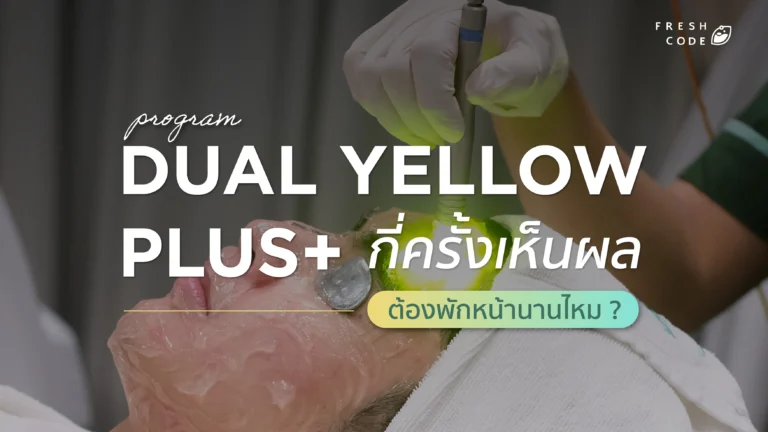
How many sessions of Dual Yellow to reduce acne redness and see results is a question that cannot be answered with a fixed number, because Dual Yellow Plus+ is a dual-wavelength laser that Fresh Code Clinic uses to treat acne redness that remains after acne has subsided. The number of sessions and downtime depends on the intensity of the redness, skin condition, and post-treatment care. The clinic's service page itself does not specify the number of sessions. This article explains what acne redness is, what this machine helps with according to the clinic's specifications compared to the evidence found, including melasma, dark spots, and skin brightening, how many sessions are needed, whether downtime is required, and how to care for the skin. This is general knowledge, not a diagnosis. Key Takeaways Post-Acne Redness (PIE) is redness that remains after inflammation, different from dark spots (PIH) caused by pigmentation, so the type of redness must be differentiated before choosing a treatment method[2][3]. According to the clinic, Dual Yellow Plus+ emits two wavelengths of light: yellow light 578 nm for redness and blood vessel problems and green light 511 nm for pigmentation problems. However, the clinic's service page concludes that there is no research found on this type of machine directly for post-acne redness[1]. There is no fixed number of sessions for everyone. The clinic's service page does not specify the number of sessions or the downtime…

Where is the best place to get Ultraformer MPT? The answer is not just one clinic name, but rather choosing a doctor and clinic whose identity can be verified, who assesses the facial structure on a case-by-case basis, and who explains the limitations of the machine directly, because Ultraformer MPT is a HIFU machine that delivers energy under the skin. This article explains how to verify the name of the doctor and clinic, questions to ask before making a decision, the location of Fresh Code Clinic, the principles of the machine, comparisons with other machines, and the expected results from research. This is general knowledge, not a diagnosis. Key Takeaways: Ultraformer MPT is a HIFU / Focused Ultrasound machine from CLASSYS. The manufacturer specifies 4 energy delivery modes: Dot, MP mode, Linear and Circular, and depths of 1.5, 2.0, 3.0, 4.5 mm[2]. When choosing a clinic, start by verifying that the doctor is a registered doctor, the clinic has a license to display, the doctor who assesses is the one performing the procedure, and explains the number of times…

Oligio X is a non-surgical skin tightening device that uses monopolar RF radio waves, an improved version of the original Oligio. The key change is the GXG Dual Mode system, which delivers energy in the sequence of G, X, and G, along with an enhanced cooling system for greater comfort. This article explains what Oligio X is, how it differs from its predecessor, how it compares to Ulthera Prime and Xtherma, which programs it can be combined with, and what you should know before treatment. This is general knowledge, not a diagnosis. Key Takeaways: Oligio X is a monopolar RF skin tightening device with a frequency of 6.78 MHz and a maximum power of 400W. It uses heat to stimulate the contraction of existing collagen and the creation of new collagen without surgery. The key difference from the previous model is the GXG Dual Mode, which delivers energy in the sequence of G Mode,…

Is XTherma painful? The answer is no, it's not a completely painless procedure. Because it's a monopolar RF skin tightening device that heats beneath the skin, patients may feel alternating coolness and warmth, or deep heat. The sensation varies depending on the individual and the area being treated. This article describes the sensations during the procedure, anesthesia, comparisons to Thermage FLX, before and after images, limitations, and who might not be suitable for the treatment. This is general knowledge, not a diagnosis. Key Takeaways: XTherma is not a completely painless procedure because it uses monopolar RF to heat beneath the skin. Patients may feel alternating coolness and warmth, pulsating heat, or deep heat beneath the skin. The sensation varies depending on pain sensitivity, location, tissue thickness, and energy level. The cooling system helps manage skin temperature and comfort, but it doesn't eliminate pain. Regarding anesthesia, the doctor will assess each individual. Do not use excessive amounts of numbing cream yourself, and do not tolerate any unusual heat or pain. Inform your doctor immediately during the procedure. There is no research directly testing XTherma. Information regarding pain and results comes from other RF devices such as Thermage and…

Ulthera Prime vs. Oligio X are two non-surgical skin tightening devices that many people think are interchangeable. However, Ulthera Prime uses focused ultrasound (MFU-V) to deliver energy at selectable depths, while Oligio X uses monopolar RF to distribute heat throughout the tissue. This article compares the technologies, the importance of the SMAS layer, sensation during treatment, time to see results, who it's suitable for, and whether they can be used together. This is general knowledge, not a diagnosis. Key Takeaways: Ulthera Prime uses focused MFU-V ultrasound to deliver energy at selectable depths of 1.5, 3.0, and 4.5 mm, while Oligio X uses Monopolar RF 6.78 MHz to distribute heat throughout the tissue in a G, X, G sequence. The difference lies in the energy delivery method; it doesn't mean one device is better in every case. SMAS…

What is acne? Acne is a condition where pores become clogged with oil and dead skin cells, and may become inflamed, resulting in red bumps, pustules, or deep nodules. It can be found on the face, chest, and back. This article explains the causes, types of acne, treatment approaches, ways to reduce recurrence, and Fresh Code Clinic's Spotless Skin program. This is general knowledge, not a diagnosis. Key Takeaways: Acne occurs when pores become clogged with oil and dead skin cells and may become inflamed when bacteria, hormones (such as during adolescence and menstruation), and certain medications are involved. Stress can also worsen existing acne. Acne is divided into non-inflammatory (blackheads, whiteheads) and inflammatory (red bumps, pustules, nodules, cysts) groups. It's important to differentiate the type before choosing a treatment method. Deep, painful, or scarring acne should be treated by a doctor. Mild acne often starts with topical products recommended by a pharmacist and should be used consistently for about 6-8 weeks before evaluating results. Severe inflammatory acne or acne that doesn't respond to treatment may require prescription medication. Isotretinoin should only be used under a doctor's supervision. Reduce recurrence by gently washing your face no more than twice a day, choosing non-comedogenic products, and avoiding picking or squeezing acne.
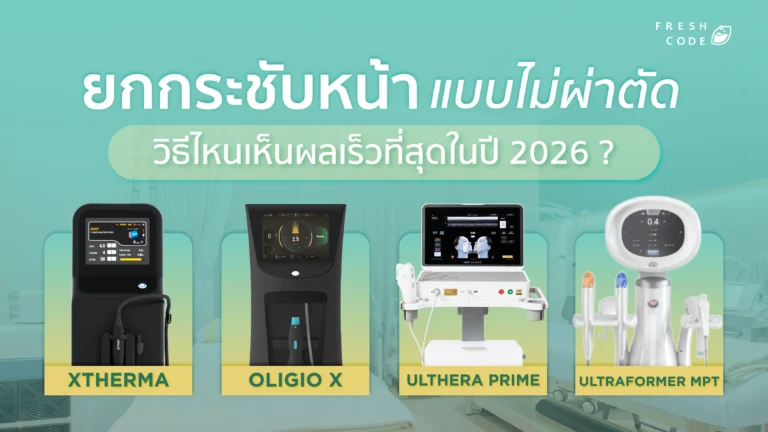
Non-surgical facelifts use energy, such as radio frequency (RF) waves or ultrasound, to heat the skin and stimulate collagen production without incisions. This article compares XTherma, Oligio X, Ulthera Prime, and Ultraformer MPT, explaining the differences from surgical facelifts and providing pre- and post-treatment care instructions. This is general knowledge and not a diagnosis. Key Takeaways: There is a lack of direct comparative research on these four devices, so it's impossible to say which one shows results fastest. The collagen stimulation effect is continuous; clinic and manufacturer data suggest follow-up results at approximately 1 month, 2-3 months, and a maximum of 3-6 months. XTherma and Oligio X use monopolar RF at a frequency of 6.78 MHz, while Ulthera Prime uses focused ultrasound with real-time imaging at depths of 1.5, 3.0, and 4.5 mm…
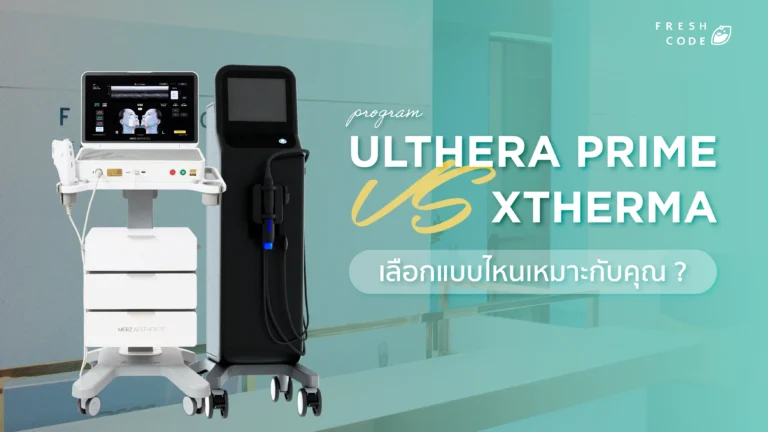
Ulthera Prime vs. Xtherma differ in energy type and depth: Ulthera Prime uses focused ultrasound with real-time imaging, while Xtherma uses monopolar RF radio waves to heat the skin. This article compares the mechanism, advantages, skin problems each machine is typically considered for, follow-up time, and combination treatments, based on information from Fresh Code Clinic and referenced research. This is general knowledge, not a diagnosis. Key Takeaways: Ulthera Prime uses focused ultrasound (MFU-V) to deliver energy at depths of 1.5, 3.0, and 4.5 mm with real-time imaging. Xtherma uses monopolar RF at a frequency of 6.78 MHz with a maximum power of 400W and a cooling system. There is no single best machine for everyone, and there is no direct comparative study of these two machines. Clinic service pages indicate similar follow-up times for both machines…

Can I get Botox and then Ulthera? And how long should I wait between treatments? This is a common question from people with both wrinkles from muscle movement and sagging facial contours. This article summarizes available research on Ulthera Prime after Botox and in combination with fillers, including the order in which treatments are performed, with supporting evidence, as well as information lacking numerical confirmation. This is general knowledge, not a diagnosis. Key Takeaways: Botox and Ulthera can be done together as part of the same plan, but they shouldn't be done consecutively. A randomized trial by Ramathibodi Hospital (15 people, published in 2025) found that an MFU-V 1.5 mm head administered immediately, on day 7, or on day 14 after Botox injection in the forehead reduced the effect of Botox, and researchers recommended a minimum 14-day wait. With HA fillers, a pilot study of 14 people (injected in the abdomen, not the face) found that HA decreased with MFU 1.5 mm at 60 minutes and 14 days after injection. ... (The text cuts off here, likely referring to a separate study on HA fillers).

Is it possible to treat clogged pores and inflammatory acne without medication? This is a question many people ask when they want to start managing their acne but aren't ready for medication. This article explains the difference between clogged pores and inflammatory acne, provides evidence from the NHS and the American Academy of Dermatology (AAD) on the extent to which acne can be managed without medication, and includes evidence on laser and light therapy for acne, as well as the Fresh Code Clinic's Acne Program. This information is general knowledge and not a diagnosis. Key Takeaways: "Not taking medication" doesn't mean not using medication at all. The 2024 AAD guidelines prioritize topical medications such as benzoyl peroxide and retinoids, with oral medications used in some cases, especially if the acne is severe, painful, deep, or starting to leave scars…

Does Dual Yellow laser really reduce acne redness? This is a question for those whose acne has subsided but whose skin remains red and uneven. This article explains the difference between red and dark marks, the principles of 578 and 511 nm light according to clinic information, how to interpret before-and-after clinic photos, available evidence on how effective yellow laser is for acne and redness, who is suitable for consultation, and post-treatment skin care. This is general knowledge, not a diagnosis. Key Takeaways: Post-inflammatory erythema (PIE) differs from PIH (pigmented skin) marks. JCAD studies indicate that both tend to fade over time, while scarring remains. AAD states that dark spots a few shades darker than the skin usually fade in about 6-12 months. Dual Yellow is a dual-wavelength laser: 578 nm yellow light for red lesions from bleeding and 511 nm green light for pigmented lesions. The US FDA has given clearance to model D10B…

What is HydraFacial at Fresh Code Clinic, and how does Bubble Treat differ from regular facials? These are questions many people seeking minimally invasive skincare often ask. This article explains HydraFacial based on information from Medical News Today and Healthline, the nine steps of Bubble Treat as described by the clinic, the available evidence, who is suitable for the treatment, and precautions. This is general knowledge, not a diagnosis. Key Takeaways: HydraFacial, or hydradermabrasion, is a treatment that combines exfoliation, suction, and serum application in one go. Medical News Today and Healthline both describe it as a non-invasive procedure. Common side effects include redness, burning, or itching. Bubble Treat is Fresh Code Clinic's system, which the clinic explains enhances the HydraFacial concept…