Fresh Code Clinic
Decode Your Freshness
Unlock the secrets to all your skin problems, with expert advice from doctors to help you better understand your skin.

How is HydraFacial similar to or different from Bubble Treat? This is a question often wondered by those interested in skincare before choosing a treatment program. This article compares the two approaches based on information from Fresh Code Clinic, Medical News Today, and Healthline, highlighting similarities, differences, and important information about the evidence. This is general knowledge, not a diagnosis. Key Takeaways: Similarities: As explained by Medical News Today, Healthline, and the clinic, both approaches focus on cleansing pores, exfoliating, hydrating, and require no downtime. Differences: The clinic explains that HydraFacial is a skincare concept, while Bubble Treat is a clinic-based system that adds steps such as plasma, bipolar RF, and ultrasound. Evidence: Medical News Today states that there are no studies comparing HydraFacial to other procedures, and no independent sources studying Bubble Treat were found…

XTherma combined with Ulthera Prime is a skin tightening plan that uses Monopolar RF to address skin firmness combined with focused ultrasound to deliver energy deep into the SMAS layer. Doctors may recommend this in cases where problems occur at multiple levels simultaneously. This article explains the rationale based on information from Fresh Code Clinic and medical reviews, including the limitations of the evidence. This is general knowledge, not a diagnosis. Key Takeaways: The face has multiple layers. The clinic explains that the superficial layer concerns skin quality, the middle layer concerns collagen, and the deep layer is the supporting structure, such as the SMAS layer. Therefore, problems can occur at multiple levels simultaneously. XTherma is a Monopolar RF that focuses on firmness and skin quality, while Ulthera Prime is a focused ultrasound that delivers energy to specific points deep into the SMAS layer. Reviews indicate that RF stimulates the superficial to middle layers, while focused ultrasound primarily works on the deep layers. Combining these treatments doesn't necessarily mean they must be done on the same day. Doctors may schedule them sequentially, separate times, or select specific areas. Reviews also advise caution when performing multiple procedures on the same day. Doctors interviewed by Dermatology Times believe that combining the technologies is likely to yield the best results, but no studies found combining XTherma with…
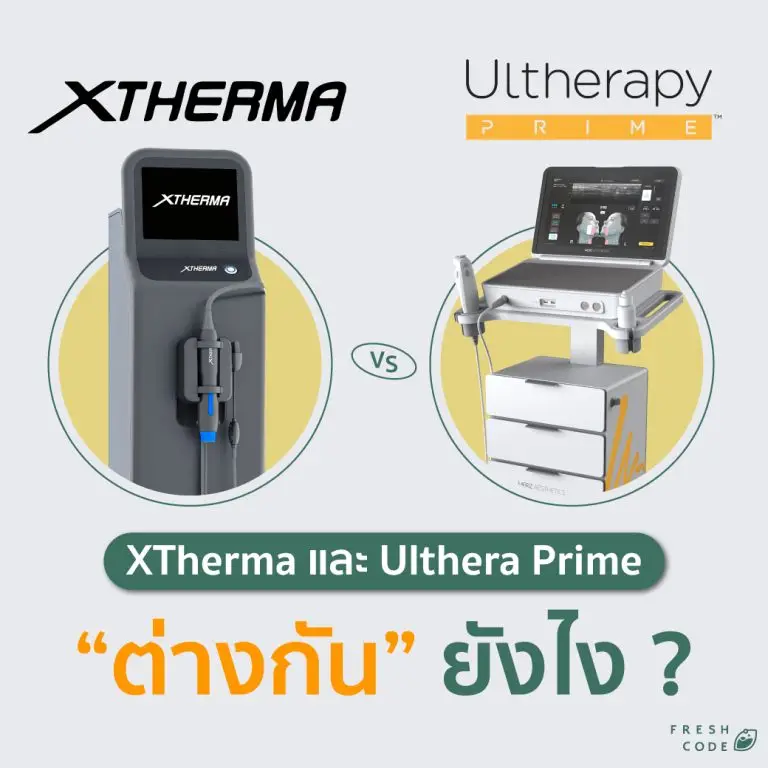
XTherma differs from Ulthera Prime in that they use different types of energy. XTherma uses Monopolar RF, which provides diffused heat, while Ulthera Prime uses focused ultrasound to deliver energy in targeted, deep-level pulses. This article compares the mechanism, sensation during treatment, commonly considered results, and who is right for whom, based on information from Fresh Code Clinic and medical reviews. This is general knowledge, not a diagnosis. Key Takeaways: XTherma uses Monopolar RF for diffused heat to stimulate collagen production; clinics describe it as focusing on firmer, smoother, and more natural-looking skin. Ulthera Prime uses focused ultrasound (HIFU) to deliver energy in targeted, deep-level pulses, focusing on structural lifting. Reviews indicate that RF stimulates the superficial to mid-dermis layers, while focused ultrasound works on deeper layers. Both use heat to stimulate collagen restructuring; they do not replace surgery. The sensation during treatment differs according to clinic descriptions. XTherma typically feels like a continuous deep warmth and has a cooling system, while Ulthera…

Botox resistance refers to a condition where the effects of Botox are diminished or shorter-lasting. This can be caused by immune response, frequent or high injection doses, technique and assessment, or changes in expectations. This article explains the causes and answers the question of whether switching brands can actually help, based on information from Fresh Code Clinic, medical reviews, and the Mayo Clinic. This is general knowledge, not a diagnosis. Key Takeaways: Botox resistance doesn't mean Botox is ineffective; it means the effects are weaker or shorter-lasting. Not everyone who experiences no results has true resistance. The clinic identifies five causes: immune response, too frequent injections, muscle overuse, technique and assessment, and changes in expectations. Reviews confirm the factors of interval and dose but find no independent sources for increased muscle strength and expectations. Immune response in cosmetic procedures is rare; one review estimated it at around 0.2–0.41 TP3T, while another combining three products estimated around 1–2.11 TP3T, and diagnosis is difficult to confirm. Switching brands is only one option and doesn't help everyone. Reviews state that in cosmetic cases, changing products doesn't provide a short-term solution and requires long-term follow-up; therefore, a medical evaluation is necessary before making a decision. Table of Contents: Why do some people experience less results after Botox injections? And does switching brands really help? What is Botox resistance? Resistance...

Where should and shouldn't Botox be injected is a crucial question, as natural-looking results depend on the location, dosage, and individual muscle structure. This article explains commonly considered areas and areas to be cautious about, based on information from Fresh Code Clinic, Mayo Clinic, and medical reviews. This is general knowledge, not a diagnosis. Key Takeaways: Botox temporarily reduces muscle activity, making it suitable for wrinkles caused by muscle movement. It's not suitable for non-muscle problems such as sagging skin, structural furrows, dry skin, or volume loss. As explained by the clinic, commonly considered areas include the forehead, between the eyebrows, crow's feet, jawline, and in some cases, the neck or facial contour. However, the balance of surrounding muscles must be assessed at every location. Reviews indicate that eyebrow and eyelid drooping are related to location and dosage; evidence varies for each area. A Cochrane review of the jawline found no qualifying trials (searched up to 2013), while a review of the platysma found 15.41 TP3T adverse events, but none requiring further treatment. Unnatural-looking results are often due to assessment and dosage, not just the product itself. It's essential to have a doctor assess you, wait at least 3 months between injections, and choose a clinic that explains the rationale for the injection location. Table of Contents: Know Before You Get Injected…

Frequently asked questions about Botox before deciding to get injections include: Is it painful? Is there a downtime? How many days until I see results? How long does it last? And will my face feel tight? This article answers these five questions based on information from Fresh Code Clinic, Mayo Clinic, and Cleveland Clinic. This is general knowledge, not a diagnosis. Key Takeaways: Botox is a substance that temporarily reduces muscle activity in the injected area. It is used to reduce wrinkles caused by facial expressions. It is not a permanent treatment, and clinics explain that it does not change facial structure. Medical sources indicate that most people experience only mild discomfort and can return to activities immediately, but should avoid rubbing or massaging the injection area and heavy exertion for the period recommended by their doctor. Results are usually visible in about 1-7 days (varies depending on the source), full effect within 1-2 weeks, and last about 3-6 months. Repeat injections should be spaced at least 3 months apart. The natural look depends on the doctor's assessment, dosage, and technique. Pregnant women, breastfeeding women, those with neuromuscular disorders, ptosis (drooping eyelids), or those taking blood thinners should consult a doctor beforehand. Table of Contents…

เลือกคลินิกทำหัตถการ ควรดูอะไรบ้าง? บทความนี้สรุปเช็กลิสต์ 10 ข้อ ตั้งแต่แพทย์ผู้ประเมิน ความสะอาด การอธิบายขั้นตอน รีวิว ราคา ไปจนถึงการดูแลระยะยาว ตามข้อมูลของ Fresh Code Clinic, AAD, ASDS และรายงานข่าวด้านสุขภาพ เป็นความรู้ทั่วไป ไม่ใช่การวินิจฉัย Key Takeaways หัตถการเดียวกันอาจให้ผลต่างกันได้ ขึ้นกับการประเมิน การดูแล และมาตรฐานของคลินิกตามที่คลินิกอธิบาย และ AAD ระบุว่าผลลัพธ์ขึ้นกับทักษะของผู้ทำอย่างมาก ก่อนรับบริการ ควรตรวจสอบอย่างน้อย 2 อย่าง คือผู้ทำเป็นแพทย์ที่มีใบอนุญาตจริงหรือไม่ และสถานที่เป็นสถานพยาบาลที่ได้รับอนุญาตตามกฎหมายหรือไม่ คลินิกที่น่าเชื่อถือควรอธิบายข้อดี ข้อจำกัด ความเสี่ยง และทางเลือก ไม่รับประกันผลเกินจริง และไม่เร่งให้ซื้อแพ็กเกจทันที ราคาไม่จำเป็นต้องถูกที่สุด ASDS เตือนว่าราคาต่ำผิดปกติอาจสะท้อนการฝึกอบรมที่ไม่เพียงพอ ส่วนรีวิวควรอ่านเป็นประสบการณ์การดูแล ไม่ใช่โฆษณา สารบัญ เช็กลิสต์สำคัญก่อนตัดสินใจ เพื่อความปลอดภัยและผลลัพธ์ที่เหมาะกับคุณจริง ๆ ทำไมการเลือกคลินิกถึงสำคัญกว่าที่คิด? ด้านแพทย์และการประเมิน: ใครเป็นคนดูแล และไม่ขายเกินจำเป็นหรือไม่ ด้านสถานที่และการดูแล:…

ทำหัตถการอะไรดี เป็นคำถามที่ตอบได้ดีขึ้นเมื่อเปลี่ยนเป็น “อะไรเหมาะกับเรา” โดยพิจารณาจากปัญหาผิวจริง ผลลัพธ์ที่ต้องการ และไลฟ์สไตล์ บทความนี้ไล่เลือกตามช่วงอายุ ปัญหาผิว และไลฟ์สไตล์ ตามข้อมูลของ Fresh Code Clinic, Mayo Clinic และงานทบทวนทางการแพทย์ เป็นความรู้ทั่วไป ไม่ใช่การวินิจฉัย Key Takeaways การเลือกหัตถการควรเริ่มจากคำถามว่า “เหมาะกับตัวเอง” ไม่ใช่ “อะไรดี” โดยดูปัญหาผิวจริง ผลลัพธ์ที่ต้องการ และไลฟ์สไตล์ เพราะหัตถการเดียวกันอาจได้ผลต่างกันในแต่ละคน ช่วงอายุเป็นเพียงแนวทางคร่าว ๆ ของคลินิก Mayo Clinic ระบุว่าผิวเปลี่ยนตามอายุ แสงแดด การแสดงสีหน้า การสูบบุหรี่ และพันธุกรรม ปัญหาผิวจริงจึงสำคัญกว่าตัวเลขอายุ แต่ละปัญหาผิวมีแนวทางต่างกัน เช่น ริ้วรอยจากการแสดงสีหน้า (Botox) ร่องลึกหรือสูญเสียปริมาตร (ฟิลเลอร์) ผิวหย่อน (หัตถการยกกระชับ) และผิวแห้งโทรม (skin booster) โดยหัตถการยกกระชับไม่ได้ออกแบบมาแทนการผ่าตัด ความไม่ตรงใจมักมาจากเลือกตามชื่อเครื่องหรือรีวิว คาดหวังเกินจริง หรือไม่ประเมินผิวก่อน การปรึกษาแพทย์ก่อนทำช่วยลดโอกาสนี้ได้…

XTherma ต่างจาก Oligio HIFU Ulthera ตรงชนิดพลังงานเป็นหลัก โดย XTherma และ Oligio ใช้ความร้อนจากคลื่นความถี่วิทยุ (RF) ส่วน HIFU และ Ulthera ใช้คลื่นอัลตราซาวด์โฟกัสเป็นจุด บทความนี้เปรียบเทียบกลไก ความรู้สึกขณะทำ และกลุ่มที่เหมาะ ตามข้อมูลของ Fresh Code Clinic และงานทบทวนทางการแพทย์ เป็นความรู้ทั่วไป ไม่ใช่การวินิจฉัย Key Takeaways XTherma และ Oligio อยู่ในกลุ่ม Monopolar RF ที่ใช้ความร้อนกระตุ้นคอลลาเจน ส่วน HIFU และ Ulthera อยู่ในกลุ่มอัลตราซาวด์ที่ส่งพลังงานเป็นจุดลึก งานทบทวนระบุว่าทั้ง RF และอัลตราซาวด์โฟกัสใช้กับความหย่อนคล้อยของใบหน้าและลำคอ แต่ไม่ได้มีไว้แทนการผ่าตัด ความรู้สึกขณะทำต่างกัน RF มักเป็นความอุ่นหรือร้อน (ในงานศึกษา Thermage ผู้ป่วยส่วนใหญ่ให้ระดับ “อุ่น”) ส่วนอัลตราซาวด์โฟกัสความเจ็บแปรผันตามบริเวณและตัวบุคคล ค่าเฉลี่ยในงานทบทวนอยู่ราว 2-4…

XTherma เหมาะกับใคร? ตามข้อมูลของคลินิก XTherma เป็น Monopolar RF ที่มักเหมาะกับผู้ที่ผิวหย่อนคล้อยเล็กน้อยถึงปานกลางและต้องการดูดีขึ้นแบบเป็นธรรมชาติ โดยพิจารณาจาก 3 ปัจจัย คือช่วงอายุ ปัญหาผิว และไลฟ์สไตล์ บทความนี้อธิบายแต่ละปัจจัยพร้อมข้อมูลจากงานทบทวนทางการแพทย์ เป็นความรู้ทั่วไป ไม่ใช่การวินิจฉัย Key Takeaways คลินิกอธิบายว่า XTherma มักเหมาะกับผู้ที่หย่อนคล้อยเล็กน้อยถึงปานกลางและไม่ต้องการผ่าตัด ซึ่งสอดคล้องกับแหล่งอิสระที่ระบุว่าอุปกรณ์ยกกระชับส่วนใหญ่เหมาะกับกลุ่มนี้ ส่วนผู้ที่ต้องแก้ด้วยการผ่าตัดไม่ใช่ผู้สมัครที่ดี ช่วงอายุ 25-30, 30-40 และ 40 ปีขึ้นไป เป็นกรอบคร่าว ๆ ของคลินิก ไม่ใช่เกณฑ์ตายตัว ไม่พบงานวิจัยที่ระบุว่า XTherma ได้ผลดีที่สุดในช่วงอายุใด แหล่งอิสระบอกเพียงว่าเซลล์ผลิตคอลลาเจนในผิวลดลงตามอายุ คลินิกระบุว่าไม่ต้องพักฟื้น แต่งานศึกษา RF รุ่นอื่นพบรอยแดงหรือบวมชั่วคราว และ RF มักต้องทำหลายครั้ง จึงควรเตรียมใจว่าเป็นโปรแกรมต่อเนื่อง ไม่ใช่ครั้งเดียวจบ ผู้ที่หย่อนคล้อยมาก คาดหวังผลถาวรแบบศัลยกรรม หรือมีอุปกรณ์อิเล็กทรอนิกส์ฝังในร่างกาย (เช่น เครื่องกระตุ้นหัวใจ) ควรให้แพทย์ประเมินก่อนเลือกหัตถการ สารบัญ XTherma…

XTherma อยู่ได้นานแค่ไหน? คลินิกระบุว่าโดยทั่วไปผลลัพธ์อยู่ได้ราว 6-12 เดือน ขึ้นกับอายุ สภาพผิวเดิม ไลฟ์สไตล์ การตั้งค่าพลังงานโดยแพทย์ และการดูแลหลังทำ บทความนี้แยกให้เห็นว่าส่วนไหนเป็นคำอธิบายของคลินิก ส่วนไหนมีข้อมูลจากงานวิจัยอิสระ และมีส่วนไหนที่ยังไม่มีหลักฐานรองรับ เป็นความรู้ทั่วไป ไม่ใช่การวินิจฉัย Key Takeaways คลินิกระบุว่า XTherma อยู่ได้โดยทั่วไปราว 6-12 เดือน ตัวเลขนี้เป็นการประมาณของคลินิก ไม่พบงานวิจัยอิสระที่ติดตามผลของ XTherma โดยตรง และผลต่างกันในแต่ละคน ผลไม่ถาวรเพราะผิวยังเปลี่ยนแปลงตามวัยต่อไป งานทบทวนอิสระพบว่าเซลล์ผลิตคอลลาเจนในผิวลดลงตามอายุ และการยกกระชับด้วย RF ไม่ได้แทนที่การผ่าตัด งานศึกษา Monopolar RF รุ่นอื่น (Oligio) ติดตามผลได้ 6 เดือนเท่านั้น จึงบอกไม่ได้ว่าผลคงอยู่นานกว่านั้นหรือไม่ และไม่พบงานที่พิสูจน์ว่าการดูแลหลังทำช่วยยืดอายุผลลัพธ์ รอบการทำซ้ำไม่มีตัวเลขตายตัว หน้าบริการของคลินิกระบุว่าแพทย์ดูจากผลหลังทำและการติดตามผลของแต่ละคน ผู้ที่มีอุปกรณ์อิเล็กทรอนิกส์ฝังในร่างกายควรแจ้งแพทย์ก่อนทำ สารบัญ XTherma อยู่ได้นานแค่ไหน? เริ่มจากเข้าใจว่าทำงานกับผิวยังไง XTherma อยู่ได้นานประมาณเท่าไร และทำไมไม่ถาวร XTherma เห็นผลตอนไหน? ทำไมบางคนบอกว่าดีขึ้นเรื่อย…

XTherma พักฟื้นนานไหม? คลินิกระบุว่าเป็นหัตถการไม่ผ่าตัด ไม่มีแผล และไม่มีระยะพักฟื้นแบบการผ่าตัด แต่ในช่วงแรกอาจมีรอยแดง ความอุ่น หรือบวมเล็กน้อยได้ บทความนี้อธิบายสิ่งที่เกิดขึ้นตอนทำครั้งแรก สิ่งที่อาจพบหลังทำ ข้อมูลจากงานศึกษา RF รุ่นอื่น และสิ่งที่ควรแจ้งแพทย์ก่อนทำ เป็นความรู้ทั่วไป ไม่ใช่การวินิจฉัย Key Takeaways คลินิกระบุว่า XTherma ไม่มีแผลและไม่มีระยะพักฟื้นแบบการผ่าตัด แต่หน้าบริการเดียวกันก็ระบุว่าบางคนอาจมีรอยแดง ความอุ่น บวมเล็กน้อย หรือไวต่อการสัมผัสในช่วงแรก จึงไม่ควรเข้าใจว่า “ไม่มีอะไรเกิดขึ้นเลย” งานศึกษา Monopolar RF รุ่นอื่นพบว่ารอยแดงหลังทำเป็นเรื่องพบได้ (Oligio พบ 25 จาก 30 คน หายใน 1-2 วัน) และงานย้อนหลังกว่า 600 ครั้งพบผลข้างเคียงชั่วคราวราว 2.7% ของการรักษา ไม่พบผลข้างเคียงถาวร แต่ไม่ใช่งานของ XTherma โดยตรง ผลลัพธ์ไม่เห็นเต็มที่ในวันที่ทำ คลินิกแนะนำให้ติดตามเป็นช่วงประมาณ 1 เดือนและ 2-3 เดือน…