



Fresh Code Clinic
Decode Your Freshness
Unlock the secrets to all your skin problems, with expert advice from doctors to help you better understand your skin.

Does squeezing pimples cause acne scars? The short answer is yes, squeezing or picking at pimples increases the chance of scarring. However, acne scars usually start from already deep, inflamed pimples. This article compares clinical explanations with guidelines from the American Academy of Dermatology and research in Thai patients, explaining why squeezing pimples leaves holes, how to manage acne instead of squeezing it yourself, and options when acne scars develop. This is general knowledge, not a diagnosis. Key Takeaways: Squeezing, picking, or pressing pimples increases the risk of scarring because it can push the contents deeper into the lesion and increase inflammation. However, the biggest factor contributing to scarring is deep and severely inflamed acne. A cross-sectional study of 225 Thai acne patients found that those who occasionally squeezed or picked at pimples had approximately 2.7 times higher odds of scarring. However, this is a correlation from questionnaires and does not prove that squeezing is a direct cause. Acne scars can fade, but they rarely disappear completely, according to the AAD. If you already have acne scars, there are several methods doctors use to reduce their visibility, such as lasers, radiofrequency (RF) treatments, microneedling, fillers, and scar surgery, chosen depending on the type of scar. If you have pimples that need managing, apply topical medication to the pimples instead of squeezing them. And have a doctor evaluate acne that is deep, painful, or does not improve in 4-6 weeks. Table of Contents: Does squeezing pimples cause acne scars? And why does squeezing pimples leave holes? What causes acne scars? Research on squeezing pimples and acne scars. Is it okay to squeeze pimples yourself?...

How do Venus Viva and Pico Deep differ in treating acne scars? The clinic explains that Venus Viva is a Fractional RF device that delivers energy through a small needle tip, while Pico Deep is the picosecond laser mode of Discovery Pico. This article compares the two methods with available research, including their effects on acne scars, observed side effects, and limitations of the evidence. This is general knowledge, not a diagnosis. Key Takeaways: The clinic explains that Venus Viva (Fractional RF) is suitable for multiple shallow to medium acne scars, while Pico Deep is suitable for specific deep scars, which is the clinic's approach. Available sources did not find any studies directly comparing these two methods. A study of 23 Thai people who used Venus Viva 3 times and a study of 26 people who used a 1064 nm picosecond laser combined with an MLA tip 6 times…

How does Sculptra help with acne scars? The clinic explains that Sculptra is a PLLA (Poly-L-Lactic Acid) treatment that doesn't provide immediate results like fillers, but instead stimulates the body to gradually produce its own collagen. This article examines the mechanism and evidence against available studies, including its effects on acne scars, the number of treatments and duration specified by the clinic, limitations of the evidence, and precautions. This is general knowledge, not a diagnosis. Key Takeaways: The clinic explains that Sculptra (PLLA) stimulates collagen from within and is suitable for shallow to moderate acne scars. However, the FDA-approved indication is for rash and facial wrinkles, not acne scars. Therefore, its use for acne scars relies primarily on small-scale clinical reports. Available studies found that PLLA particles stimulate macrophage and fibroblast activity, and in a study of 14 people, type I collagen increased by 65.51 TP3T at 3 months. However, the authors state that the molecular mechanism is not yet fully understood, and they are affiliated with the manufacturer. Reports on acne scars include a study of 20 people who received 7 treatments once a month, and another of 22 people who received 3-4 treatments. The review concludes that this is preliminary evidence. A larger control panel is needed to confirm this…

What are the differences between Oligio, Ulthera, and Ultraformer? Many people search for "oligio vs ultraformer vs ulthera." The main difference lies in the mechanism. Oligio uses monopolar RF to heat a specific area within the tissue, while Ulthera and Ultraformer MPT use focused ultrasound to deliver energy to a specific point at a defined depth. This article arranges topics according to frequently searched questions, such as "what are the differences?", "which is better?", and "are they comparable?", considering the mechanism, images during treatment, pain level, and available research. This is general knowledge, not a diagnosis. Key Takeaways: The main difference is the type of energy. Oligio uses monopolar RF to heat a volume within the tissue, while Ulthera and Ultraformer MPT use focused ultrasound to deliver energy to a specific point at a defined depth. Both methods rely on heat to stimulate collagen restructuring. Ulthera Prime and Ultraformer MPT both use focused ultrasound. The difference that is clearly stated on the service provider's page is…

What are the differences between HArmonyCa and Profhilo? HArmonyCa is a hybrid filler combining cross-linked HA and CaHA, injected into deep layers for volume and tissue support. Profhilo is a non-cross-linked HA injected into the dermis to improve skin quality; it's not designed for volume addition. This article explains this for those unfamiliar with injections, along with a comparison table of HArmonyCa, Profhilo, and the Sculptra Profhilo Structura (which is still under study), evidence of faster and longer-lasting results, risks, and how to choose a clinic. This is general knowledge, not a diagnosis. Key Takeaways: HArmonyCa is a hybrid HA (20 mg/mL) mixed with 55.7% CaHA particles, injected into the deep dermis and subdermal layers. Profhilo is a combination of large and small HA molecules, injected in small dots into the dermis. Therefore, they serve different functions and are not direct substitutes for each other…

What are the differences between Red Touch and Dual Yellow? The main difference lies in wavelength and target area. Red Touch uses a 675 nm laser, which research describes as highly sensitive to melanin and having low interaction with water and blood vessels. Dual Yellow, as described by the clinic, uses a 578 nm yellow laser and a 511 nm green laser, targeting blood vessels and pigment, respectively. This article compares the two systems based on mechanisms and publicly available evidence. Red Touch is not listed as a service offered by the clinic, so this is general information and not an indication that the clinic offers this service. This is general knowledge, not a diagnosis. Key Takeaways: The main difference is wavelength and target area. Research indicates that the 675 nm of Red Touch is highly sensitive to melanin and has low interaction with water and blood vessels. The clinic describes the 578 nm of Dual Yellow as targeting blood vessels and the 511 nm as targeting pigment. Having two wavelengths means different targets; however, this doesn't prove one is better than the other. No research comparing Red Touch…

Skin resurfacing is the process of removing dead skin cells from the outer layer of the skin. The original clinic article categorized it into three types: exfoliating, acid peeling, and energy-based peeling. This article examines claims of benefit against these methods with the AAD and FDA, compares the number of sessions and side effects of each type based on independent sources, and explains how to best understand the clinic's Plasmalis information. This is general knowledge, not a diagnosis. Key Takeaways: Skin resurfacing isn't for everyone. The AAD states that if done incorrectly, it can do more harm than good, such as redness or acne breakouts. Dry, sensitive, or acne-prone skin is generally better suited to gentler methods. Independent sources don't provide specific number of sessions for every method; only the AAD gives the example of mild acid peels for acne scar treatment, suggesting 3-5 sessions spaced 2-4 weeks apart. At-home methods depend on skin condition and method strength. Side effects vary depending on strength. The FDA notes that AHA acids increase sun sensitivity. Laser resurfacing has a list of complications including prolonged redness, patchy discoloration, infection, and scarring. The original article mentioned benefits such as reduced acne and dark spots, but these are conditional depending on the method and skin problem. Plasmalis…
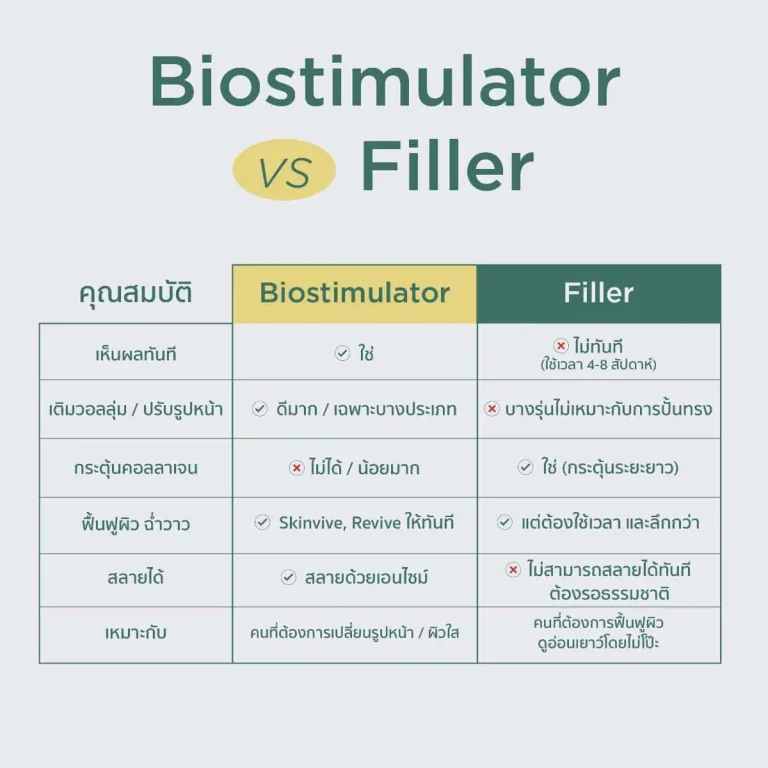
How do biostimulators differ from fillers? HA fillers add volume and shape directly, while biostimulators such as Sculptra (PLLA) and HArmonyCa (HA mixed with CaHA) are designed to gradually stimulate the body to build its own tissue structure. This article explains this for first-time users, with a comparison table of Sculptra, HArmonyCa, and Profhilo compared to Botox and fillers, how to read before-and-after images, opinions from doctors and surgeons who can verify the source, and how to choose a clinic. This is general knowledge, not a diagnosis. Key Takeaways: HA fillers add volume with an injected gel and are broken down by the enzyme hyaluronidase. Biostimulators in the PLLA and CaHA group stimulate the body to build its own tissue structure, the effect is gradual, and they are not broken down by this enzyme.[2][3][4] Sculptra is PLLA, HArmonyCa is HA mixed with CaHA, Profhilo is…

How do Dolly Eyes differ from under-eye bags? According to available research, under-eye bags (steatoblepharon) are related to fat around the eye socket protruding onto the lower eyelid. Dolly Eyes, or what is academically known as pretarsal fullness or aegyo-sal, are the area where the orbicularis oculi muscle protrudes in a line near the lower lash line, becoming more noticeable when smiling. This area has very little or no subcutaneous fat. This article compares the two anatomically, along with the conditions of what constitutes “different” and “safe, without lumps” that you should know before making a decision. This is general knowledge, not a diagnosis. Key Takeaways: The difference between under-eye bags and Dolly Eyes lies in the tissue. Under-eye bags are related to fat around the eye socket protruding, while Dolly Eyes are the orbicularis oculi muscle line in front of the tarsal plate that protrudes near the lower lash line. Research indicates that this area has very little or no subcutaneous fat, both above and below the muscle. These two are not fundamentally separate. The authors of the research recommend evaluating the protruding under-eye fat before undergoing Dolly Eye surgery and do not recommend surgery if the under-eye fat is very prominent, the skin is very sagging, or the under-eye area is very dark…

What is prejuvenation? It's a proactive skincare concept that starts before age-related problems become apparent. The name comes from "Pre" plus "Rejuvenation," as opposed to waiting for wrinkles or sagging to appear before addressing them. This article reviews and examines studies to determine which methods have strong evidence, which still have limitations, and what shouldn't be considered definitively effective. This is general knowledge, not a diagnosis. Key Takeaways: Prejuvenation is about proactive skincare before age-related problems appear. While the term is prevalent on social media, research from 2024 indicates a lack of clarity regarding methods and effectiveness. Most analyses are posted by non-medical professionals. The most solid evidence is daily sun protection. A randomized trial of 903 adults found that skin aging was 24% less severe over 4.5 years compared to those who used sunscreen haphazardly. Data on preventative treatments like Botox, RF, and biostimulators is still preliminary or limited. Skin, collagen, and facial bone structure change with age, but there's no research proving that starting procedures early in your 20s yields better results or reduces the need for fillers. Therefore, it shouldn't be believed that these treatments prevent aging. Not everyone in their 20s needs procedures; starting with sun protection and basic skincare is key. And have your doctor assess whether any additional procedures are needed, because doing more than necessary involves costs and risks without evidence that it's worth it. Table of Contents: What is Prejuvenation and why is it trending? How do skin and facial structure change with age? Reasons for proactive care…

Can under-eye fillers really cause blindness? Medical reviews have reported real cases of vision loss after facial filler injections, so this shouldn't be considered impossible. This article answers this directly, explaining the most common locations, warning signs requiring immediate medical attention, procedures in case of an accident, and the limitations of the claim that cannulas reduce the risk. This is general knowledge, not a diagnosis. Key Takeaways: Blindness from fillers is possible. Hundreds of cases have been reported in reviews, and the most recent one reported 318 cases of vision loss. More than two-thirds did not recover at all, while the remainder recovered partially or completely. The most common locations are the nose, forehead, and between the eyebrows, but there is no evidence to suggest that the under-eye area is low-risk. The reviews state that blood vessels in this area are interconnected, and blindness can occur in any part of the face. Warning signs requiring immediate medical attention include unusual pain, blurred or altered vision, drooping eyelids, inability to move the eyeball, pale, gray, or purplish skin, severe headache, or symptoms similar to a stroke. Immediate consultation with an ophthalmologist is especially crucial. Cannulas are one measure recommended in the reviews, but accessible sources do not confirm that they eliminate the risk, and there have been reports of patients receiving injections with cannulas. Table of Contents: Can under-eye fillers really cause blindness? Answers according to medical reviews. Where are the most reported areas, and where exactly are the dark circles under the eyes…?
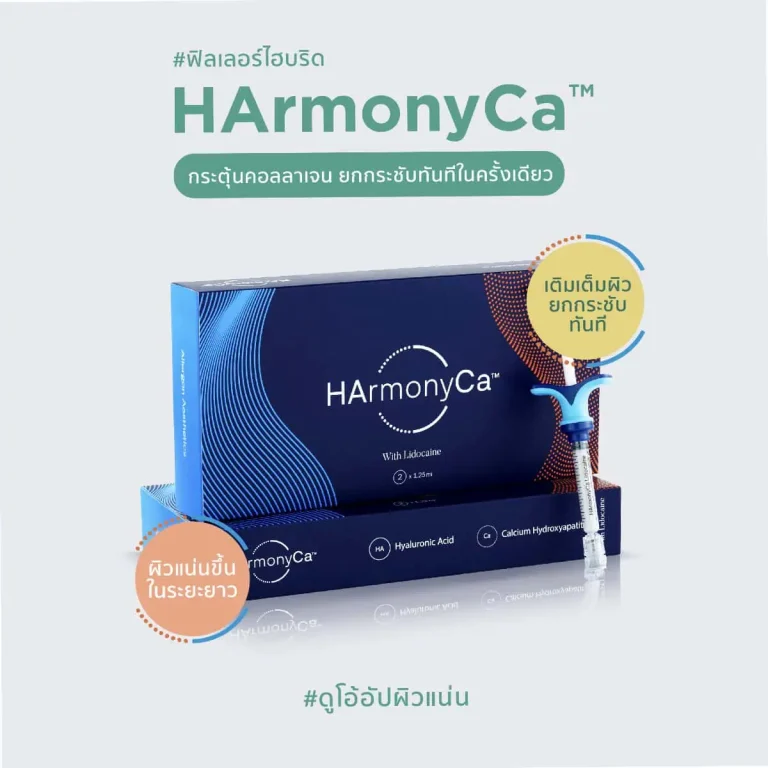
What is HArmonyCa? It's a composite injectable substance combining hyaluronic acid (HA) with calcium hydroxyapatite (CaHA) to add volume and lift facial tissue. This article describes the components, mechanism, research-backed effects, risks, and limitations of the evidence, separating clinical data from independent sources. This is general knowledge, not diagnosis. Key Takeaways: HArmonyCa is a composite injectable substance containing 20 mg of cross-linked HA with 55.7% by weight of CaHA microspheres. HA provides initial volume and lift, while CaHA is believed to stimulate collagen production, hence the term both as a composite filler and a biostimulator. In a study of 140 people with mid-cheek volume loss, 82.8% showed improvement of at least one level at month 1 and 65.9% at month 12. However, this was an open study with no control group and funded by the manufacturer. Evidence regarding collagen in humans comes from a study of 15 people…