What is XTherma? According to the clinic, XTherma is a skin tightening device that uses Monopolar Radiofrequency (RF) at a frequency of 6.78 MHz to generate controlled heat in the tissue to stimulate collagen production. It also features a cooling system to protect the skin surface during treatment. This article explains the working principle, the differences between Monopolar and Bipolar RF, and the available evidence. This is general knowledge and not a diagnosis.
Key Takeaways
- XTherma is a Monopolar RF 6.78 MHz device supporting a maximum power of 400W. The 400W figure represents the maximum capability of the machine and does not mean that everyone needs to use it at maximum power. The doctor will adjust the power settings based on the area and skin condition.
- Monopolar RF has an energy polarity at the head and uses a return pad as the other polarity, while bipolar RF has two polarities on the skin. Reviews indicate that, in principle, bipolar RF provides shallower heat, but actual results depend on the device, the practitioner, and the individual's skin condition.
- No independent research directly studying XTherma was found. The closest independent data is from a Monopolar RF study using the Oligio device (30 people, no control group, followed for 6 months). Therefore, information on XTherma should be considered as clinical description.
- RF skin tightening is not intended as a substitute for surgery, and those with implanted electronic devices, such as pacemakers, should inform their doctor before undergoing the procedure.
What is XTherma? It's a Monopolar RF 6.78 MHz skin tightening device.
When it comes to non-surgical facial lifting, RF (Radiofrequency) technology is a familiar option for many. However, many still don't know what XTherma is and how it differs from other commonly known RF devices.[1]
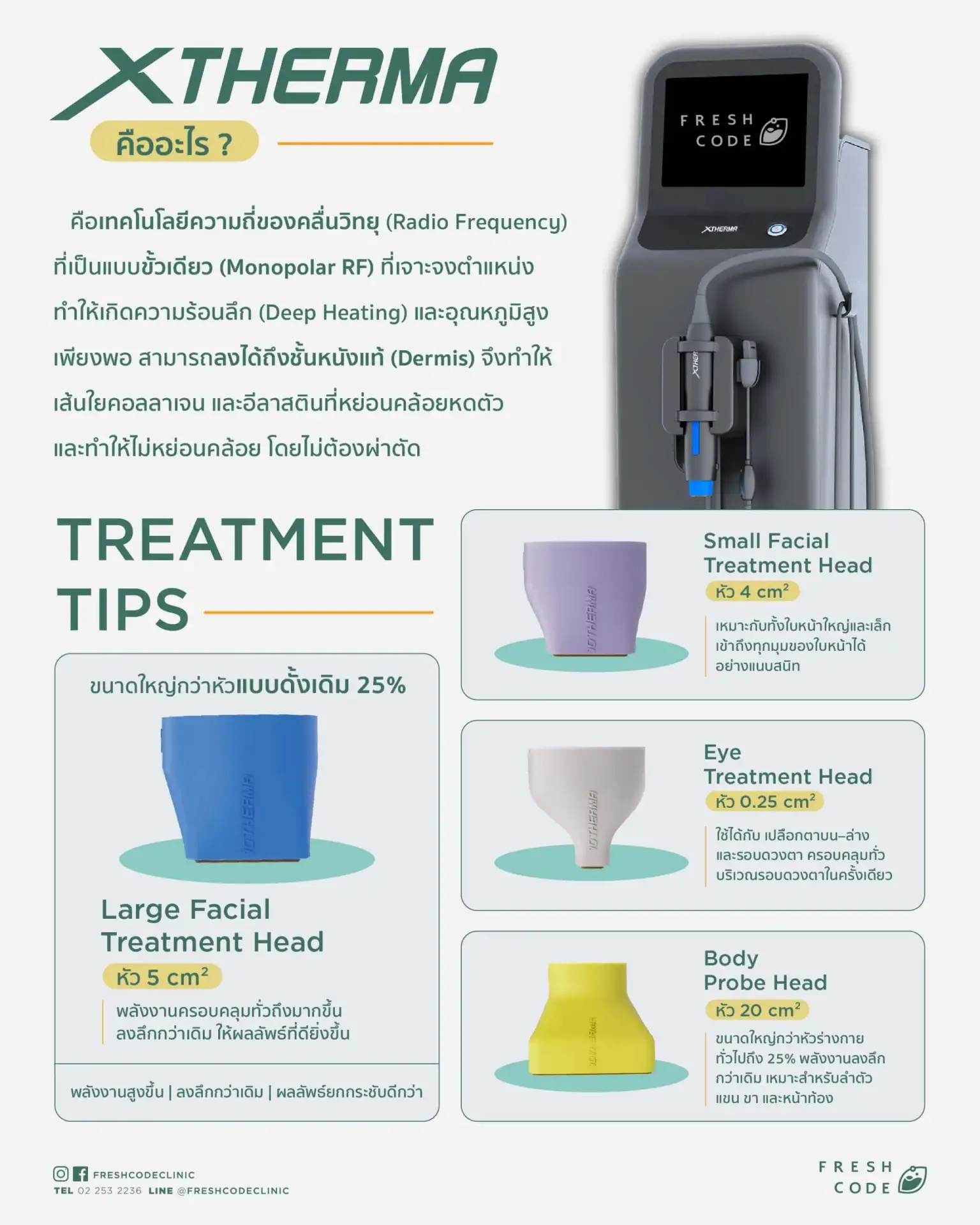
XTherma (pronounced Ten-therma) is a skin tightening device that uses Monopolar RF at a frequency of 6.78 MHz to generate controlled heat in the tissue, stimulating collagen fiber remodeling and the process of new collagen formation (Collagen Remodeling). The device supports a maximum power of 400W and features a Smart Temperature Cooling (STC) system that works in conjunction with energy delivery to help control the temperature of the skin surface during treatment.[1][2]
The clinic states that XTherma's primary goal is skin firmness, lifting, and collagen remodeling. It's suitable for individuals with sagging cheeks, a heavy lower face, an undefined jawline, or loose skin under the chin, who desire non-surgical treatment. However, it's not designed to transform everyone's facial structure.[2]
How does XTherma work? Heat, collagen, and a cooling system.
The clinic explains the procedure in three steps: First, RF energy is delivered to the planned tissue area, generating controlled heat. Then, the body gradually repairs and rearranges collagen after the procedure. Therefore, results should not be judged solely on immediate post-treatment images.[2]
A review of skin tightening technologies in the journal Facial Plastic Surgery consistently indicates that RF and focused ultrasound use heat to stimulate collagen restructuring, applied to facial and neck sagging, and that most patients in the study were satisfied. However, the authors emphasize that these methods are not intended to replace surgery.[4]
Smart Temperature Cooling (STC) system
According to the product information cited on the clinic's service page, the STC system has a total of 7 cooling cycles per shot: 2 pre-cooling cycles, 3 RF + cooling cycles, and 2 post-cooling cycles, to generate heat in the tissue while maintaining the comfort of the upper skin layer.[2] The sensation during the procedure may therefore be warmth, pulsating heat, or deep heat beneath the skin alternating with coolness, and it will vary from person to person.
4 sizes of treatment heads
The product page states that XTherma offers four treatment head sizes to choose from based on the area and tissue thickness. This does not mean that the largest head is best for all areas.[2]
- Large Facial Treatment Head 5.0 cm² for larger areas of the face such as cheeks, lower face, jawline, under the chin, and neck.
- Small Facial Treatment Head 4.0 cm² for areas requiring more flexibility.
- The Eye Treatment Head 0.25 cm² is for the area around the eyes, and the energy level needs to be assessed separately from the cheeks or lower face.
- Body Probe Head 20.0 cm² for areas of the body larger than the face.
Regarding the 400W power rating, the service page explains it as the maximum capability of the machine. This doesn't mean everyone needs to use the maximum power level. The setting depends on the area being treated, tissue thickness, fat amount, skin condition, and sensation during the procedure.[2]
How does Monopolar RF differ from Bipolar RF? (Comparison table)
When "different from typical RF," technically it usually refers to the difference between Monopolar and Bipolar RF. The clinic's service page explains that Monopolar RF has an energy polarity at the treatment head and uses a return pad as the other polarity, allowing current to travel through the tissue and generating heat from the internal resistance within the tissue.[2] The review, The Landscape of Radiofrequency Technology for Skin Rejuvenation (Health Science Reports 2025), consistently describes and states that bipolar RF uses two electrodes on the skin without the need for a ground plate.[3]
| Points of comparison | Monopolar RF (e.g., XTherma) | Bipolar RF (Typical) |
|---|---|---|
| Power polarization | The first terminal is on the treatment head, and the return pad serves as the second terminal.[2][3] | The two terminals are on the surface; no grounding plate is required.[3] |
| Depth of heat (in principle) | Deeper than that, the review suggests it could be around 20 mm, but the authors did not cite any measurements to support this figure.[3] | Shallower, by about 1-4 mm, as indicated by the review.[3] |
| Common uses | Skin sagging, wrinkles around the eyes, eyebrow lifting, and facial contouring.[3] A speaker at MDedge reported that transdermal RF is suitable for those with mild sagging skin.[5] | Mild to moderate sagging, skin texture, the area around the eyes, and home appliances, which the review indicated were less effective than monopolar devices for deep sagging.[3] |
| Feelings while doing it | The review indicates that it is often more uncomfortable than bipolar disorder, but cooling systems can reduce skin irritation risk. Comfort depends on the practitioner's skill and pain sensitivity.[3] | It's easier and more comfortable to control, as indicated by the review.[3] |
| Caution | Individuals with pacemakers, defibrillators, or implanted electronic devices are contraindicated for transcutaneous RF treatment.[5] | A doctor should evaluate the device model and your medical history. |
The table should be read carefully, as it provides a general overview of principles. Each model is designed differently, including the power delivery pattern, cooling system, and protocol. Therefore, it cannot be concluded that monopolar is always better than bipolar. The review itself also indicates that the protocols vary so much from one study to another that cross-scenario comparisons are difficult, and most studies are small-scale, single-center, not random, or retrospective.[3]
How does XTherma differ from typical RF skin tightening?
The clinic explains that XTherma, a monopolar RF, delivers energy deeper than bipolar RF, consistent with the principles stated in the reviews. However, comfort during treatment shouldn't be concluded as monopolar being more comfortable, as reviews indicate the opposite—that monopolar is generally more uncomfortable than bipolar. What the clinic emphasizes for XTherma is the 7-stroke cooling system per shot that helps maintain comfort on the surface of the skin.[1][2][3]
The points where XTherma differs from conventional concepts, according to clinical data, are as follows:[2]
- There is an STC system that performs cooling before, during, and after the RF release in a single shot.
- There are 4 treatment head sizes, ranging from 0.25 cm² for the eye area to 20.0 cm² for the body.
- The doctor adjusts the energy level according to the area and thickness of the tissue; they don't use the same setting across the entire face.
However, independent, accessible sources did not find any studies directly comparing XTherma to other RF machines. Therefore, it should not be concluded that XTherma is superior to others. The clinic's own service page also states that XTherma and Oligio X are in the same Monopolar RF category, but the details of each platform differ, and in some cases, the desired results do not depend on changing machines, but rather on tailoring the treatment to the specific problem.[2] For comparisons with Ulthera Prime, which uses a different type of energy, please read more at the link below.
Evidence of XTherma and Monopolar RF that you should know.
To be straightforward, no independent, publicly available research directly studying XTherma was found. Therefore, information about XTherma comes from clinical descriptions and product data. The closest independent data is a study of the 6.78 MHz monopolar RF frequency of the Oligio device, which is a different model.
The procedure was performed on 30 Thai adults aged 43-53 years, with a single treatment and follow-up at 1, 3, and 6 months by two dermatologists who did not disclose whether the images were before or after. Approximately 871 TP3T treatments were assessed as improving at 6 months. The average discomfort score was around 3 out of 10, and post-treatment redness was observed in 25 out of 30 people, which resolved within 1-2 days. No serious adverse events occurred.[6] Limitations include the absence of a control group, largely subjective assessments, small sample size, follow-up period of only six months, and the equipment being supplied by the vendor with open publication costs paid by the manufacturer.[6]
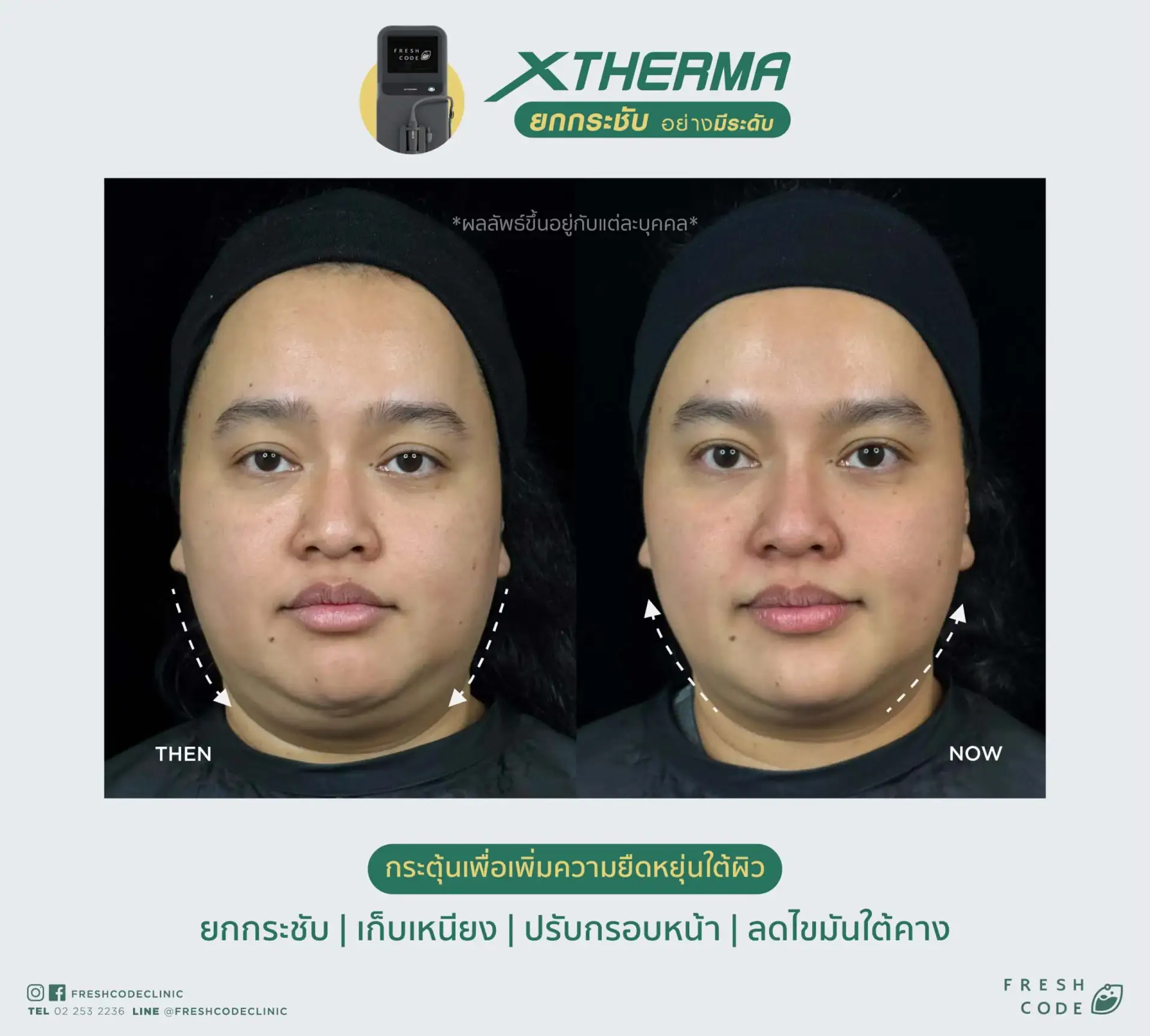
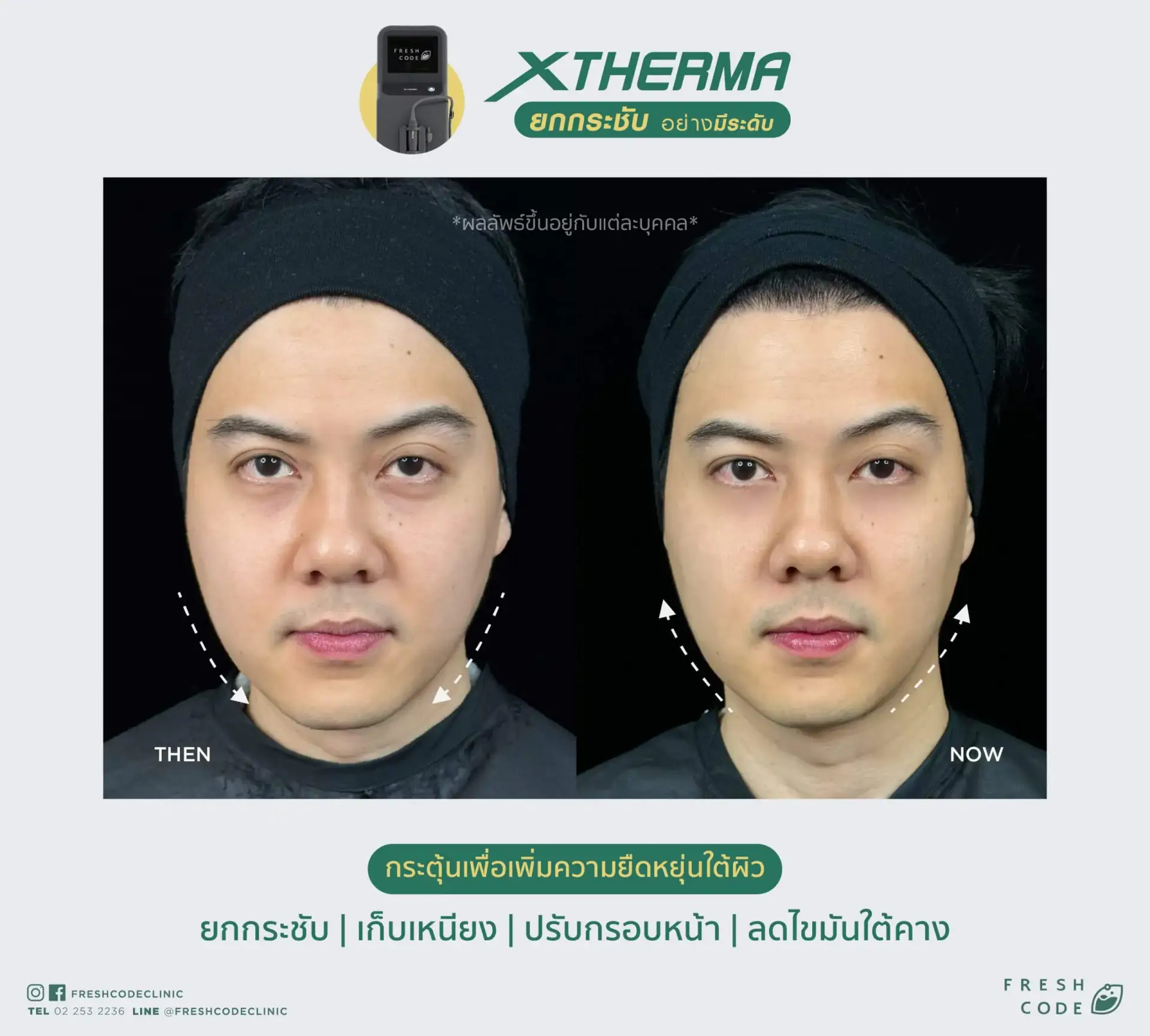
Speakers at MDedge reported that the results of skin tightening devices are inconsistent between machines and between individuals. Choosing the right patient and having realistic expectations is crucial, and percutaneous RF generally requires multiple sessions; one session is insufficient.[5] The images below are examples of clients who have visited our clinic. These are just a few examples; results vary from person to person and are not a guarantee.
Who is XTherma suitable for, and what information should you provide to your doctor before the procedure?

The clinic explained that XTherma is suitable for consideration in individuals whose skin and tissues are beginning to lose firmness and who want non-surgical tightening care. It's not necessary to wait until a specific age to evaluate, as people of the same age can have different skin thicknesses, fat amounts, facial shapes, and levels of sagging. If the primary problem stems from fat or facial structure, simply increasing the number of shots may not solve the entire issue.[2] Independent sources consistently indicate that individuals requiring surgery or expecting a tightening effect similar to manual skin pulling are not suitable candidates for this type of device.[5]
Before the procedure, the clinic's service representative recommends that you disclose your health history and any previous procedures, especially if you have any wounds or inflammation in the area to be treated, any underlying medical conditions, any implanted electronic devices or medical materials, are pregnant, have recently had fillers, thread lifts, or other energy treatments in the same area, have had facial or neck surgery, or have any sensory abnormalities. This information does not mean that all cases are unsuitable, but it will affect the assessment of your suitability.[2]
For more information about suitable age groups and skin concerns, or how long the results last, see the article below.
FAQ (Frequently Asked Questions)
Q: What is XTherma?
Q: How does XTherma differ from typical RF skin tightening?
Q: What is the difference between Monopolar RF and Bipolar RF?
Q: What does the 400W power rating of XTherma mean?
Q: Can XTherma provide a skin tightening alternative to surgery?
Q: Who should inform their doctor before undergoing XTherma treatment?
Conclusion
What is XTherma? According to the clinic, it's a Monopolar RF 6.78 MHz skin tightening device that generates controlled heat in tissue to stimulate collagen production. It also features a cooling system and four treatment heads of different sizes. The main difference from Bipolar RF lies in the polar placement and heat depth, but actual results depend on the device, the user, and skin condition. There is no independent research directly related to XTherma, and RF is not intended as a replacement for surgery.
At Fresh Code Clinic, doctors assess your face to determine whether the primary problem lies in the skin, fat, or structure, and then plan the appropriate energy level and number of shots for each individual. The information in this article is general knowledge and is not a diagnosis or guarantee of results. For more information, consult a doctor for a preliminary assessment.
References
- What is XTherma, and how does it differ from typical RF skin tightening treatments? (Original article) — Fresh Code Clinic
- What is XTherma? How much does it cost? How many shots are included, and what are its benefits? — Fresh Code Clinic
- The Landscape of Radiofrequency Technology for Skin Rejuvenation — Health Science Reports
- Skin tightening technologies — Facial Plastic Surgery
- No one-size-fits-all approach to tissue-tightening devices — MDedge Dermatology
- Efficacy and Safety of Monopolar Radiofrequency for Treatment of Lower Facial Laxity in Asians — Dermatology and Therapy