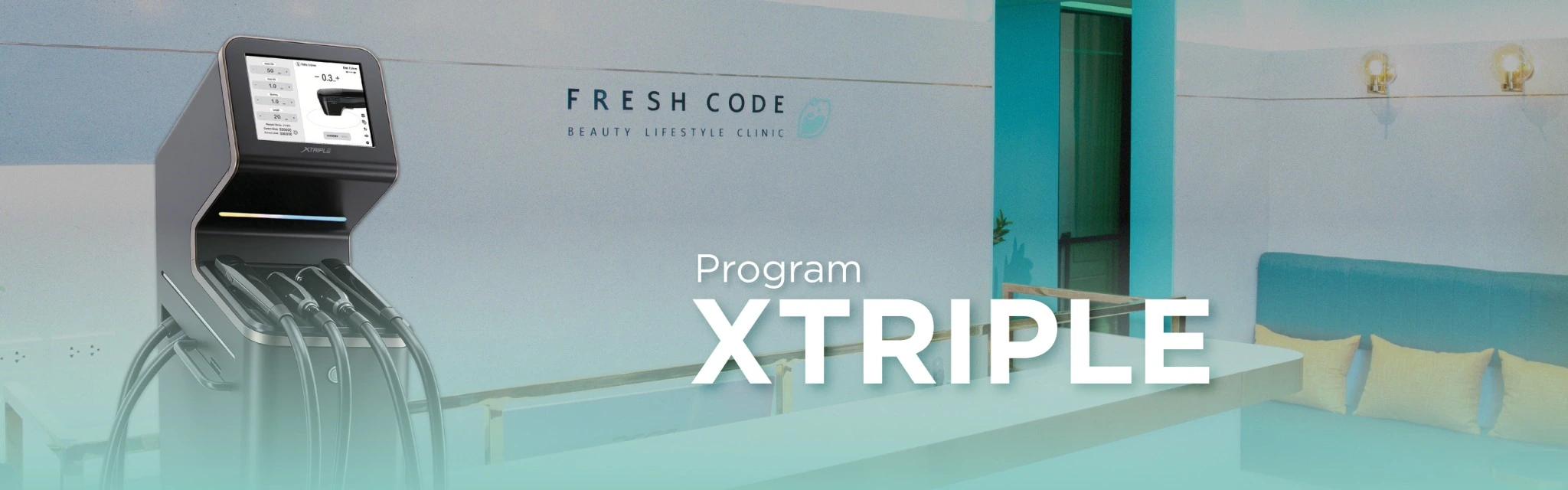
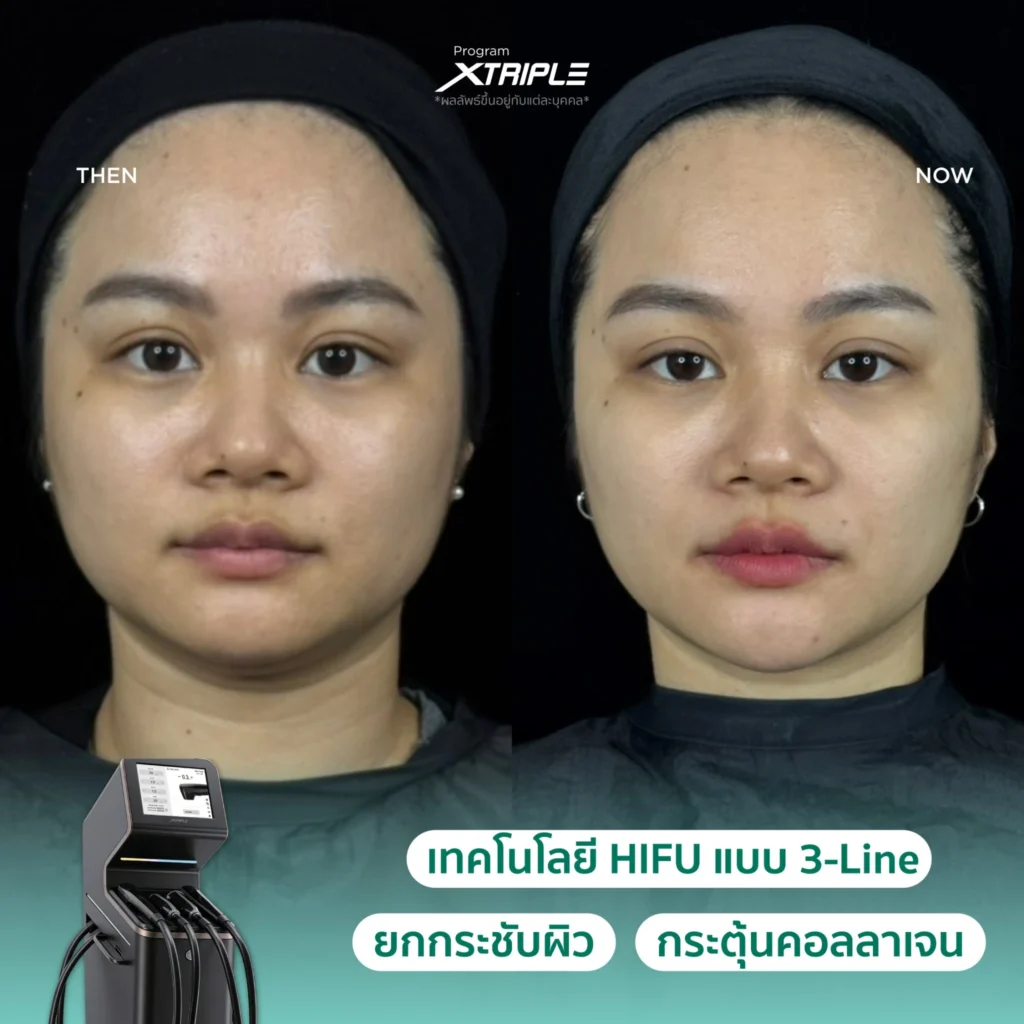
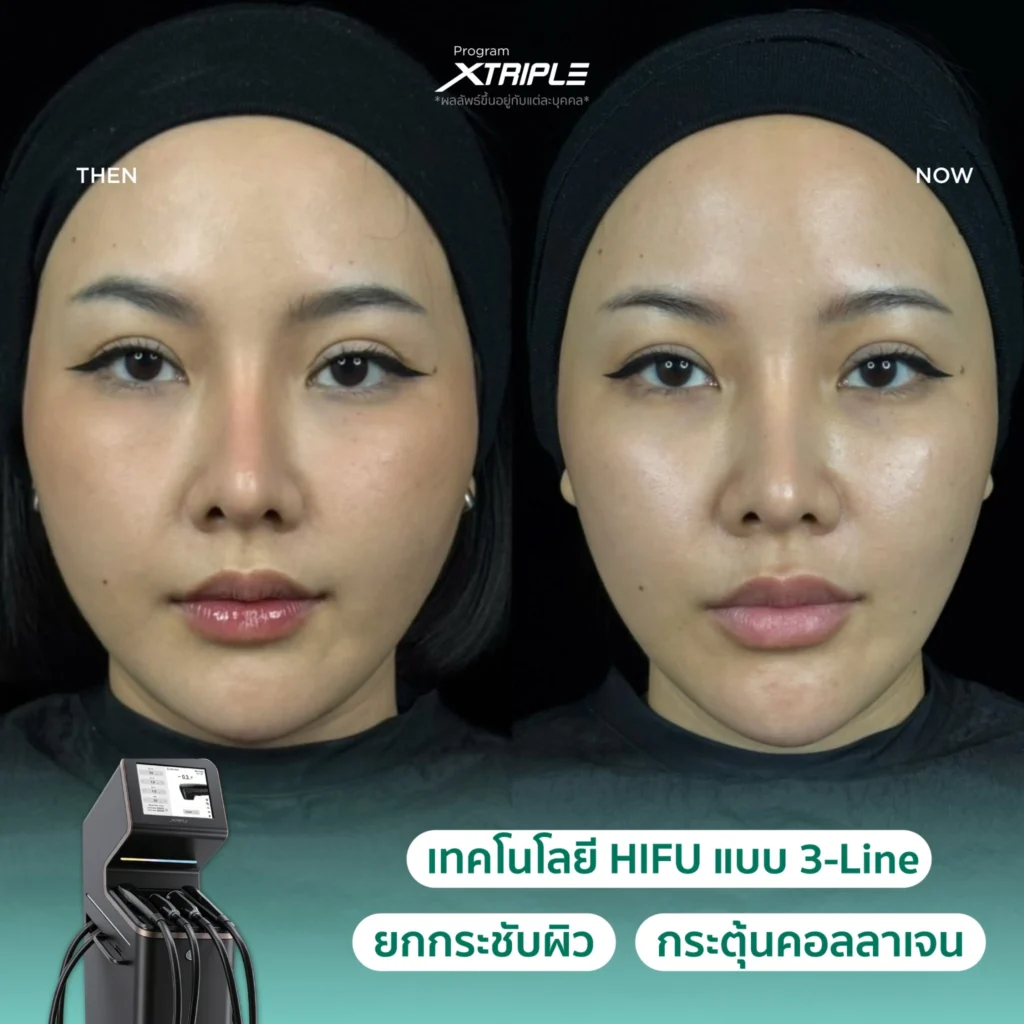
What is XTriple? 3-Line HIFU is a skin tightening technology that delivers energy in three directions simultaneously.
When people notice sagging cheeks, an undefined jawline, a heavier lower face, or loose skin under the chin, they start looking for skin tightening devices. However, each type of device uses energy and works on different tissues, so stronger devices or more treatments aren't necessarily suitable for every face.
XTriple (10TRIPLE) is a HIFU/Focused Ultrasound machine from TENTECH, South Korea. Its key feature is the 3-Line system, which uses three transducers working simultaneously. It also offers 3-Dot and 1-Dot heads with multiple depth settings for doctors to choose from, depending on the area, tissue thickness, and individual facial concerns.
Important: The research results cited on this page are from different microfocused ultrasound models, and most of the measured results are minor to moderate, as there are no independent studies directly related to XTriple.
Key Takeaway
- XTriple (10TRIPLE) is a HIFU/Focused Ultrasound machine from TENTECH, South Korea. Its key features include a 3-Line head that delivers energy in three directions simultaneously, and 3-Dot and 1-Dot heads with depths of 1.5, 3.0, and 4.5 mm.
- No independent studies directly related to XTriple have been found. The research data on this page is from other microfocused ultrasound models.[1]
- In the same study group, most showed slight to moderate improvement after 90 days, and the measured results may decline over time.[1]
- It is suitable for evaluation when mild to moderate sagging is the primary problem. It is not a fat removal device, and there are contraindications that must be disclosed to the doctor before treatment.
- The number of shots and the price depend on the area and the type of head used; you shouldn't compare figures directly across different machines.
What is XTriple?
XTriple or 10TRIPLE is a HIFU/Focused Ultrasound (HIFU) device from TENTECH, South Korea. Its key feature is the 3-Line head, which uses three transducers to create three energy lines simultaneously. It also includes 3-Dot and 1-Dot heads for areas requiring more precise energy placement.
Important information to know before reading further: The manufacturer states on their Thai website that 10TRIPLE will be launched in August 2025 and will receive certification from TFDA Thailand in February 2026.[3] The clinical research cited on this page is for other Microfocused Ultrasound/HIFU models, such as Ulthera and Ultraformer, as we have not found any independent clinical studies directly testing XTriple/10TRIPLE. Therefore, the published results serve as an overview of the technology and do not constitute a valid endorsement of the device's effectiveness.
| section | information |
|---|---|
| Machine name | XTriple / 10TRIPLE |
| manufacturer | TENTECH, South Korea |
| Types of energy | Focused Ultrasound / HIFU |
| Header style | 3-Line, 3-Dot, and 1-Dot (7 cartridges in total, as specified by the clinic) |
| Depth | 1.5, 3.0, and 4.5 mm depending on the cartridge type. |
| 3-Line | 3.0 and 4.5 mm |
| Areas that can be assessed by the doctor. | Cheeks, lower face, jawline, under chin, eyebrows, and neck, as appropriate for each individual. |
| After the procedure | There are no surgical incisions, but temporary redness, swelling, or bruising is common in this type of device.[1] |
| Follow-up | Assessment should continue for several weeks to approximately 3 months after the procedure (studies using the same type of device assessed results at 90 days).[1] |
An undefined facial contour can result from sagging skin and tissue, excess fat under the chin, or facial structure issues. Therefore, choosing the right device should begin with identifying the cause. Sending frontal and side profile photos to our medical team for an initial assessment to determine if XTriple is suitable for your problem.
How does XTriple work?
These devices deliver focused ultrasound energy in small points at a defined depth, without damaging the upper skin layers. Each energy point creates a localized area of heated tissue, about 1 mm³ in size, at a temperature of approximately 60–70 degrees Celsius. The body then repairs and remodels the collagen. Studies using these devices report that the remodeling process begins around 28 days post-treatment.[1] Therefore, not all results occur immediately on the day of the transaction.
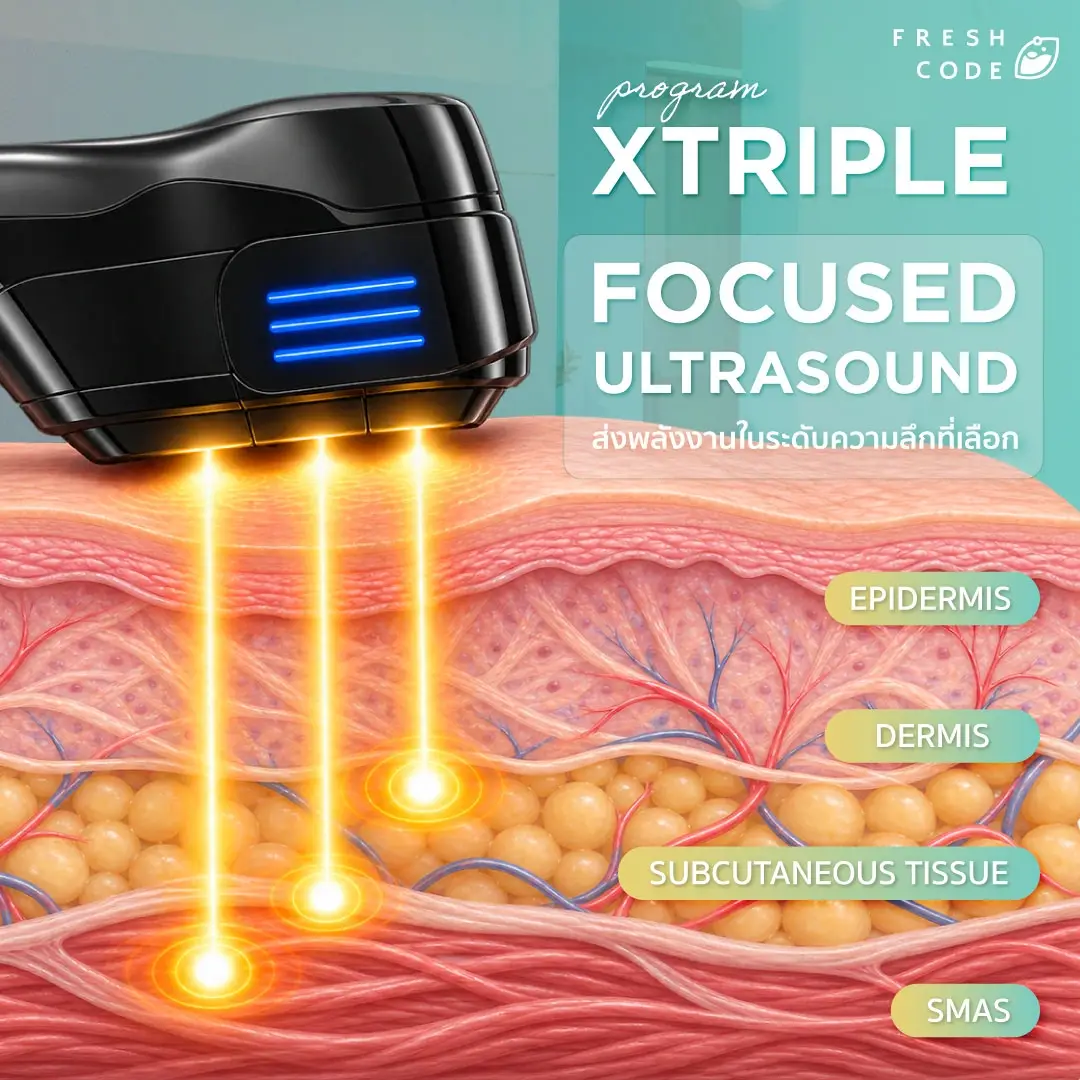
Note regarding terminology: In academic contexts, high-energy HIFU usually refers to fat destruction in the body (frequency around 2 MHz, depth 1.1–1.8 cm). Facial lifting devices that use frequencies of 4–10 MHz and a depth of 1.5–4.5 mm are called Microfocused Ultrasound (MFU).[2] In clinics and the market, the term HIFU is often used collectively. Therefore, this page uses both terms depending on the context.
The face is not uniformly thick in all areas. The cheeks, around the eyes, the lower face under the chin, and the neck have different layers of fat and subcutaneous structure. Therefore, the doctor must consider the thickness of the tissue, fat, facial structure, areas of sagging, and the desired lifting direction before selecting the appropriate head and depth of lift.
How does 3-Line HIFU differ from Single Line HIFU?
The main difference lies in the number of simultaneous energy pulses. Single-line HIFU creates one focal point per cycle, while the XTriple 3-line head uses three transducers working simultaneously, thus creating three pulses in a single cycle.
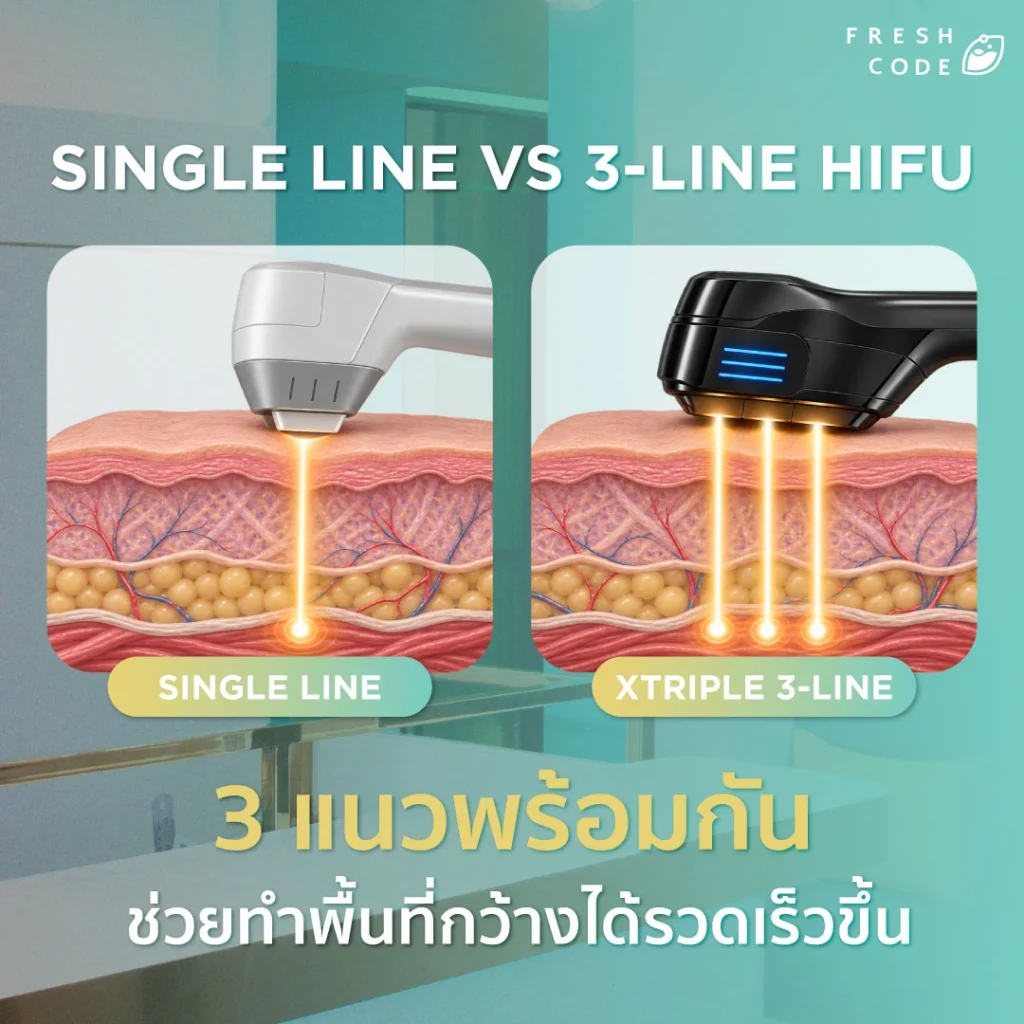
An article from a Korean clinic introducing this device suggests that the three-axis system covers a wider area faster and more stably.[4] This is based on presentations from both users and manufacturers. No independent test data has been found to confirm any difference in speed or performance compared to single-line devices.
3-Line doesn't mean it's three times stronger than regular HIFU; it refers to the number of energy pulses delivered simultaneously, not an increase in energy at each point. It shouldn't be assumed that 3-Line is painless either, as the sensation during treatment depends on the area, depth, energy level, and individual sensitivity. A more accurate statement is that faster treatment completion results in a shorter duration of discomfort.
What types of nozzles does XTriple use, and how deep can it penetrate?
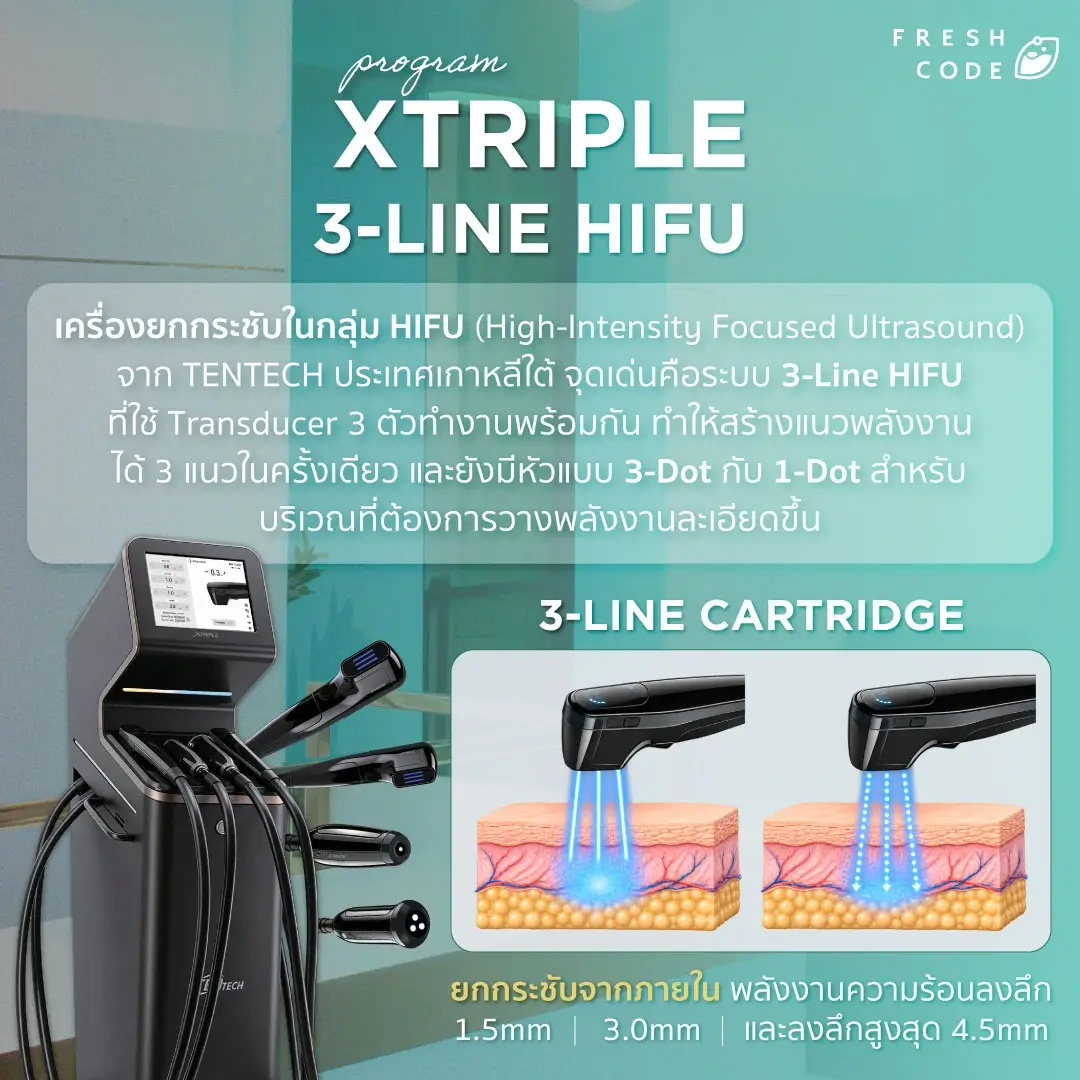
According to the clinic, XTriple offers 7 different cartridge types, divided into 3-Line, 3-Dot, and 1-Dot, based on depth. This allows physicians to select both the energy delivery pattern and depth that are suitable for each area.
| Cartridge format | Depth | Frequency (as specified by the clinic) | Usage characteristics |
|---|---|---|---|
| 3-Line | 3.0 mm | 7 MHz | Delivering energy in three directions simultaneously. |
| 3-Line | 4.5 mm | 4 MHz | Delivering energy in three directions at deeper levels. |
| 3-Dot Pen Type | 3.0 mm | 7 MHz | Send data from 3 points simultaneously in an area requiring high precision. |
| 3-Dot Pen Type | 4.5 mm | 4 MHz | Three points simultaneously at a deeper level. |
| 1-Dot Pen Type | 1.5 mm | 7 MHz | A single point for areas requiring high precision. |
| 1-Dot Pen Type | 3.0 mm | 7 MHz | A single point in the middle range. |
| 1-Dot Pen Type | 4.5 mm | 4 MHz | A single point at a deep level. |
The depth and frequency patterns are similar to those found in typical microfocused ultrasound research, which uses depths of 1.5, 3.0, and 4.5 mm and often employs frequencies of 4 and 7 MHz.[1] Having multiple cartridge types doesn't mean every cartridge needs to be used on everyone, but it helps doctors select the appropriate pattern and depth for each area.
How deep can XTriple penetrate?
XTriple supports depths of 1.5, 3.0, and 4.5 mm, but the Cartridge doesn't offer all three levels in every version.
- 1.5 mm Available only in the 1-Dot Pen Type, this is the shallowest level in the set, used for precise energy delivery to areas deemed appropriate by the physician.
- 3.0 mm There are 3-Line, 3-Dot, and 1-Dot options available, using a frequency of 7 MHz (as specified by the clinic).
- 4.5 mm There are 3-Line, 3-Dot, and 1-Dot models available, using a frequency of 4 MHz (as specified clinically). In research using this type of device, the 4.5 mm depth is associated with the SMAS layer.[1]
It's important to note that some models have ultrasound imaging capabilities that help visualize tissue layers and the location of bone or blood vessels during the procedure.[2] Regarding XTriple, we haven't found any information indicating the existence of such a system. Therefore, physicians rely primarily on anatomical knowledge and positional markings.
Therefore, the important thing is not to choose the deepest heading, but to select both the Depth and Pattern that match the area and the target.
What are the benefits of XTriple?
XTriple is suitable for evaluating problems where skin and tissue sagging are the main components. Before choosing the treatment, it's important to identify the cause of "facial drooping," as the appearance may be similar but the underlying causes are different.
If it's due to laxity.
If the facial contour was previously quite defined but the cheeks and lower face have sagged, there may be underlying tissue laxity. Focused ultrasound is one option for evaluation. A review of 16 microfocused ultrasound studies over 90 days showed that physicians assessed 921 TP3T improvement in participants, with most showing slight (471 TP3T) and moderate (361 TP3T) changes. Only 81 TP3T showed significant improvement, while 71 TP3T remained unchanged and 11 TP3T worsened.[1] These figures reflect the expectation of gradual change, but one should not expect results equivalent to surgery.
If it's caused by fat.
If there is a significant amount of fat in the lower face or under the chin, simply increasing the number of HIFU treatments may not be the complete solution. The primary goal of XTriple is not fat removal.
If it's due to facial structure.
Some people have a short chin, an unprominent jawline, or insufficient bone support from the start. A facelift can only partially help because the root cause isn't solely due to sagging.
Therefore, the question asked before starting the procedure shouldn't just be "How many shots are needed?" but rather, "What is causing the problem?"“
Who is XTriple suitable for, and what areas can it assess?
XTriple is suitable for consideration in individuals with mild to moderate sagging who desire a non-surgical option, especially when the primary problem involves tissue displacement. Those with severe sagging or a prominent platysmal band often require surgery.[2]
It's important to note the limitations of the research data: 16 review participants were predominantly women, with an average age of around 35–59 years, and the studies indicated that excessive laxity, a body mass index (BMI) greater than 30, or high body fat levels tended to diminish the benefits.[1] Furthermore, it is not clear whether doing it multiple times provides any additional benefit.[1]
Age is not the only deciding factor, as people of the same age can have vastly different levels of fat, tissue thickness, and facial structure. Therefore, the procedure plan and energy levels used do not necessarily have to be the same.
Areas being evaluated for the XTriple project.
Cheeks and Lower Face
This is an area where changes are clearly visible as the tissue begins to shift downwards. The doctor may place energy along the desired lifting path (Treatment Vector) as one option for treating sagging skin.
Face frame and jawline
If a once-defined facial contour is becoming inconsistent due to sagging, targeting the lower face and jawline with energy can be part of a plan.
Under the chin
It's important to differentiate whether the problem stems from sagging, fat, or both. Research on these types of devices reports a reduction in the area under the chin of approximately 26–45 mm², but one study found that after 180 days, the lift decreased from 26 to 14 mm².[1] And if fat is the main factor, HIFU alone may not be the solution.
The eyebrow area and around the eyes.
The review found an eyebrow elevation of about 0.47–1.7 mm, a slight change.[1] The area around the eyes has delicate anatomy and is more painful than other areas.[1] Some reports indicate that use around the eye is outside the approved indications, and ultrasound waves can penetrate the eye shield, so it must be performed above the bone and with extra caution.[2] A doctor should assess the appropriate position and head shape.
throat
If the skin on the neck is starting to sag, it can be assessed in conjunction with the face, and the energy used will need to be calculated based on the actual area.
How many shots are needed for XTriple, and what is the price?
There is no single ideal number of shots for every face, as it depends on the area, degree of sagging, face size, depth, type of cartridge, and the desired energy placement. Those focusing on the lower face and jawline will require less area than those wanting to treat the entire face, under the chin, and neck.
When you see packages with different numbers of shots, the question shouldn't just be, "Which one gives more?", but rather, "What shots are taken," "What type of tip is used," and "How are the shots counted?"
What is the difference between Shots and Lines in XTriple?
The 3-Line head uses three transducers to generate three energy pulses simultaneously in one cycle. However, one shot of the XTriple should not be interpreted as equal to three shots from other machines, as each machine differs in the number of focal points, distance, length of the energy pulse, energy level, and counting method. Directly comparing numbers between machines can lead to misunderstandings. Before comparing packages, ask the clinic what the numbers represent, what type of head is used, and the area it covers.
How much does XTriple cost?
Prices depend on energy requirements, the area being worked on, the type of head used, and current promotions. Therefore, you shouldn't compare prices and shot counts alone. Before making a decision, consider these three factors together.
- What is the stated quantity measured in?
- What area does it cover?
- What type of cartridge are you using?
A package focusing solely on the lower face is different from a face + under chin + neck treatment, and more isn't always better if the energy isn't delivered at the right location and depth to address the problem. Inquire about current pricing via LINE or phone.
When will XTriple show results, and how long will the effects last?
The results are not all seen in a single day. In addition to the initial tissue response, there is a gradual collagen remodeling process that continues. In research using this type of device, the process begins around 28 days after treatment.[1] Some people may feel tightness or stiffness initially, but the immediate after picture should not be used as the final result.
In practice, therefore, changes are tracked over several weeks and reassessed at approximately 3 months (90 days), which is the point at which most research evaluates results. The level and duration of change vary from person to person, and when measured numerically, the results are often small to moderate.[1] Assessments by the service recipients themselves were inconsistent, with a review of reports indicating that approximately 251 TP3T individuals felt no change after 90 days.[1]
How long does XTriple last?
There is no fixed timeframe for everyone because the aging process continues after treatment, and long-term data is limited. The review lacked data following progress beyond one year, and measurable results may diminish over time. For example, one study found that the proportion of individuals who achieved a 1 mm lift was 30–401 TP3T at 90 days and decreased to 22–331 TP3T at one year, while another study found that at 180 days, eyebrows were slightly lower than the initial level.[1]
Relevant factors include age, degree of pre-existing laxity, tissue quality, energy placement, weight changes, and lifestyle habits. Therefore, it is better to monitor each individual and determine when repeat treatment is needed, rather than setting a uniform timeframe for everyone.
How does XTriple compare to other skin tightening devices?
What are the differences between XTriple and Ultraformer MPT?
Both are focused ultrasound systems, but they use different platforms and energy delivery methods. XTriple excels with its 3-Line, 3-Dot, and 1-Dot heads, while... Ultraformer MPT There are different cartridges and modes for the Ultraformer system.
| XTriple | Ultraformer MPT | |
|---|---|---|
| energy | Focused Ultrasound | Focused Ultrasound |
| Highlights | 3-Line / 3-Dot / 1-Dot | Multiple Cartridges / Modes |
| Selection | Choose a pattern based on the area. | Choose the topic and mode according to the problem. |
| Who is it suitable for? | It needs to be assessed based on facial structure. | It needs to be assessed based on facial structure. |
We haven't found any studies directly comparing these two devices, so there's no data indicating which one is better. The choice should consider facial structure, degree of sagging, area to be treated, and budget.
What are the differences between XTriple and Ulthera Prime?
The most obvious difference is: Ulthera Prime Microfocused Ultrasound with Visualization (MFU-V) provides real-time ultrasound images up to 8 mm deep, allowing doctors to visualize tissue layers while delivering energy and avoiding bone or blood vessels.[2] The XTriple model emphasizes the flexibility of head shape and depth.
| XTriple | Ulthera Prime | |
|---|---|---|
| energy | Focused Ultrasound / HIFU | MFU-V |
| Highlights | 3-Line / 3-Dot / 1-Dot | Real-time Visualization |
| Depth | 1.5 / 3.0 / 4.5 mm | Shallow to deep levels depending on the transducer head. |
| Key differences | Choose a pattern based on the area. | You can see the tissue layer while working. |
The choice therefore depends on what the client prioritizes, facial anatomy, and the physician's assessment, rather than judging by the machine name. Most of the clinical data cited on this page comes from the Ulthera group, which does not mean that XTriple produces the same results.
What is the difference between XTriple and XTherma?
XTriple uses Focused Ultrasound. XTherma Using Monopolar RF 6.78 MHz (as specified by the clinic), this is a different type of skin tightening device. XTriple delivers energy as focal points at a selected depth, while XTherma generates heat distributed within the tissue.
| XTriple | XTherma | |
|---|---|---|
| energy | Focused Ultrasound | Monopolar RF |
| Energy form | Focal Points | Heat is distributed within the tissue. |
| Use for consideration when... | Focus on Lifting / Laxity | Focus on tightening/firmness. |
In some cases, physicians may plan to use both devices together, but we have not found any research directly studying the use of XTriple in combination with XTherma. Therefore, their use together is at the discretion of each individual physician and is not a protocol supported by evidence.
Where is the best place to get XTriple treatment, and what makes Fresh Code Clinic different?
You shouldn't just look at the price and the number of shots, but also the device itself, face evaluation, and the power delivery.
- The device and cartridge can be verified, for example, by having a medical device registration number.
- Facial structure is assessed before the procedure.
- Explain why one area chose 3-Line but another area chose 1-Dot or 3-Dot.
- It can explain when XTriple is not the best answer and offer alternatives.
Choosing equipment based on real-world problems is more important than following trends or the number of shots required.
How is XTriple at Fresh Code Clinic different from other places?
Fresh Code Clinic plans the XTriple treatment based on the structure and cause of sagging, rather than prescribing the same number of shots to everyone. Before selecting a device, the medical team assesses the degree of sagging, fat amount, tissue thickness, facial shape, and the desired lifting lines.
One of the doctors in charge of the skin tightening treatments at the clinic is... Dr. Kritimuk Viseththanakorn (Dr. Krit) whom the clinic identifies as a Trainer & Speaker for XTherma and XTriple, and who was previously invited by TENTECH to give a presentation on XTriple at IMCAS Asia.
Experience with both Ultrasound and Monopolar RF allows for assessments to begin with identifying the primary problem and determining which energy type is more suitable. Some individuals may be better suited to XTriple, while others may be more compatible with XTherma, Ulthera Prime, or Ultraformer MPT. In some cases, more than one energy type may be used, based on the doctor's assessment.
Things to know before undergoing XTriple treatment: Pain, contraindications, side effects.
XTriple is a non-surgical procedure that delivers heat energy to the tissue. Therefore, it is important to inform your doctor about your medical history and any previous procedures before undergoing the procedure.
Does XTriple hurt?
During the procedure, some people may feel a warm, tingling, or deep tightness under the skin. In a review of microfocused ultrasound procedures using pre-existing local anesthesia, the average pain score was around 3.8 out of 10 (ranging from 2.5–6.1), with the areas around the eyes and under the jaw being more painful than other areas.[1] Another study using imaging-guided devices reported average scores of 5.68 at the cheeks and 6.09–6.53 at the chin and submandibular levels.[2] These numbers come from different devices and protocols, so they are for illustrative purposes only.
Therefore, it's inappropriate to say that XTriple is "not painful at all" or "less painful than all HIFU machines." A more accurate advantage of 3-Line is that it treats a larger area in a shorter time, which may also result in a shorter duration of discomfort.
Groups that people should generally avoid or be wary of.
- There is an open wound or infection in the area to be treated.[2]
- I have severe inflammatory acne or cystic acne that is still active.[2]
- There are metal devices operating in that area, such as pacemakers or defibrillators.[2]
- Special caution should be exercised in individuals with keloid scars, implants, permanent fillers, or who smoke.[2]
Additionally, inform your doctor if you are pregnant, have had facial surgery, or recently had fillers, biostimulators, thread lifts, or other energy treatments. Your doctor will assess whether the procedure is suitable, how long the waiting period needs to be, and which areas should be avoided.
Common side effects.
In this group of devices, temporary redness is observed, sometimes accompanied by swelling in almost all cases. Swelling may last 2–14 days, while redness and bruising usually subside within about 2 weeks. Less common side effects (around 2%) include numbness or abnormal sensation, bruising, fine lines on the skin, burns, and contact dermatitis.[1] If you experience any unusual symptoms after the procedure, please contact the clinic.
FAQ: Frequently Asked Questions about XTriple
Is XTriple any good?
Is XTriple the same as HIFU? And is it similar to 10TRIPLE?
How many types of XTriple nozzles are there, and what is the 3-Line's target depth?
Is XTriple 3-Line 3 times more powerful than regular HIFU, and is 1 shot equivalent to 3 shots?
How many XTriple treatments are needed? When will I see results, and how long do the effects last?
Is XTriple painful, and do I need to rest my face after the procedure?
Does XTriple help reduce a double chin or make your face look thinner?
Which is better: XTriple, Ultraformer MPT, Ulthera Prime, or XTherma?
In summary, who is XTriple suitable for?
If you're starting to notice sagging cheeks, an undefined jawline, a heavier lower face, or loose skin under your chin and neck, and you're not yet ready for surgery, XTriple is a technology to consider. Its key features include Focused Ultrasound combined with 3-Line HIFU and multiple depth heads, allowing the doctor to design energy placement based on the area and anatomy.
What should be realistically expected is a gradual change, mostly small to moderate, and varying from person to person.[1] Before deciding "how many shots" are needed, it's important to determine whether the primary cause is sagging, fat, bone support, or skin quality. Each cause may be suited to a different type of energy. Some individuals may be better suited to XTriple, while others may prefer Ultraformer MPT, Ulthera Prime, or Monopolar RF like XTherma. Some cases may also benefit from a combination treatment.
When choosing a skin tightening device, don't start with "which machine is the most powerful," but rather "what are our specific problems, and what type of energy is best suited to those problems?"“
Consult with a specialist about your skin problems.
Still unsure if XTriple is right for your face?
If you're still undecided between XTriple, Ultraformer MPT, Ulthera Prime, or XTherma, you can start by sending frontal and side profile photos for an initial assessment, or visit Fresh Code Clinic for a consultation before making your decision.
Add LINE @freshcodeclinic Contact the clinic.
- Address: 19 Sukhumvit Soi 5, BTS Nana Exit 1 (Parking available)
- telephone: 02-253-2236, 083-626-4264
- Opening hours: Open daily 11:00–20:00
References
- Contini M, et al. A Systematic Review of the Efficacy of Microfocused Ultrasound for Facial Skin Tightening. Int J Environ Res Public Health. 2023;20(2):1522. https://pmc.ncbi.nlm.nih.gov/articles/PMC9861614/
- Fabi SG. Noninvasive skin tightening: focus on new ultrasound techniques. Clin Cosmet Investig Dermatol. 2015;8:47-52. (The author reports that he was a consultant to the manufacturer of the Ulthera device.) https://pmc.ncbi.nlm.nih.gov/articles/PMC4327394/
- TENTECH (Thai Website) Company and Product Timeline 10TRIPLE https://tenlaserth.com/tentech/
- Smart Today (Korea). Article introducing the 10TRIPLE machine in Korean clinics, December 10, 2025. https://www.smarttoday.co.kr/ko-kr/articles/98682
The information on this page is general and not medical advice. Treatment outcomes and suitability vary from person to person. Consult a doctor before making any decisions.