


สิวคืออะไร คือภาวะที่รูขุมขนอุดตันด้วยน้ำมันและเซลล์ผิวที่สะสม และอาจอักเสบกลายเป็นตุ่มแดง ตุ่มหนอง หรือก้อนลึก พบได้ที่ใบหน้า หน้าอก และหลัง บทความนี้อธิบายสาเหตุ ชนิดของสิว แนวทางการรักษา วิธีลดโอกาสเกิดซ้ำ และโปรแกรม Spotless Skin ของ Fresh Code Clinic เป็นความรู้ทั่วไป ไม่ใช่การวินิจฉัย
Key Takeaways
- สิวเกิดเมื่อรูขุมขนอุดตันด้วยน้ำมันและเซลล์ผิวที่ตาย และอาจอักเสบเมื่อมีแบคทีเรีย ฮอร์โมน (เช่น วัยรุ่นและช่วงประจำเดือน) และยาบางชนิดมีส่วนเกี่ยวข้อง ส่วนความเครียดทำให้สิวที่มีอยู่แย่ลงได้
- สิวแบ่งเป็นกลุ่มไม่อักเสบ (หัวดำ หัวขาว) และกลุ่มอักเสบ (ตุ่มแดง ตุ่มหนอง ตุ่มก้อน ซีสต์) ควรแยกชนิดก่อนเลือกวิธีดูแล และสิวที่ลึก เจ็บ หรืออาจเป็นแผลเป็นควรพบแพทย์
- สิวไม่รุนแรงมักเริ่มด้วยผลิตภัณฑ์ทาที่เภสัชกรแนะนำ ควรใช้สม่ำเสมอราว 6-8 สัปดาห์ก่อนประเมินผล ส่วนสิวอักเสบรุนแรงหรือไม่ตอบสนองอาจต้องใช้ยาที่แพทย์สั่ง ซึ่งยากลุ่ม Isotretinoin ต้องอยู่ในการดูแลของแพทย์เท่านั้น
- ลดโอกาสเกิดซ้ำด้วยการล้างหน้าอย่างอ่อนโยนไม่เกินวันละ 2 ครั้ง เลือกผลิตภัณฑ์ที่ไม่อุดตันรูขุมขน ไม่แกะไม่บีบ ทากันแดด และไม่เปลี่ยนผลิตภัณฑ์บ่อย หากมีรอยสิวตามมา โปรแกรม Spotless Skin ของคลินิกดูแลทั้งสิวและรอยต่อเนื่อง ตามการประเมินของแพทย์
สิว คืออะไร ? และสาเหตุของการเกิดสิว
สิวเป็นปัญหาผิวที่คนส่วนใหญ่เคยเจอ บางคนหายไปเมื่อพ้นวัยรุ่น แต่บางคนเป็นๆ หายๆ นานหลายปีและทิ้งรอยแดง รอยดำ หรือหลุมสิวไว้จนกระทบความมั่นใจ
สิว (Acne) คือภาวะผิวหนังที่ตั้งแต่มีตุ่มเล็กๆ ไม่กี่เม็ด ไปจนถึงก้อนลึกที่เจ็บ พบบ่อยที่ใบหน้า หน้าอก และหลัง และอาจกระทบสุขภาพใจได้ด้วย[1] รูขุมขนจะอุดตันจากน้ำมันและเซลล์ผิวที่ตาย และเมื่อมีแบคทีเรียเข้ามาเกี่ยวข้องก็เกิดการอักเสบและหนอง[1] ความรุนแรงต่างกันในแต่ละคน หากต้องการดูแนวทางของคลินิก ดูได้ที่ หน้ารักษาสิว[8]
Causes of acne
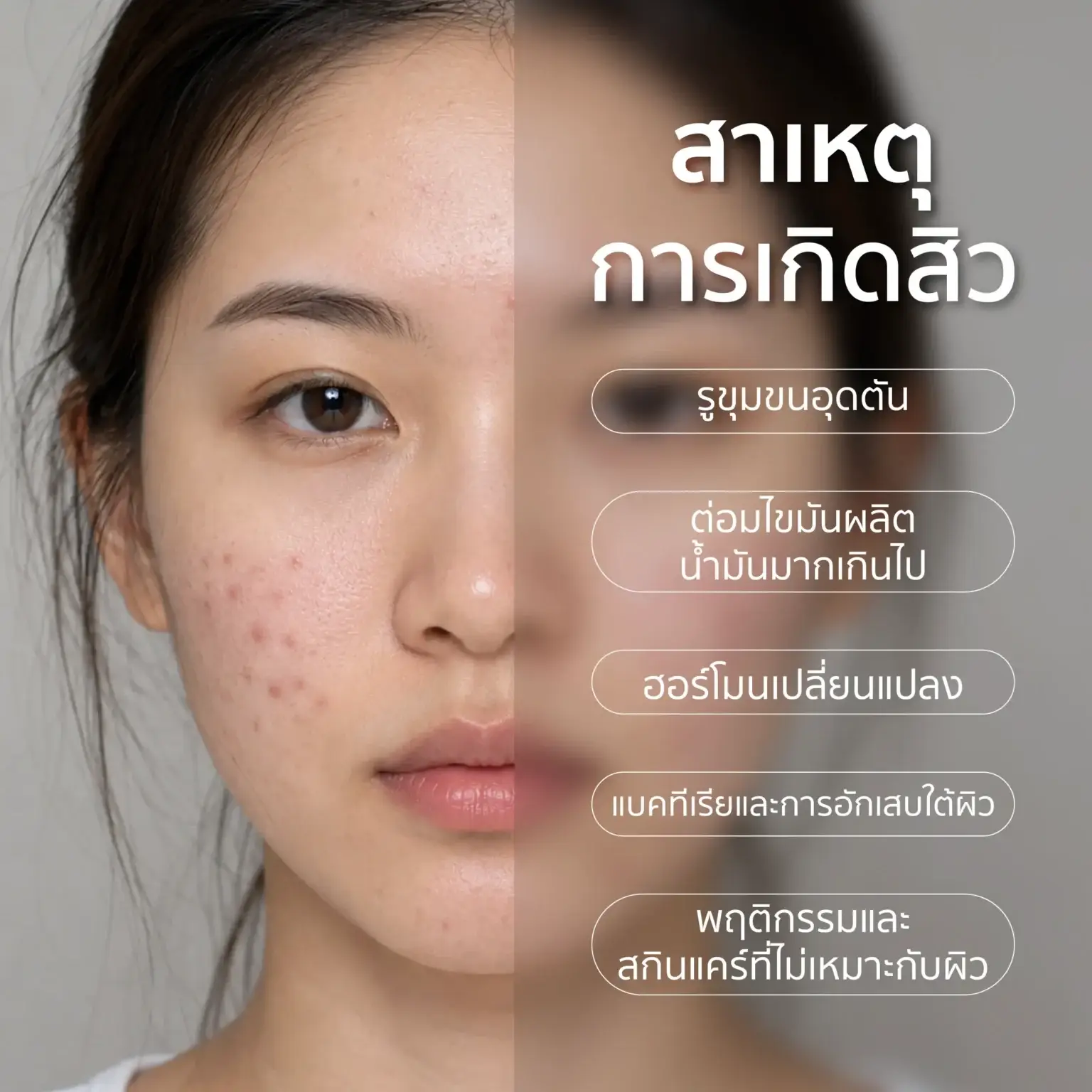
สิวไม่ได้มีสาเหตุเดียว ปัจจัยที่แหล่งข้อมูลทางการแพทย์ระบุไว้ ได้แก่
- clogged pores น้ำมันและเซลล์ผิวที่ตายสะสมจนอุดรูขุมขน แล้วอาจอักเสบเมื่อมีแบคทีเรีย[1]
- ต่อมไขมันและฮอร์โมน ในวัยรุ่น ฮอร์โมนแอนโดรเจนทำให้ต่อมไขมันโตขึ้นและผลิตน้ำมันมากขึ้น จึงอุดรูขุมขนได้ง่ายขึ้น[2] การเปลี่ยนแปลงของฮอร์โมนในช่วงประจำเดือน วัยหมดประจำเดือน และการตั้งครรภ์ก็เกี่ยวข้อง รวมถึงภาวะบางอย่าง เช่น ถุงน้ำรังไข่หลายใบ (PCOS) และโรคโรซาเซีย[1]
- ยาบางชนิดและผลิตภัณฑ์ที่มันมาก ยาบางชนิดและผลิตภัณฑ์บำรุงผิวหรือผมที่มันอาจเกี่ยวข้อง[1] รวมถึงเครื่องสำอางที่มัน หรือผลิตภัณฑ์แต่งผมอย่างโพเมด[2]
- พันธุกรรม หากพ่อแม่หรือญาติใกล้ชิดเคยเป็นสิวรุนแรงจนเกิดแผลเป็น ความเสี่ยงจะสูงขึ้น[2]
- ความเครียด การนอน และบางพฤติกรรม ความเครียดไม่ได้ทำให้เกิดสิวโดยตรง แต่ทำให้สิวที่มีอยู่แย่ลงได้ ส่วนการนอนไม่พอ อาหารบางชนิด และการสูบบุหรี่ ก็อาจทำให้สิวแย่ลงหรือเกี่ยวข้องกับสิวที่รุนแรงกว่า[2]
AAD ระบุด้วยว่านักวิทยาศาสตร์ยังไม่เข้าใจทั้งหมดว่าทำไมบางคนเป็นสิวง่ายกว่าคนอื่น[2] สิวพบได้เกือบทุกวัย ไม่ได้จำกัดอยู่แค่วัยรุ่น
How many types of acne are there?
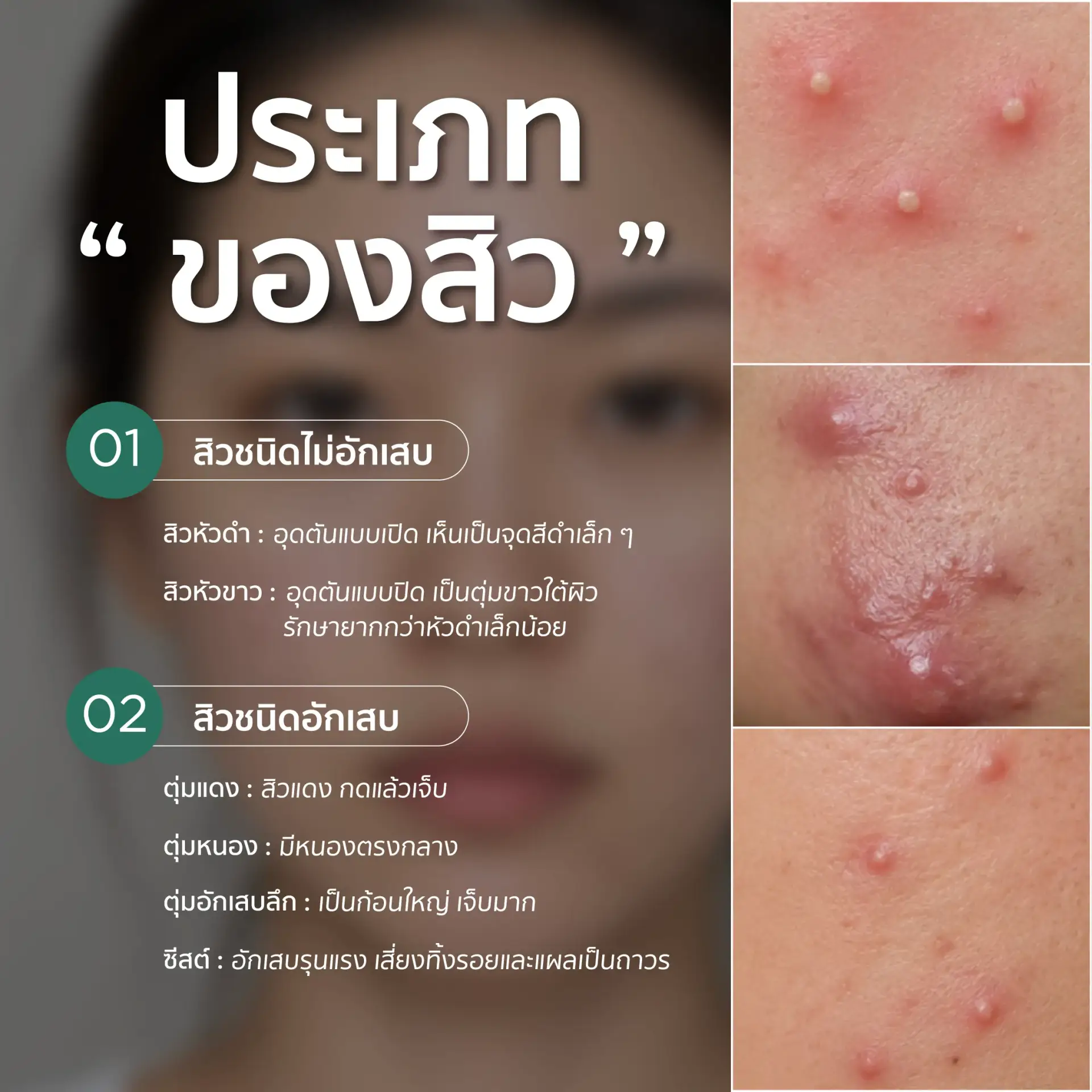
การแยกชนิดของสิวสำคัญ เพราะแต่ละชนิดต้องดูแลต่างกัน การจัดกลุ่มแบบไม่อักเสบและอักเสบด้านล่างเป็นการจัดเพื่อให้ใช้งานง่าย ส่วนลักษณะของตุ่มแต่ละชนิดอ้างอิงจาก NHS[1]
| กลุ่ม | ชนิด | ลักษณะที่เห็น |
|---|---|---|
| ไม่อักเสบ | สิวหัวดำ (Blackheads) | จุดสีเข้ม มักแบนราบ |
| ไม่อักเสบ | สิวหัวขาว (Whiteheads) | ตุ่มเล็กสีเดียวกับผิว |
| อักเสบ | ตุ่มแดง (Papules) | ตุ่มนูน ดูชมพูหรือแดงบนผิวสีอ่อน และอาจเป็นสีน้ำตาลหรือม่วงบนผิวสีเข้ม |
| อักเสบ | ตุ่มหนอง (Pustules) | ตุ่มนูนที่มีหนอง |
| อักเสบ | ตุ่มก้อนและซีสต์ (Nodules / Cysts) | ก้อนใหญ่ใต้ผิว บางครั้งเจ็บ และอาจรวมกันเป็นก้อนเดียว |
สิวที่หายแล้วอาจทิ้งแผลเป็นได้ ทั้งเป็นหลุมตื้นหรือเป็นรอย[1] NHS แนะนำให้พบแพทย์หากสิวเป็นจำนวนมาก ลึก เจ็บ หรืออาจเป็นแผลเป็น มีสัญญาณติดเชื้อ เช่น ผิวร้อน บวม แดง หรือสิวกระทบสุขภาพใจ[1]
Methods of treating acne.
หัวใจของการรักษาคือรู้ว่าสิวของคุณเป็นชนิดไหน เพราะวิธีที่ไม่ตรงกับชนิดของสิวอาจทำให้หายช้าหรือเกิดซ้ำ ตารางนี้สรุปแนวทางที่แหล่งข้อมูลระบุไว้ตามสถานการณ์
| สถานการณ์ | แนวทางที่พบในแหล่งข้อมูล | ใครเป็นผู้ดูแล |
|---|---|---|
| สิวไม่รุนแรง | ผลิตภัณฑ์ที่มี benzoyl peroxide หรือ salicylic acid และรีติโนลหรือเรตินอยด์ ใช้สม่ำเสมอราว 6-8 สัปดาห์ก่อนประเมินผล[1][4][5] | ปรึกษาเภสัชกรหรือแพทย์ |
| สิวหลายเม็ด ลึก เจ็บ หรือไม่ดีขึ้นด้วยการดูแลเอง | ยาทากลุ่มเรตินอยด์หรือยาปฏิชีวนะ และยากินบางกลุ่มที่แพทย์พิจารณา เช่น ยาปฏิชีวนะ ยาคุมกำเนิดแบบฮอร์โมนรวม[1] | แพทย์ |
| สิวอักเสบรุนแรง เกิดซ้ำ หรืออาจเป็นแผลเป็น | อาจพิจารณา Isotretinoin ซึ่งต้องตรวจและติดตามโดยแพทย์เท่านั้น[1][6] | แพทย์ผิวหนังหรือแพทย์ผู้เชี่ยวชาญ |
| สิวอุดตันที่ไม่ตอบสนองต่อยาทา | การกดสิวโดยผู้เชี่ยวชาญ ซึ่งเป็นส่วนหนึ่งของแผนการรักษา[7] | แพทย์หรือผู้เชี่ยวชาญ |
ผลิตภัณฑ์ทาและเรตินอยด์
สิวไม่รุนแรงมักเริ่มจากผลิตภัณฑ์ที่เภสัชกรแนะนำ เช่น ที่มี benzoyl peroxide หรือ salicylic acid[1] ส่วนเรตินอยด์และเรตินอลเป็นอนุพันธ์ของวิตามินเอ ช่วยเร่งการผลัดเซลล์ผิวและลดการอักเสบที่ทำให้สิวแย่ลง เรตินอยด์แรงกว่าและมักต้องมีใบสั่งแพทย์ ขณะที่เรตินอลอ่อนกว่าและหาซื้อได้ทั่วไป[5] อาการข้างเคียงที่พบบ่อยคือแดง แห้ง ลอก ซึ่งมักอยู่ราว 3-4 สัปดาห์ ควรเริ่มความถี่ต่ำ เช่น สัปดาห์ละครั้ง และทากันแดดทุกวัน[5]
AAD แนะนำให้ใช้ผลิตภัณฑ์รักษาสิวอย่างน้อย 6-8 สัปดาห์ก่อนตัดสินว่าได้ผลหรือไม่ และสิวมักใช้เวลา 3-4 เดือนจึงสงบชัดเจน การเปลี่ยนผลิตภัณฑ์บ่อยอาจทำให้ผิวระคาย และควรทาผลิตภัณฑ์เป็นชั้นบางในบริเวณที่มักเกิดสิว ไม่ใช่เฉพาะเม็ดที่เห็น[4]
ยากินและ Isotretinoin
สิวที่หลายเม็ด ลึก หรือไม่ตอบสนองต่อยาทา แพทย์อาจพิจารณายากิน เช่น ยาปฏิชีวนะ หรือยาคุมกำเนิดแบบฮอร์โมนรวมในบางราย[1] ส่วน Isotretinoin เป็นยากลุ่มวิตามินเอชนิดกินที่ใช้กับสิวรุนแรง สิวที่ดื้อต่อการรักษาอื่น หรือสิวที่ทิ้งแผลเป็น ยานี้เป็นยาควบคุมพิเศษในประเทศไทย ซื้อเองไม่ได้ และมีผลข้างเคียงสำคัญ เช่น ผิวและตาแห้ง ผิวไวต่อแดด ตับและไขมันในเลือดผิดปกติ และอันตรายมากต่อทารกในครรภ์ จึงต้องตรวจและติดตามโดยแพทย์ทุกราย[6] บทความของคณะเภสัชศาสตร์ มหิดล ที่อ้างอิงเผยแพร่เมื่อปี 2010 ควรตรวจสอบแนวทางล่าสุดกับแพทย์ก่อนตัดสินใจ
Procedure
การกดสิวโดยผู้เชี่ยวชาญช่วยเอาสิวอุดตันที่ไม่ตอบสนองต่อยาทาออกได้ บทความของคลินิกผิวหนังรายหนึ่งในสหรัฐฯ ระบุว่าทำภายใต้สภาพปลอดเชื้อ และเตือนว่าการบีบเองอาจทำให้เกิดแผลเป็น ติดเชื้อ และสิวแย่ลง[7] แหล่งนี้เป็นบล็อกของคลินิกที่ให้บริการนี้เอง จึงควรอ่านด้วยความระมัดระวัง และ AAD ก็แนะนำเช่นกันว่าไม่ควรแกะ บีบ เพราะทำให้การอักเสบลึกขึ้นและเสี่ยงเกิดรอย[3][4]
เมื่อสิวสงบแล้ว รอยแดงและรอยดำที่เหลือสามารถให้แพทย์ประเมินเรื่องเลเซอร์ได้ ซึ่งต้องดูความเหมาะสมเป็นรายบุคคล
How to prevent acne from recurring.
การป้องกันระยะยาวขึ้นกับการดูแลผิวสม่ำเสมอและนิสัยประจำวัน หลักๆ ที่ AAD และ NHS แนะนำมีดังนี้
- Wash your face gently. ไม่เกินวันละ 2 ครั้ง และหลังเหงื่อออกมาก ใช้คลีนเซอร์อ่อนโยนและล้างด้วยมือ ไม่ขัดแรง[3][4]
- เลือกผลิตภัณฑ์ที่ไม่อุดตันรูขุมขน มองหาสูตร non-comedogenic และไม่มีแอลกอฮอล์ หลีกเลี่ยงโทนเนอร์ แอสตริงเจนต์ และสครับที่ทำให้ผิวแห้งและระคาย[1][3][4]
- ล้างเครื่องสำอางก่อนนอน แม้เป็นสูตรที่ไม่อุดตันก็ยังทำให้เกิดสิวได้หากทิ้งไว้ข้ามคืน และไม่ควรใช้อุปกรณ์แต่งหน้าร่วมกับผู้อื่น[1][4]
- ดูแลผมและสิ่งที่สัมผัสหน้า หากผมมัน ควรสระถี่ขึ้นและไม่ให้ผมปรกหน้า ลดการจับหน้า และสวมเสื้อผ้าที่ระบายอากาศได้ดีเมื่อเหงื่อออก[1][3]
- ทากันแดดทุกวัน เลือก broad-spectrum SPF 30 ขึ้นไป กันน้ำ และไม่อุดตันรูขุมขน เพราะยารักษาสิวบางชนิดทำให้ผิวไวต่อแดด และการอาบแดดอาจทำให้สิวแย่ลง[3]
- ไม่แกะ ไม่บีบ เพราะทำให้หายช้า และเสี่ยงเป็นแผลเป็นและรอยดำ[3][4]
- ไม่เปลี่ยนผลิตภัณฑ์บ่อย และเมื่อซับเหงื่อ ให้ซับเบาๆ ด้วยผ้าสะอาด ไม่ถูแรง[4]
- นอนให้พอและจัดการความเครียด เพราะความเครียดทำให้สิวที่มีอยู่แย่ลงได้[2]
หากทำตามนี้แล้วสิวยังไม่ดีขึ้น AAD แนะนำให้พบแพทย์ผิวหนัง[3]
Say goodbye to acne with the Spotless Skin program at Fresh Code Clinic.
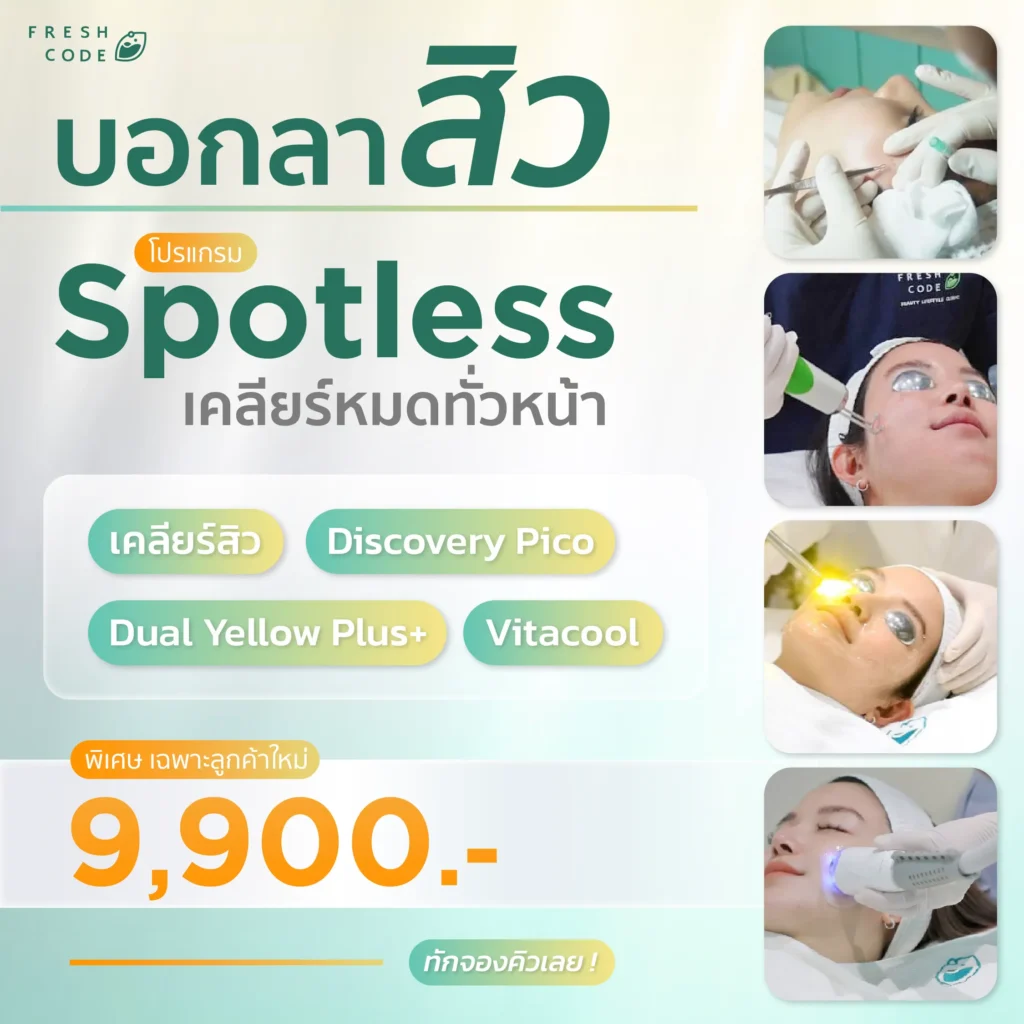
สำหรับคนที่ดูแลเองแล้วผิวยังไม่ดีขึ้น หรือมีทั้งสิวอุดตัน สิวอักเสบ และรอยแดงรอยดำสะสม คลินิกมีโปรแกรม Spotless Skin ที่รวมการดูแลไว้ในแผนเดียว ไม่ต้องแยกไปหลายที่ โปรแกรมนี้แบ่งเป็น 4 ขั้นตอน
| ขั้นตอน | ดูแลอะไร | ข้อมูลจากหน้าบริการของคลินิก |
|---|---|---|
| 1. เคลียร์สิว | สิวอุดตันและสิวอักเสบบนใบหน้า | แพทย์ประเมินสิวที่ยังอยู่ แล้วเลือกวิธีที่เหมาะ[8] |
| 2. Discovery Pico | รอยดำ สีผิวไม่สม่ำเสมอ ผิวหมองคล้ำ | เลเซอร์พิโควินาทีหลายโหมด โหมดสำหรับเม็ดสีใช้กับรอยดำจากสิวได้ ปัญหาเล็กน้อยอาจเห็นการเปลี่ยนแปลงหลังราว 1-2 ครั้ง ปัญหาซับซ้อนอาจต้องราว 5-6 ครั้งขึ้นไป[9] |
| 3. Dual Yellow Plus+ | รอยแดง การระคายเคือง และผิวสดใส | เลเซอร์สองความยาวคลื่น แสงเหลือง 578 nm เหมาะกับปัญหาสีแดง ส่วนแสงเขียว 511 nm ใช้กับปัญหาเม็ดสี[10] |
| 4. Vitacool | ฟื้นฟูผิวหลังทำ | ผสานการทำความเย็นกับแสงบำบัดเพื่อนำสารอาหารเข้าสู่ผิว และในโปรแกรมรักษาสิวถูกใช้เพื่อความสบายผิวและเติมความชุ่มชื้น[8][11] |
โปรแกรมนี้เหมาะกับคนที่อยากดูแลทั้งตัวสิว รอยที่ตามมา และสุขภาพผิวโดยรวมในแผนเดียว หน้าบริการไม่ได้ระบุราคา จำนวนครั้ง หรือช่วงห่างของโปรแกรม ซึ่งขึ้นกับสภาพผิวและการประเมินของแพทย์ ไม่มีหัตถการใดรับประกันว่ารอยจะหายหมดในครั้งเดียว[8][9]
Why choose Spotless Skin treatment at Fresh Code Clinic?
คลินิกเริ่มจากประเมินปัญหาหลักของผิวก่อน เพราะหลายคนมีทั้งสิวอุดตัน สิวอักเสบ รอยดำ รอยแดง และผิวไม่เรียบพร้อมกัน แล้วจึงเลือกว่าจะเริ่มที่สิว รอย หรือการฟื้นฟูผิว หากสิวยังอักเสบอยู่ แพทย์มักให้ความสำคัญกับการควบคุมสิวก่อน เพื่อไม่ให้เกิดรอยใหม่ตามมา
นอกจาก Spotless Skin คลินิกยังมีโปรแกรมรักษาสิว Acne Code 4 แพ็กเกจ ได้แก่ Acne Exit, Acne Clear, Acne Clear Plus และ Acne Clear Dual ให้เลือกตามลักษณะสิวและผิว โดยไม่จำเป็นต้องเลือกแบบที่เข้มข้นที่สุดเสมอไป[8]
FAQ (Frequently Asked Questions)
Q: สิวคืออะไร เกิดจากอะไร ?
Q: สิวมีกี่ประเภท ?
Q: ใช้ผลิตภัณฑ์รักษาสิวนานแค่ไหนถึงเห็นผล ?
Q: ควรไปพบแพทย์เมื่อไร ?
Q: Isotretinoin ซื้อกินเองได้ไหม ?
Q: Spotless Skin ต่างจากการรักษาสิวทั่วไปอย่างไร ?
summarize
สิวเกิดจากรูขุมขนอุดตันร่วมกับปัจจัยอื่น เช่น ฮอร์โมน แบคทีเรีย ยา และพฤติกรรมบางอย่าง และมีหลายชนิดที่ต้องดูแลต่างกัน สิวไม่รุนแรงเริ่มจากผลิตภัณฑ์ทาที่ใช้สม่ำเสมอราว 6-8 สัปดาห์ ส่วนสิวลึก อักเสบรุนแรง หรือไม่ดีขึ้นควรพบแพทย์ การล้างหน้าอ่อนโยน ไม่แกะไม่บีบ ทากันแดด และไม่เปลี่ยนผลิตภัณฑ์บ่อยช่วยลดโอกาสเกิดซ้ำ ที่ Fresh Code Clinic แพทย์ประเมินสภาพผิวเป็นรายเคส แล้วเลือกว่าจะเริ่มที่สิว รอย หรือการฟื้นฟูผิวในโปรแกรม Spotless Skin
ข้อมูลในบทความนี้เป็นความรู้ทั่วไป ไม่ใช่การวินิจฉัยหรือการรับประกันผลลัพธ์ หากสิวรุนแรงหรือไม่แน่ใจว่าควรเริ่มดูแลอย่างไร ให้ปรึกษาแพทย์ก่อนทุกครั้ง
References
- Acne — NHS
- Acne: Causes — American Academy of Dermatology
- Acne: Tips for managing — American Academy of Dermatology
- Skin care habits that can worsen acne — American Academy of Dermatology
- Does retinol deserve the hype? A Stanford dermatologist weighs in — Stanford Medicine
- ยารักษาสิว Isotretinoin อันตรายที่ไม่ควรมองข้าม — คณะเภสัชศาสตร์ มหาวิทยาลัยมหิดล
- Acne Extractions: How to Get Rid of Pimples Safely with a Dermatologist — U.S. Dermatology Partners
- โปรแกรมรักษาสิว Acne Code — Fresh Code Clinic
- Discovery Pico — Fresh Code Clinic
- Dual Yellow Plus+ — Fresh Code Clinic
- Vitacool — Fresh Code Clinic