What is XTherma? It's a skin tightening treatment using Monopolar RF to create a more defined facial contour and firmer skin.
There comes a time when many people notice changes in their face, even without significant weight gain. Their cheeks may sag slightly, their jawline may become less defined, their lower face may appear heavier in side photos, or the skin under their chin may lose firmness. This isn't caused by a single factor; it could be due to sagging skin and tissue, excess fat in the lower cheeks or under the chin, or structural changes in the face. Many people experience more than one of these issues simultaneously.
When choosing a skin tightening device, you shouldn't just consider which machine is more powerful or how many shots are needed, but rather start by identifying the root cause of the problem. This page explains XTherma and distinguishes between information from research and data provided by the manufacturer or clinics.
Key Takeaway
- XTherma is a monopolar RF 6.78 MHz device with a maximum power of 400 W. It is manufactured by Tentech (South Korea), according to the FDA database.[1][2]
- No research has been found that directly tests XTherma. The evidence used on this page is based on other monopolar RF devices (Oligio, 30 Thai people, no control group).[3] And a review of RF studies indicated that the evidence for direct lifting effects is low.[4]
- The indications specified by the U.S. FDA are electrocoagulation and hemostasis; skin tightening is not specified.[1] For information regarding Thai FDA registration, please inquire at the clinic.
- In Oligio's study at 6 months, results showed improvement of 86.67%, mostly at moderate levels. Skin redness disappeared within 1–2 days. No serious side effects were observed.[3] This information is not yet available from XTherma.
- The number of shots (400 or 600) cannot be determined from the number alone; it's necessary to determine whether the problem stems from skin sagging, fat, or structural issues.
What is XTherma?
XTherma is a skin tightening device that uses monopolar RF radio waves at a frequency of 6.78 MHz with a maximum power of 400 W.[1] Controlled heating of the tissue is achieved through a cooling system on the surface. When the tissue is heated, the existing collagen fibers respond, leading to repair and collagen remodeling in the post-procedure phase. Therefore, not all results are visible on the day of the procedure.
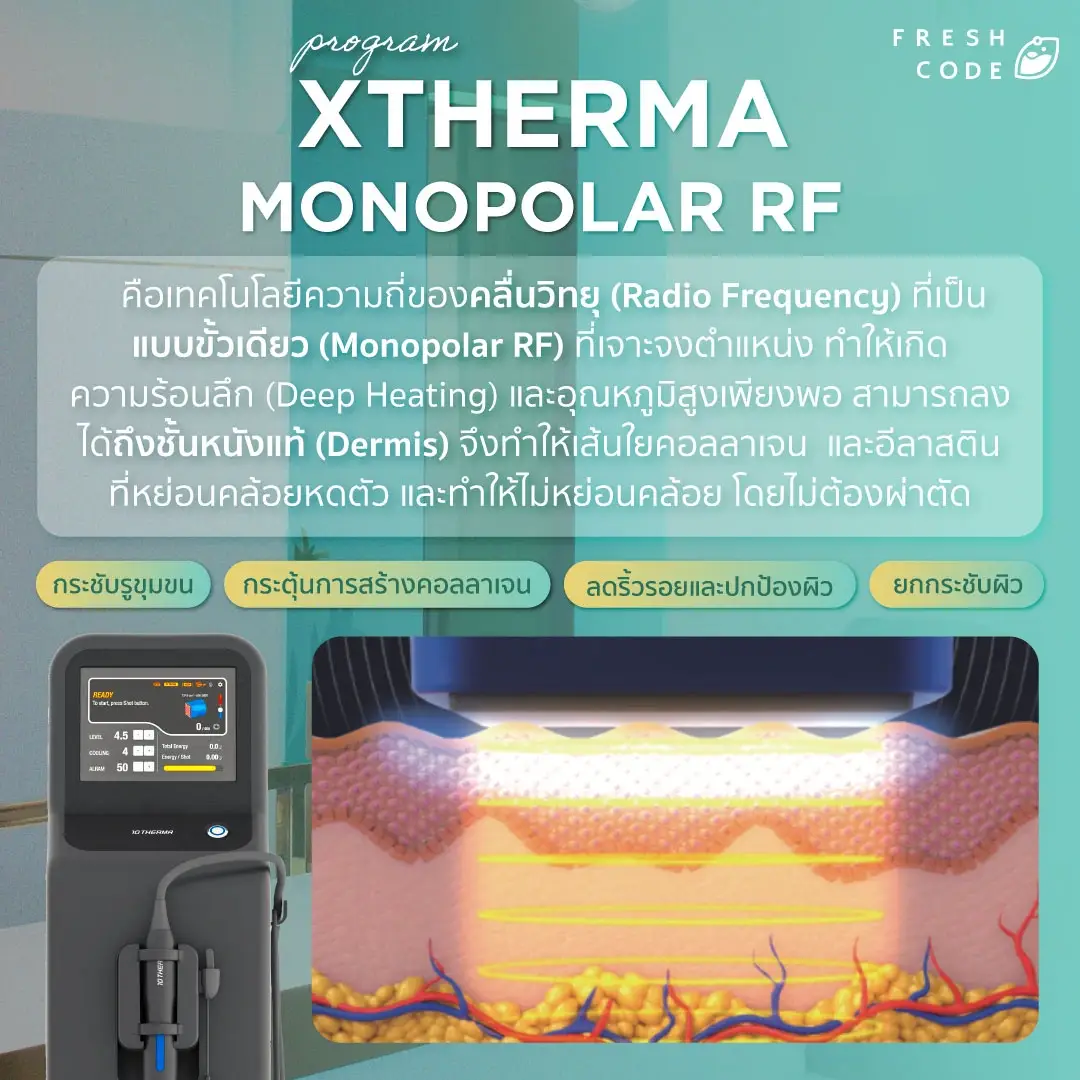
XTherma doesn't transform everyone's facial structure into a V-shape. The goal is to make the skin and tissues suitable for RF treatment appear firmer and tighter, maintaining the original facial contours.
Things you should know before reading further: This search did not find any research directly testing XTherma (or its FDA-submitted name, 10THERMA). Therefore, the results described on this page are based on research on other 6.78 MHz monopolar RF devices.[3][4] And the indication approved by the U.S. FDA is for electrocautery to stop bleeding, not for skin tightening.[1]
| section | information |
|---|---|
| manufacturer | Tentech Inc., South Korea, according to FDA database.[1][2] |
| Energy / Power | Monopolar RF 6.78 MHz / Maximum 400 W[1] |
| US FDA status | 510(k) K232992 (December 2023) Indications: Electrocoagulation and hemostasis in dermatological procedures and general surgery. Not indicated for skin tightening or wrinkle reduction.[1] |
| Treatment head | 4 sizes: 0.25 / 4.0 / 5.0 / 20.0 cm² (as per product information cited by the clinic) |
| Cooling | Smart Temperature Cooling (STC) (as stated in the product information provided by the clinic) |
| Xtherma's direct research. | Not found yet (PubMed search for XTHERMA, 10THERMA, and Tentech yielded no results as of October 2026). |
What is Monopolar RF?
Not all RF machines work the same way. Monopolar RF has an energy electrode at the treatment head and uses a return pad as the other electrode. The RF current travels through the tissue, generating heat from internal tissue resistance. This differs from ultrasound energy like Ulthera, which focuses on delivering energy to a specific depth. Monopolar RF emphasizes creating and controlling a heated area within the tissue. Therefore, the sensation during treatment and the treatment goals are not entirely the same.
How does XTherma work? How many types of heads are there? And what does cooling do?
The maximum power of 400 W is the machine's capability; it doesn't mean everyone will use the maximum power. The settings during treatment depend on the area being treated, tissue thickness, fat amount, skin condition, sensation during treatment, and the desired goal, as cheeks, jawline, and under the chin have varying tissue thicknesses.
- Delivering energy to the tissue. The treatment head delivers RF energy to the planned area, with cooling applied to the surface skin simultaneously.
- Controlled Heating occurred. The goal is to achieve the right level of heat for treatment, not "the hotter the better." Excessive energy doesn't always translate to better results.
- Collagen Remodeling after treatment The body gradually repairs and rearranges collagen, so continuous evaluation is necessary; do not judge based on immediate results after the procedure.
What types of heads does XTherma have?
XTherma comes with 4 different sized heads to choose from depending on the area (according to the product information claimed by the clinic).
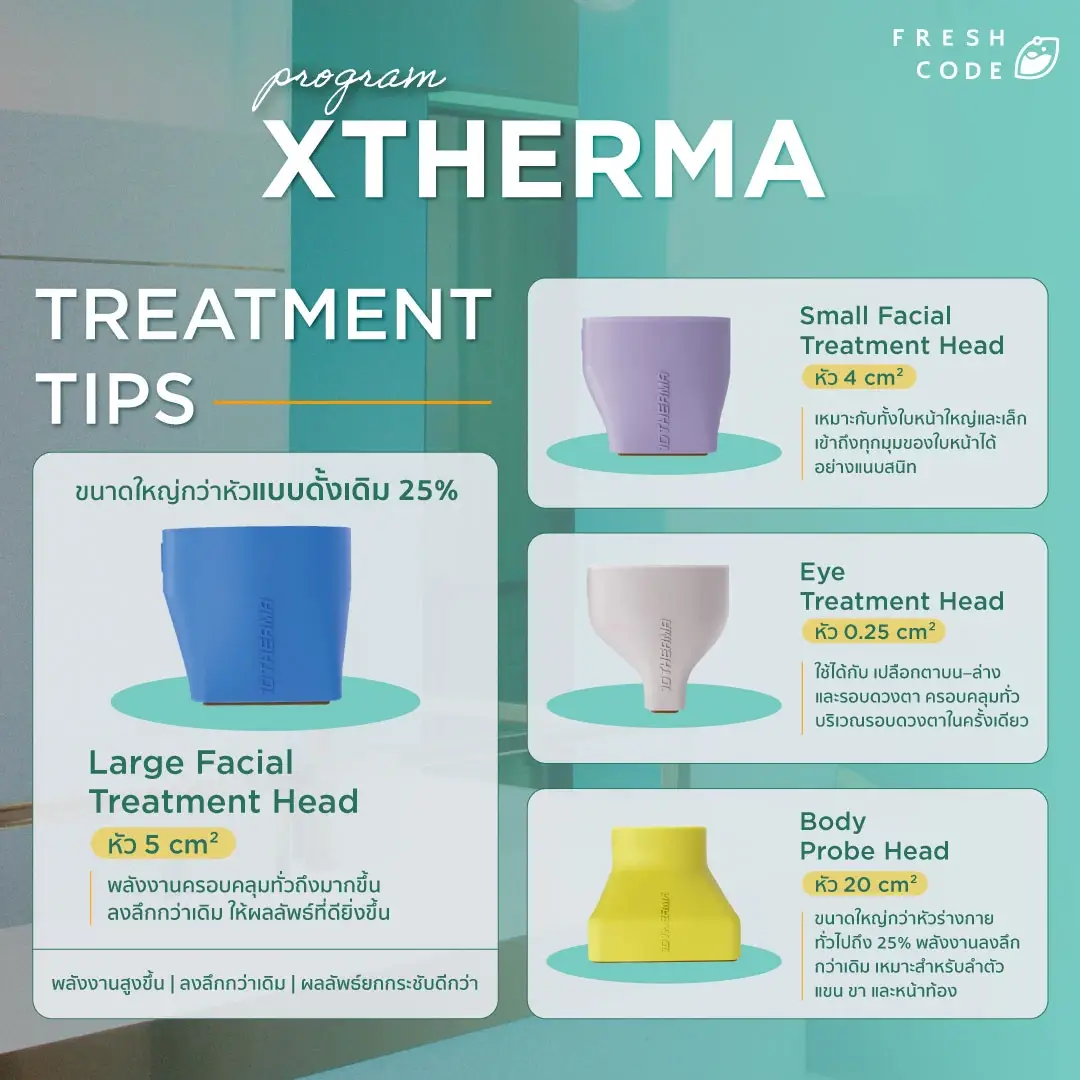
- Large Facial Head 5.0 sq cm. It covers more area per shot, making it suitable for larger areas such as the cheeks, lower face, jawline, under the chin, and neck.
- Small Facial Head 4.0 sq cm. More flexible in curved or narrower areas. Doctors choose based on the area and anatomy.
- Eye Head 0.25 sq cm. The smallest head is used for delicate areas such as around the eyes, requiring separate assessment of the head size and energy compared to the cheeks or lower face.
- Body Probe Head 20.0 sq cm. The largest contact area is for the torso or body part that is wider than the face.
The largest head isn't necessarily the best for every area. The point is to choose a head size that's appropriate for the area and distribute the shots to cover the specific problem you want to solve.
Smart Temperature Cooling (STC) system
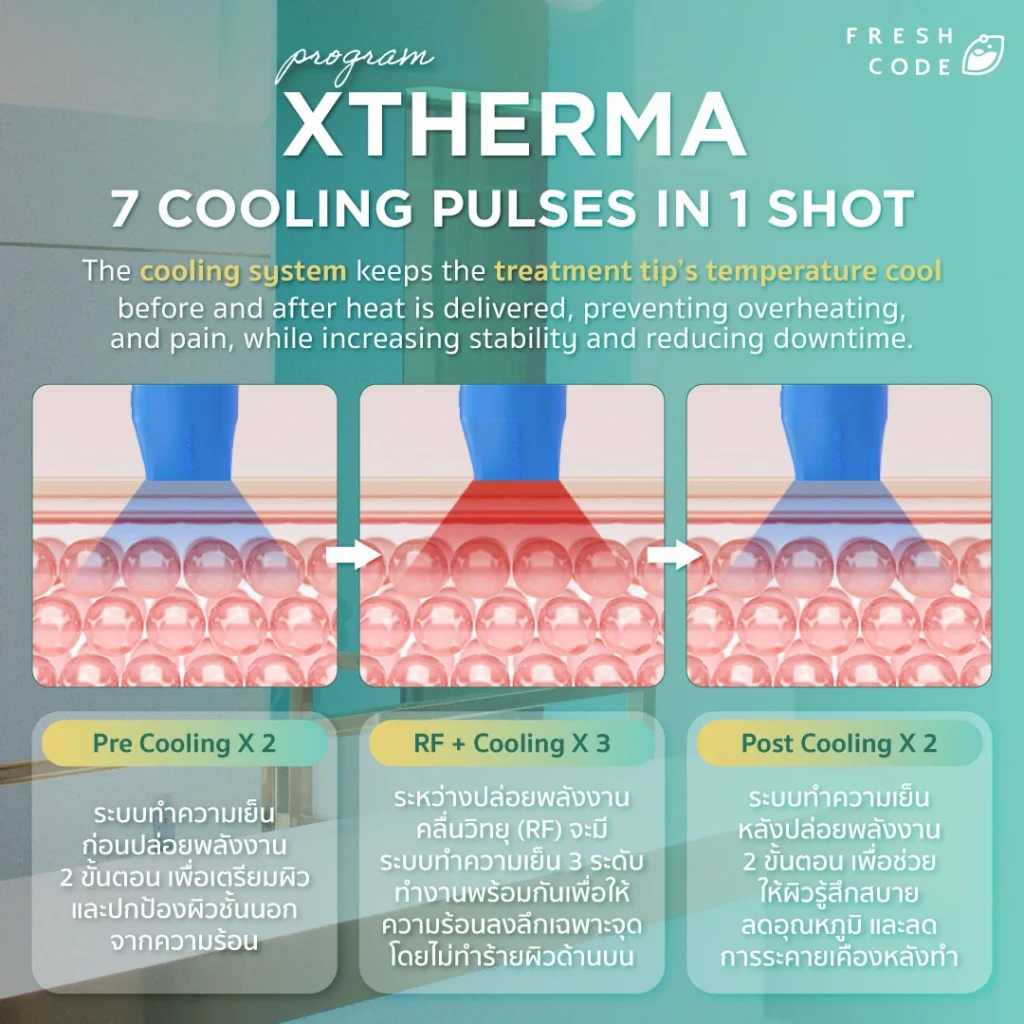
RF generates heat in the tissue, but the surface skin also needs temperature control. According to the product information cited by the clinic, the STC system has 7 cooling cycles per shot: 2 pre-cooling cycles, 3 RF + cooling cycles, and 2 post-cooling cycles. Documentation 510(k) states that the system has a cooling component.[1] However, the 7-speed specifications have not yet been verified against independent documentation. Cooling helps with surface comfort, but it doesn't mean there's no risk.
What are the benefits of XTherma, and who is it suitable for?
Xtherma's primary goal is skin firmness, lifting, and collagen remodeling. Therefore, it can be considered when you experience sagging cheeks, loss of skin firmness, a heavier lower face, an undefined jawline, or loose skin under the chin, without surgery or a long recovery period.
Based on available information: In a study by Oligio (another brand of Monopolar RF 6.78 MHz), 30 Thai people with mild to moderate lower facial laxity underwent a single treatment at 6 months. Evaluators, unaware of the before-and-after image, showed improvement of 86.67%. The majority had moderate (38.33%) improvement, followed by severe (8.33%) and excellent (3.33%). This study did not include a control group and did not test XTherma.[3] A review of 15 RF studies (1,230 people) found improvements in skin texture and firmness in most participants, but most studies were small, lacked control groups, and evidence of direct lifting was low.[4]
Why is my facial contour blurry?
They may look similar on the outside, but the care approaches are different. It's important to first identify the root cause of the problem.
- Loose skin and tissues. My jawline used to be more defined, but my cheeks are starting to sag in my lower face. Increasing tissue firmness with Monopolar RF is one option worth considering.
- fat The skin isn't severely sagging, but there's excess tissue in the lower cheeks or fat under the chin. Adding more shots of the lifting machine alone may not solve the problem entirely.
- structure If you have a short chin, an unprominent jawline, or naturally weak bone support, even with tighter skin, your facial shape may not change significantly.
Is your face starting to sag, your jawline becoming less defined, or you have a double chin but aren't sure what's causing it? Please send frontal and side photos for evaluation.Before we can determine if the main problem is with the skin, fat, or structure, we need to differentiate.
Who is XTherma suitable for?
This is suitable for those who are starting to feel their skin and tissues are losing firmness and want to maintain tightness without surgery. Examples include slightly sagging cheeks, a heavy lower face, an undefined jawline, loose skin under the chin, or those who want to start treatment before sagging becomes significant and prefer gradual results that still maintain their natural appearance.
There's no need to wait until a certain age, and age alone doesn't determine how many shots are suitable or how much is ideal, because people of the same age have different skin thicknesses, fat amounts, facial shapes, and levels of sagging.
Popular areas for XTherma treatment.
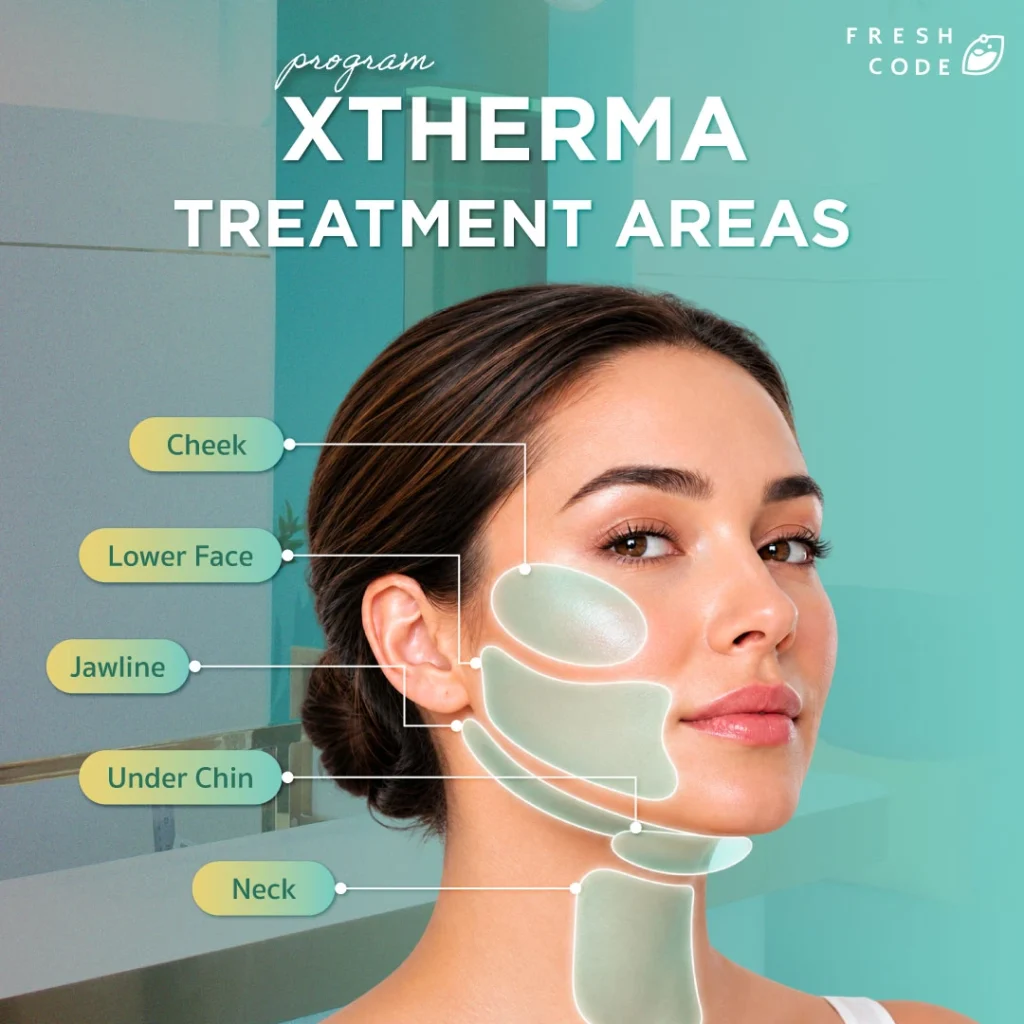
- cheek This is a rapidly changing area. When the tissue is loose, the cheeks may sag, making the lower face appear heavy. The doctor adjusts the energy level based on the tissue thickness and facial shape.
- Lower Face Skin, fat, muscle, and skeletal structure are all interconnected. It's important to first determine the primary contributing factor (this is the area studied in Oligio's research).[3]
- Face frame and jawline If your jawline was previously defined but is now obscured by sagging, adding firmness can help refine your original contours. It doesn't, however, create a V-shaped face for everyone.
- Under the chin It's important to differentiate between sagging skin and excess fat. Some people have both. If there's a lot of fat, other treatments may be needed in combination.
- throat It can be assessed in conjunction with the face, but because the area is larger, the number of shots needs to be estimated based on the actual area, and I haven't found any research specifically on this area in the works I've read.
How many shots does XTherma need to perform, 400 or 600?
Most promotions use figures like 400 or 600 shots, but there's no single best number based solely on that. The ideal number depends on the area, face size, degree of sagging, amount of tissue, areas to be emphasized, energy level, and shot distribution.
- 400 shots It can be used to plan for many different areas of the face, but there's a clear difference between those focusing on the lower face and those who want to target the cheeks, jawline, chin, and neck.
- 600 shots Consider this when working with multiple areas or face + neck, but it's not always better than 400 shots, especially if the extra shots aren't in areas where they're needed.
- Face + Neck A broader area should be assessed based on face size, neck area, degree of sagging, and areas to be emphasized, rather than assigning the same amount to everyone.
To give you an idea: In Oligio's research (lower face, head size 2 × 2 cm), an average of about 412 shots were used per session.[3] However, it's a different machine, a different head, and a different area per shot, so it can't be directly compared to the 400 or 600 shots of XTherma, and it's not a standard number.
Does XTherma hurt?
During the procedure, you will feel heat because the main mechanism is generating heat in the tissue. Some people may feel warmth, pulsating heat, or deep heat beneath the skin, alternating with coolness from the cooling system. Areas with thin tissue or near bone may feel different than the cheeks. The sensation also depends on pain sensitivity, the area, energy level, tissue thickness, and the technique used during the procedure.
In Oligio's research, the average pain score was 3.13 out of 10, but participants applied a numbing cream one hour before the procedure.[3] Overall, RF reported an average score of approximately 1.94 out of 10.[4] Therefore, you should ask the clinic whether they will use local anesthesia, and you shouldn't use pain as a measure of treatment effectiveness. More pain doesn't necessarily mean better results.
Read more: Is XTherma treatment painful?
When will XTherma show results, and how long do the effects last?
Some people feel a slight tightening or firming of the skin right from the start, but the results on the day of the procedure are not the final result because collagen remodeling takes time, so it should be viewed as a timeline.
| period | Things that may be observed (as specified by the clinic). |
|---|---|
| Immediately after the procedure. | Some people feel their skin is tighter or see a slight change in contour. These aren't the only results. |
| Approximately 1 month | The firmness and quality of the skin become more noticeable. |
| Approximately 2–3 months | Remodeling continues, making this an ideal time to evaluate the overall results. |
This is consistent with Oligio's work, which showed continuous improvement from month 1 to month 6.[3] To take before-and-after photos to show the actual results, you should control the angle, camera distance, lighting, expression, and hairstyle to make them as similar as possible.
How long does XTherma last?
There is no one-size-fits-all approach to treatment because the skin's aging process continues even after the procedure. Results depend on age, the degree of sagging before treatment, existing skin and collagen quality, the number and location of shots, weight changes, sun exposure, and skincare routine. Oligio's research followed patients for only 6 months.[3] Furthermore, since long-term data on XTherma is not yet available, it is not appropriate to mandate repeat treatments at the same time interval. It is more reasonable to monitor results and then schedule individual maintenance plans.
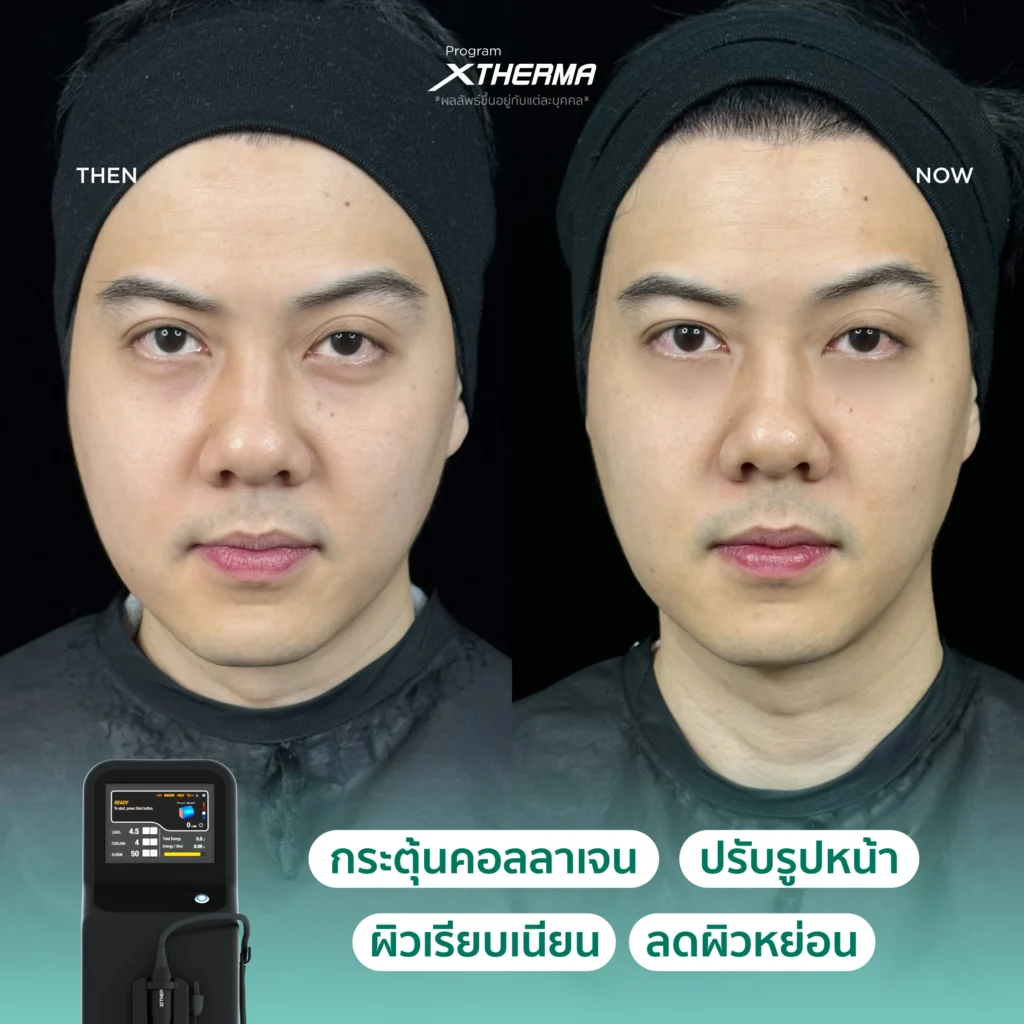
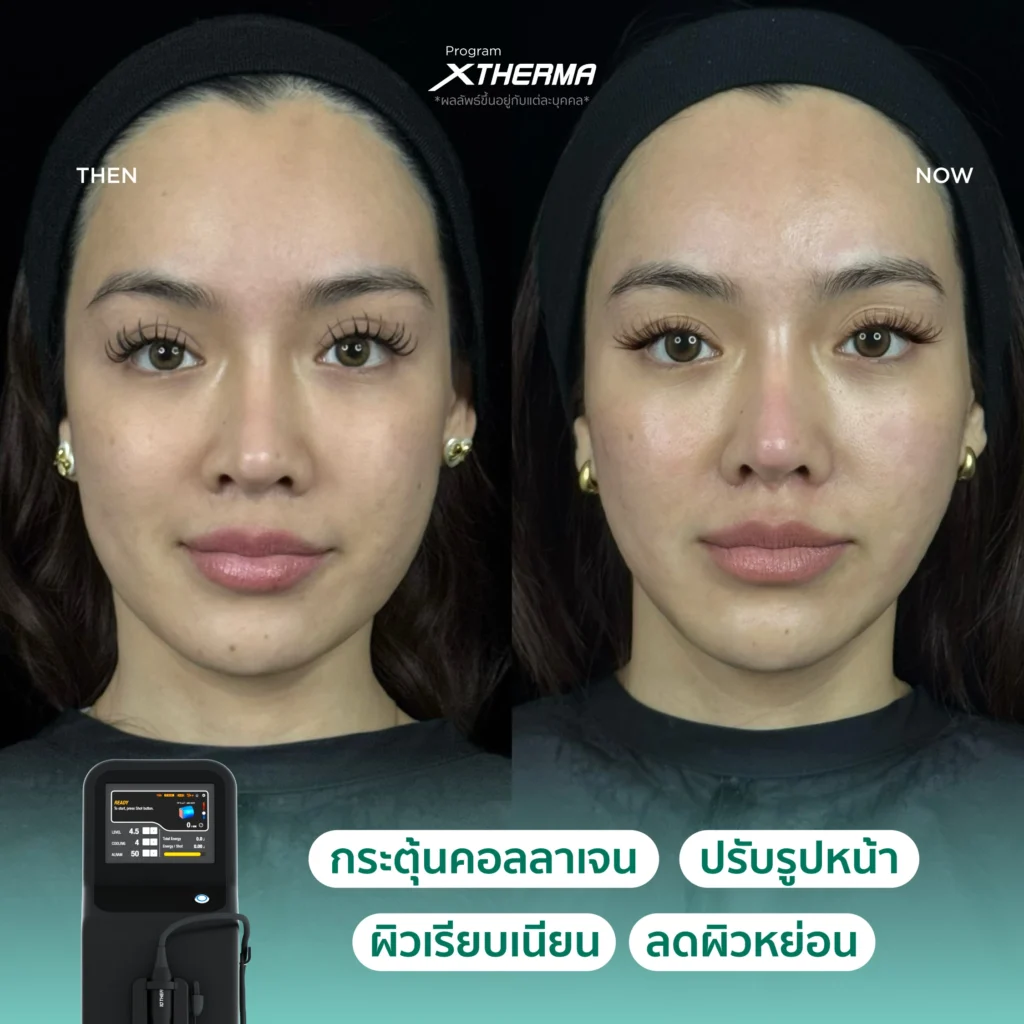
See more reviews. Read more: How long does XTherma last?
What are the differences between XTherma, Ulthera Prime, and Oligio X?
All three fall into the skin tightening category, but they differ in energy and treatment concepts. There's no need to start by asking "which one is stronger?"; begin by considering whether the primary concern is skin tightening or lifting at a deeper level.
| section | XTherma | Ulthera Prime |
|---|---|---|
| energy | Monopolar RF 6.78 MHz | Microfocused Ultrasound with Visualization (MFU-V) |
| type | Creates and controls heat zones in tissues. | Energy is delivered at a point at a chosen depth. |
| What the doctor saw. | No ultrasound images of the tissue layers were available; assessment was based on the settings and response during the procedure. | Real-time Ultrasound Visualization is available (product information). |
| Focus on | Skin tightening, Collagen remodeling | Lifting at a different level than RF. |
In some cases, both are combined to address problems at different levels, which is a decision made by the physician. Based on the resources reviewed on this page, no direct comparisons between XTherma and Ulthera Prime were found.
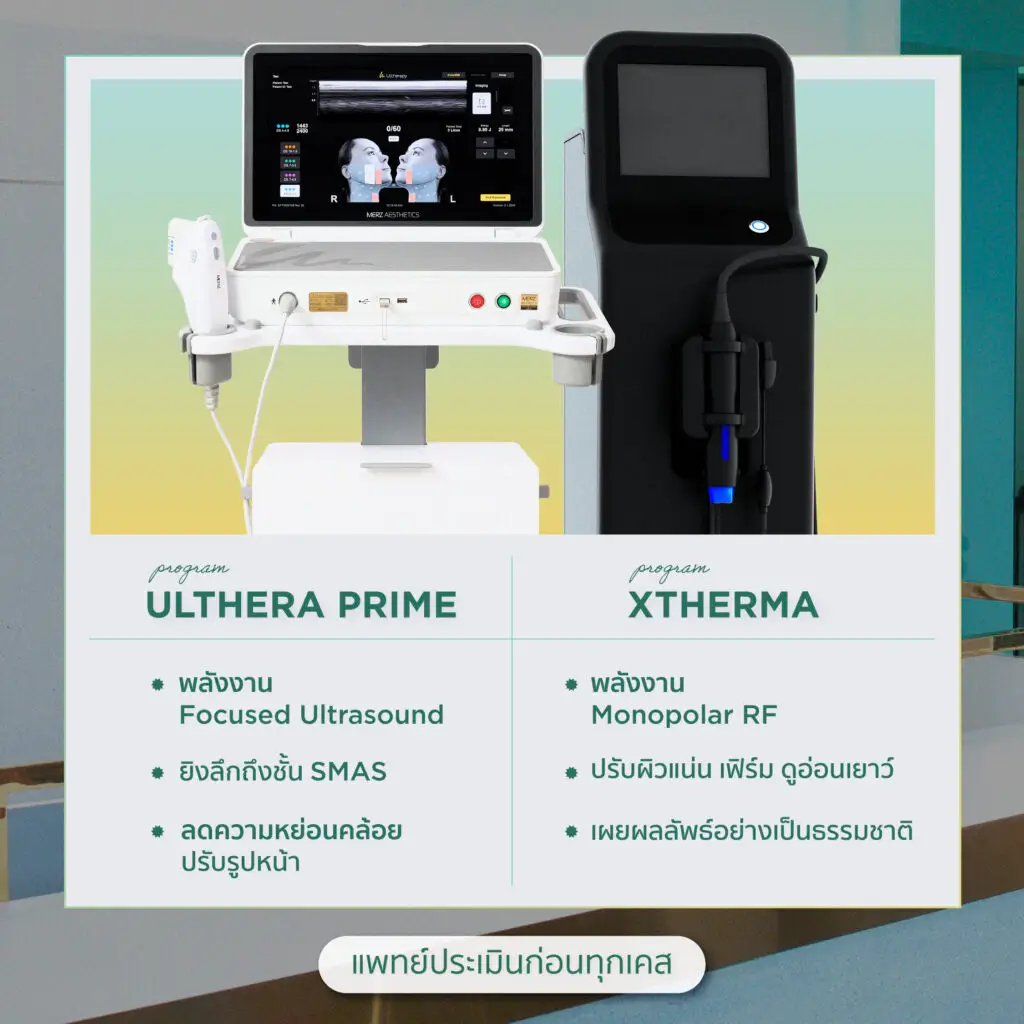
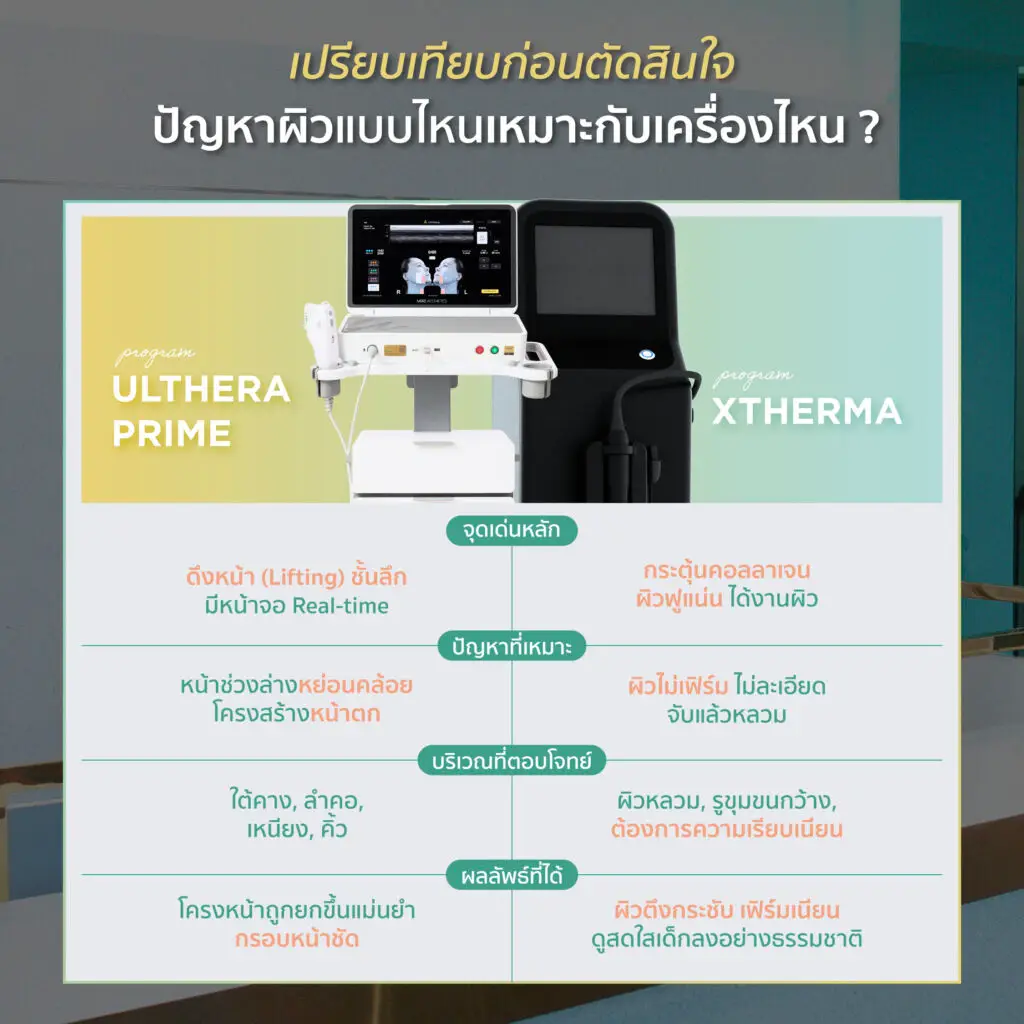
Read more: What are the differences between Ulthera Prime and Xtherma? What is the fastest non-surgical facelift method to see results in 2026?
XTherma vs. Oligio X
Both are monopolar RF 6.78 MHz and have the same peak power of 400 W (according to XTherma's FDA documentation).[1] And Oligio's original research.[3]Frequency and power are not the differentiating factors between the two machines. According to manufacturer and clinical data, the differences lie in the energy delivery pattern, treatment mode, cooling head, feedback system, and protocol used. No direct comparative studies of these two machines have been found.Oligio XFurthermore, the choice of treatment should take into account the tissue condition, the area of concern, and the goals. In some cases, the desired outcome depends more on tailoring the treatment to the specific problem than on changing the device.
How much does XTherma cost?
Prices vary depending on the number of shots, the area served, and current promotions. Before comparing prices, you should check four things.
- How many shots did you get? 400 and 600 shots provide different coverage. You should check if the packages being compared have the same number of shots.
- Where should it be done? Some packages focus on the lower face and jawline, while others include the cheeks, under the chin, and neck. The same number of shots can cover different areas.
- How was the shot positioned? Having many shots doesn't help much if it's not in an area that needs addressing. You should know what the treatment plan focuses on and why.
- Is XTherma suitable for our problem? If the main problem isn't something Monopolar RF is suitable for, then a good promotion might not be the most worthwhile option.
View the latest XTherma promotions.
Where is the best place to get XTherma treatment, and what makes Fresh Code Clinic different?
Price and number of shots can be compared, but this shouldn't be the whole story, because even the same machine model and the same number of shots can be used for different treatments. Before choosing a clinic, you should consider the following:
- A facial assessment is performed before the procedure, and the cause of sagging can be identified.
- Explain why this number of shots was chosen and how the shots were divided according to the problems in each area.
- Energy levels are adjusted based on anatomy and tissue thickness; a single protocol is not used for everyone.
- Track your feelings and responses while doing it.
- There are before and after photos taken from similar angles and lighting.
- Explain the limitations of XTherma, inform the patient of its approved indications and FDA registration number, and recommend alternative treatments if they are more suitable.
A good consultation shouldn't start with "Which device should I sell?" but rather "What is the problem with this face?"“
Dr. Krit, Trainer & Speaker for XTherma and XTriple.
As stated by the clinic. Dr. Krit As a physician specializing in skin tightening and a trainer & speaker for both XTherma and XTriple, I can assess the primary concern. If the main issue is skin and tissue firmness, Monopolar RF might be suitable. For deeper lifting, Ultrasound energy like XTriple could be another option, and in some cases, a combination of both energy types is used. Readers should be aware that this role represents my professional relationship with the technologies discussed on this page.

XTherma at Fresh Code Clinic plans treatments based on anatomy.
According to the clinic, there is no fixed number of shots or protocol for everyone; instead, they assess the primary problems of each individual's face.
- Loose skin and tissues. XTherma is applied to target areas for skin tightening and collagen remodeling, such as the cheeks, lower face, jawline, or under the chin.
- I have a lot of fat in my lower face. Assess how much fat is causing the feeling of a heavy face or undefined jawline, because RF alone doesn't necessarily need to address every aspect.
- The face is quite thin. Those with less volume should not use the same protocol as those with more cheek and lower face volume. The placement and energy must be appropriate for the actual face.
- Need a different lifting level? Some people are better suited to Ultrasound or a combination of RF, depending on their treatment goal.
The goal isn't to get as many XTherma shots as possible, but rather where each shot is placed and what problem it's solving.


Things to know before undergoing XTherma treatment and side effects.
XTherma is a non-surgical procedure that uses RF energy. Before treatment, please inform the doctor about your health history and any previous facial procedures, especially if...
- Is there any wound or inflammation in the area to be treated?
- Underlying medical conditions
- There are electronic devices implanted in the body.
- There are medical materials or equipment in the treatment area.
- I am pregnant.
- Have you recently had a procedure, thread lift, or other energy-based treatment in the same area?
- Have you ever had surgery on your face or neck?
- There is a sensory abnormality.
This doesn't mean it's impossible in every case, but this information affects the appropriateness and the recommended waiting period before proceeding.
Is post-procedure skin recovery necessary, and what are the risks?
In Oligio's study of 30 people, 25 experienced immediate skin redness after treatment (83.3%), which resolved within 1–2 days. One person experienced dry skin at 1 month, which resolved within 3 months, and no serious side effects were observed at the 6-month follow-up.[3] Overall, RF treatments showed transient redness of 17.6–100% and swelling of 5.3–26.5%. No serious complications were observed in the included sessions, but no sessions systematically measured recovery time.[4] Therefore, it's impossible to specify the appropriate number of recovery days for everyone. Excessive heat can cause blistering or burns with any heating device. Doctors minimize the risk by setting the power level and monitoring your sensation during the procedure. If you experience any unusual symptoms or your condition does not improve, contact the clinic.
Frequently Asked Questions about XTherma
Is XTherma good? Who is it suitable for?
Is XTherma FDA (Food and Drug Administration) approved?
Is XTherma 400 shots enough, or would 600 shots be better?
Is XTherma painful, and do I need to rest my face afterward?
Does XTherma show results after just one treatment? How many days does it take to see results, and how long do the effects last?
Does XTherma help to slim the face or reduce a double chin?
Does XTherma make your face look gaunt or your skin thin?
Which is better: XTherma, Ulthera Prime, or Oligio X?
In summary, who is XTherma suitable for?
If your cheeks aren't as firm as before, your lower face looks heavy, your jawline isn't clearly defined, or the skin under your chin is sagging, and you want to maintain firmness without surgery, XTherma is a viable option. It uses Monopolar RF 6.78 MHz to generate heat in the tissue to stimulate collagen remodeling, along with cooling the surface of the skin.
However, there is no research that directly tests XTherma. The available evidence is based on other RF treatments and is limited.[3][4] And the indication given by the U.S. FDA is not for skin tightening.[1] Before deciding whether or not to proceed, how many shots, or whether to choose XTherma, Oligio X, Ulthera Prime, or XTriple, it's important to determine whether the problem stems from skin sagging, fat, or structural issues. Some cases are more suitable for a combination treatment than a single device.
Consult with a specialist about your skin problems.
Still unsure if XTherma is right for your face?
If you're undecided between XTherma, Oligio X, Ulthera Prime, or XTriple, start by sending frontal and side profile photos for an initial assessment, or visit Fresh Code Clinic for a consultation. Once we know whether your main problem stems from your skin, fat, or facial structure, we can choose the most suitable machine, number of shots, and treatment plan for your face.
Add LINE @freshcodeclinic Consult a doctor.
- Address: 19 Sukhumvit Soi 5, BTS Nana Exit 1 (Parking available)
- telephone: 083-626-4264
- Opening hours: Open daily 11:00–20:00
References
- US FDA. 510(k) Summary K232992 — 10THERMA (Tentech, Inc.), decision SESE 20 Dec 2023, product code GEI, predicate Thermage FLX (K170758). Indicated indications: electrocoagulation and hemostasis in dermatological and general surgical procedures; frequency 6.78 MHz, peak power 400 W; documentation does not mention skin tightening or wrinkle reduction (manufacturer's documentation filed with the FDA). https://www.accessdata.fda.gov/cdrh_docs/pdf23/K232992.pdf
- NLM AccessGUDID. Device record: XTHERMA (Model XTHERMA-H/P), TENTECH Inc., 510(k) K232992, product code GEI (FDA Device Code Database; used to verify brand and manufacturer only, not proof of efficacy). https://accessgudid.nlm.nih.gov/devices/08809709380466
- Wanitphakdeedecha R, Yogya Y, Yan C, et al. Efficacy and Safety of Monopolar Radiofrequency for Treatment of Lower Facial Laxity in Asians. Dermatol Ther (Heidelb). 2022;12(11):2563-2573. (Tested with another brand of Oligio Monopolar RF 6.78 MHz, not XTherma; 30 Thai people, no control group; device provided by a distributor in Thailand and open publication fee paid by the manufacturer of Oligio) https://link.springer.com/article/10.1007/s13555-022-00817-8
- Kumar N, Suh DH, Lee SJ, Ryu HJ. Radiofrequency-Based Treatments for Facial Rejuvenation: A Systematic Review of Efficacy, Safety, and Patient-Centered Outcomes. Aesthet Surg J Open Forum. 2025;7:ojaf159. (A review of various RF systems, not specifically XTherma; the authors are consultants to Jeisys, another manufacturer of the device.) https://pmc.ncbi.nlm.nih.gov/articles/PMC12715571/
The information on this page is general and not medical advice. Treatment outcomes and suitability vary from person to person. Consult a doctor before making any decisions.